Department of Otorhinolaryngology and Head Neck Surgery, Medical School, University of Pécs, 2. Munkácsy M. Str., Pécs, 7621, Hungary.
Eur Arch Otorhinolaryngol. 2023 Nov;280(11):4851-4859. doi: 10.1007/s00405-023-08002-z. Epub 2023 May 3.
Single-sided deaf patients following cochlear implantation often compare the sound quality of their implanted ear with normal hearing. The interaural differences can result in dissatisfaction with speech comprehension and reduced time of usage of the speech processor; hence, prolonging auditory adaptation time. The proposed calibration method presented in this study demonstrates how the frequency distribution of the cochlear implant can be set to adequately approximate the pitch perception of the contralateral normal hearing ear towards improving speech intelligibility in a noisy environment.
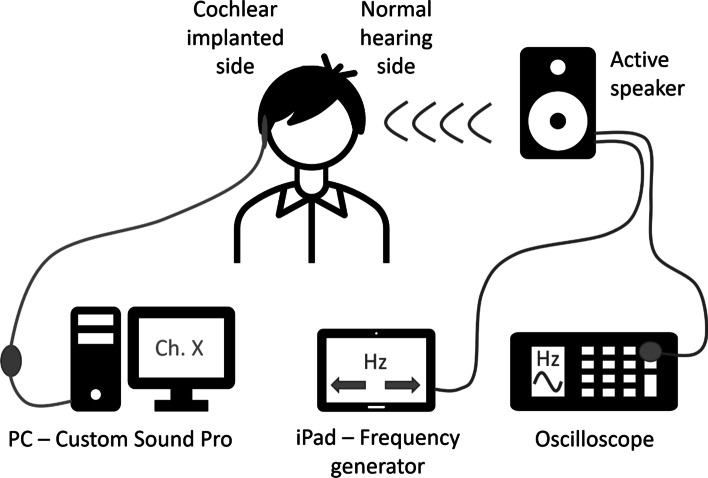
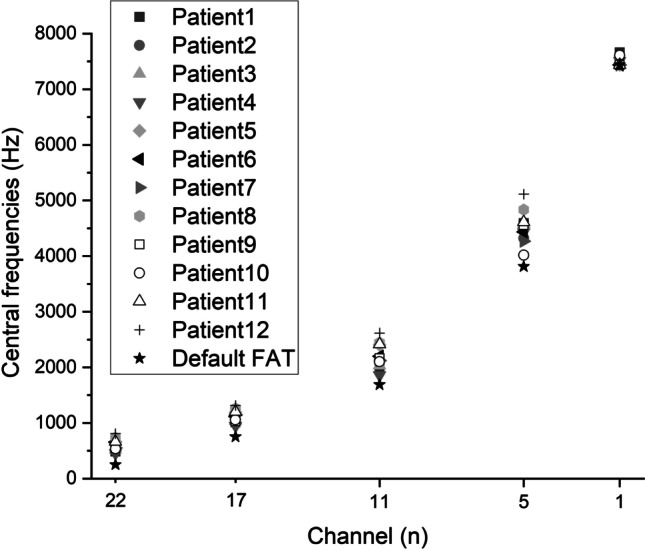
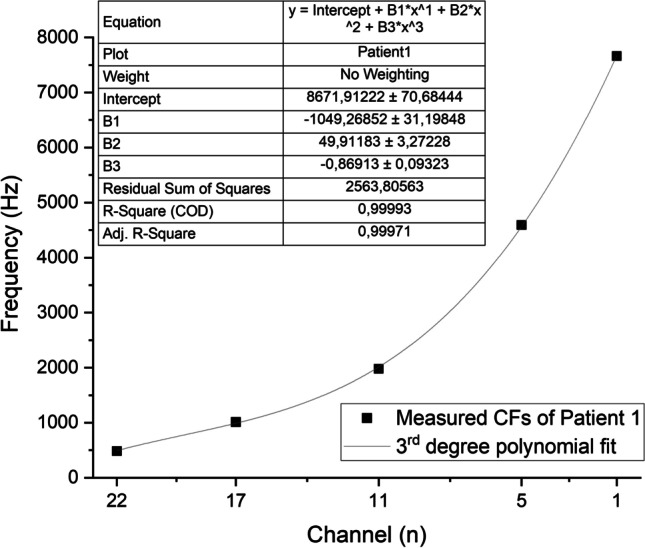
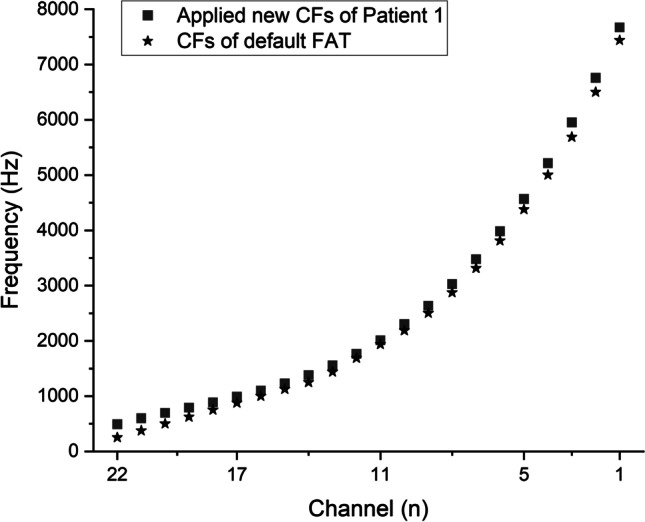
In 12 postlingual single-sided deaf patients, subjective interaural pitch-matching was carried out to determine new central frequencies for the reallocation of the frequency bands of their speech processor (CP910, CP950 or CP1000, Cochlear, Australia). The patients were asked to compare the pitch of the tones presented to their normal hearing ear to the pitch of individual channels of their cochlear implant (CI522 or CI622, Cochlear, Australia). A third-degree polynomial curve was fit to the acquired matching frequencies to create the new frequency allocation table. Audiological measurements (free-field aided thresholds, speech reception thresholds, and monosyllabic word recognition score) in noise, together with a Speech, Spatial and Qualities of Hearing Scale (SSQ12) questionnaire (short version of the original SSQ) results were evaluated prior to the pitch-matching procedure, and again, 2 weeks later.
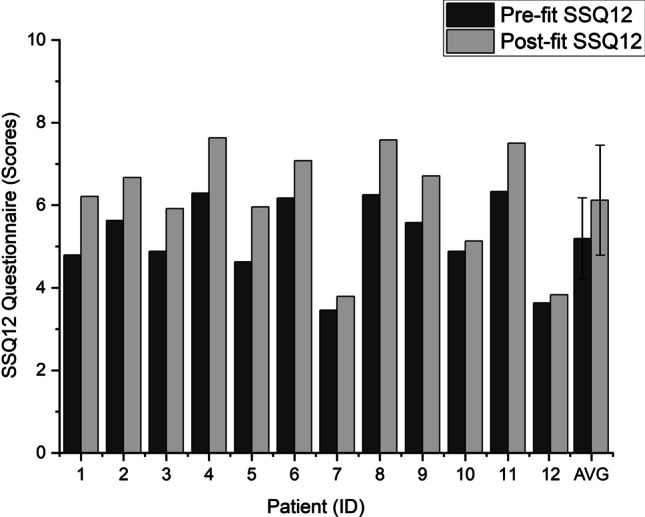
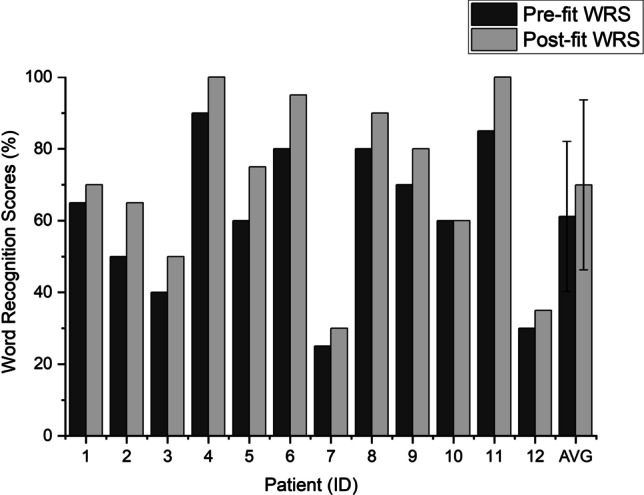
The free-field aided thresholds of the patients showed no greater shift than ± 5 dB following the procedure; however, their monosyllabic word recognition score in noise improved significantly (mean - 9.58%, SD 4.98%, matched pairs t test comparison: p < 0.001). The results of the SSQ12 questionnaire also showed significant improvement in speech intelligibility, sound localization, and sound quality (mean 0.96 points, SD 0.45 points, matched pairs t test comparison: p < 0.001).
Matching the pitch perception of the implanted cochlea with the sensation of the normal hearing contralateral ear, resulted in significant changes in the quality of hearing in patients with single-sided deafness. It is plausible the procedure can usher positive results in bimodal patients or following sequential bilateral cochlear implantation.
人工耳蜗植入后的单侧聋患者常将植入耳的声音质量与正常听力进行比较。这种来自双耳的差异可能导致他们对言语理解不满意,减少言语处理器的使用时间,从而延长听觉适应时间。本研究提出的校准方法展示了如何设置人工耳蜗的频率分布,以充分接近对侧正常听力耳的音高感知,从而提高嘈杂环境中的言语可懂度。
在 12 名后天性单侧聋患者中,进行了主观的双耳间音高匹配,以确定重新分配言语处理器(CP910、CP950 或 CP1000,科利尔,澳大利亚)的频带的新中心频率。要求患者将听到的正常耳的音调与人工耳蜗(CI522 或 CI622,科利尔,澳大利亚)的个别通道的音调进行比较。对获得的匹配频率进行三次多项式曲线拟合,以创建新的频率分配表。在音高匹配程序之前和之后的 2 周,评估听力测量(声场助听阈值、言语接受阈和单音节词识别得分)和言语、空间和听觉质量量表(SSQ12)问卷(原始 SSQ 的简短版本)的结果。
患者的声场助听阈值在程序后没有超过±5dB 的变化;然而,他们在噪声中的单音节词识别得分显著提高(平均-9.58%,标准差 4.98%,配对 t 检验比较:p<0.001)。SSQ12 问卷的结果也显示言语可懂度、声源定位和声音质量有显著改善(平均 0.96 分,标准差 0.45 分,配对 t 检验比较:p<0.001)。
使植入耳蜗的音高感知与对侧正常听力的感觉相匹配,导致单侧聋患者的听力质量发生显著变化。该程序可能会为双耳模式患者或序贯双侧人工耳蜗植入患者带来积极的结果。