Department of Ecology, Evolution, and Behavior, University of Minnesota, Saint Paul, MN, USA.
Department of Biology, Texas A&M University, College Station, TX, USA.
Nat Commun. 2023 May 3;14(1):2557. doi: 10.1038/s41467-023-37909-8.
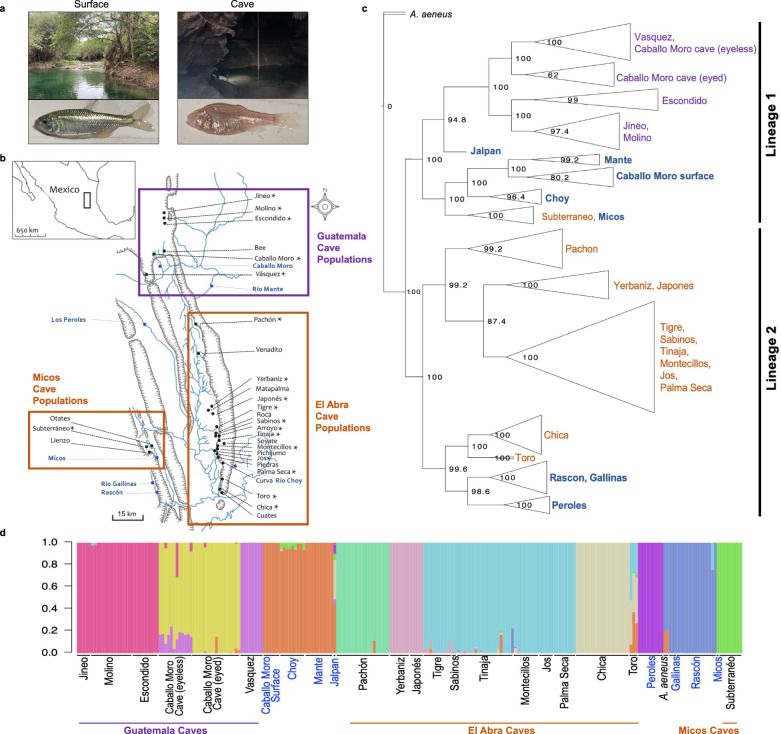
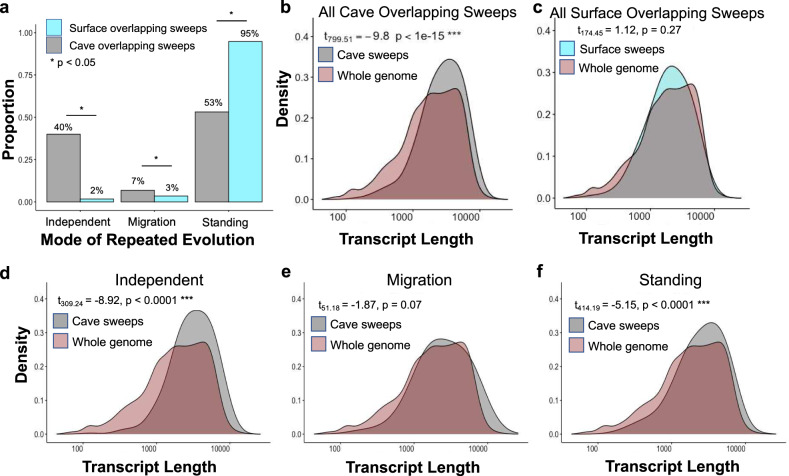
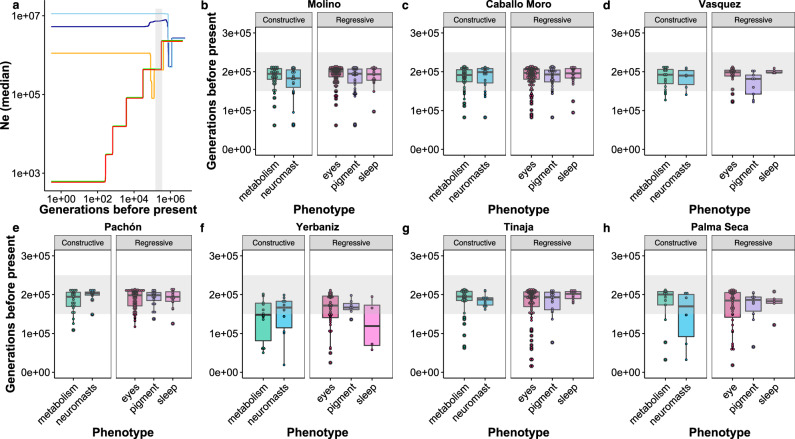
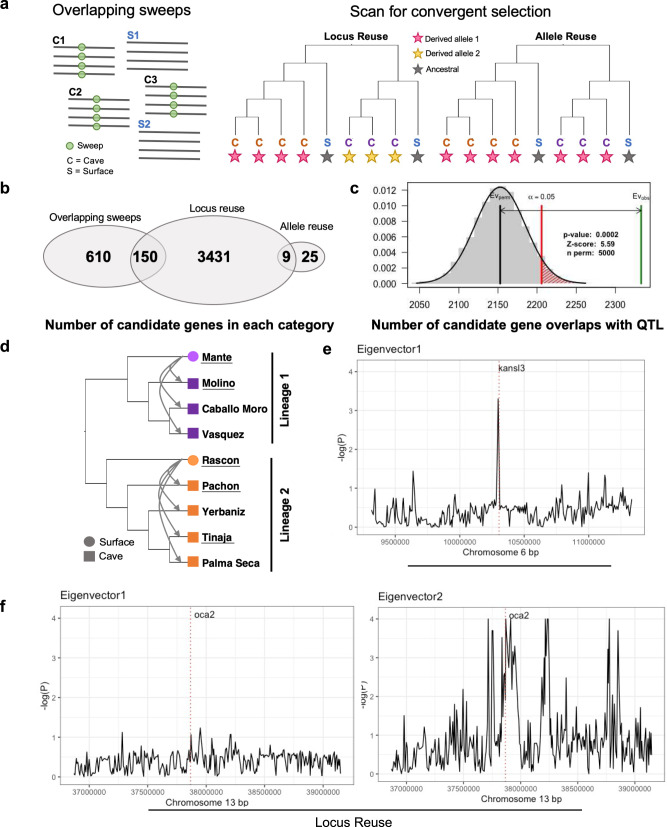
Laboratory studies have demonstrated that a single phenotype can be produced by many different genotypes; however, in natural systems, it is frequently found that phenotypic convergence is due to parallel genetic changes. This suggests a substantial role for constraint and determinism in evolution and indicates that certain mutations are more likely to contribute to phenotypic evolution. Here we use whole genome resequencing in the Mexican tetra, Astyanax mexicanus, to investigate how selection has shaped the repeated evolution of both trait loss and enhancement across independent cavefish lineages. We show that selection on standing genetic variation and de novo mutations both contribute substantially to repeated adaptation. Our findings provide empirical support for the hypothesis that genes with larger mutational targets are more likely to be the substrate of repeated evolution and indicate that features of the cave environment may impact the rate at which mutations occur.
实验室研究表明,许多不同的基因型可以产生单一表型;然而,在自然系统中,人们经常发现表型趋同是由于平行的遗传变化。这表明约束和决定论在进化中起着重要作用,并表明某些突变更有可能有助于表型进化。在这里,我们使用墨西哥四齿脂鲤(Astyanax mexicanus)的全基因组重测序来研究选择是如何塑造独立洞穴鱼谱系中特征缺失和增强的重复进化的。我们表明,对现有遗传变异和新出现突变的选择都对重复适应做出了重大贡献。我们的研究结果为这样一个假设提供了经验支持,即具有更大突变靶点的基因更有可能成为重复进化的基础,并表明洞穴环境的特征可能会影响突变发生的速度。