Mao Ye, Zhao Wei, Hao Mengxiao, Xing Rui, Yan Ming
Department of Anesthesiology, The Affiliated Hospital of Xuzhou Medical University, Xuzhou City, Jiangsu Province, People's Republic of China.
J Pain Res. 2023 Apr 27;16:1429-1440. doi: 10.2147/JPR.S404810. eCollection 2023.
Many studies confirmed that several approaches of quadratus lumborum block (QLB) were superior to transversus abdominis plane block (TAPB) in reducing opioid consumption during postoperative period. As a new QLB approach at the lateral supra-arcuate ligament (QLB-LSAL), the analgesic efficacy and safety in patients undergoing open hepatectomy are still unknown. This study aims to compare postoperative analgesia between the blocks in open hepatectomy.
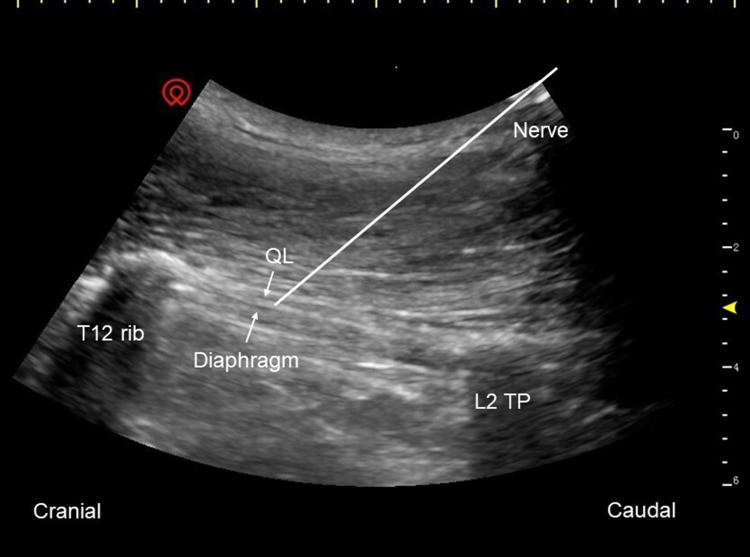
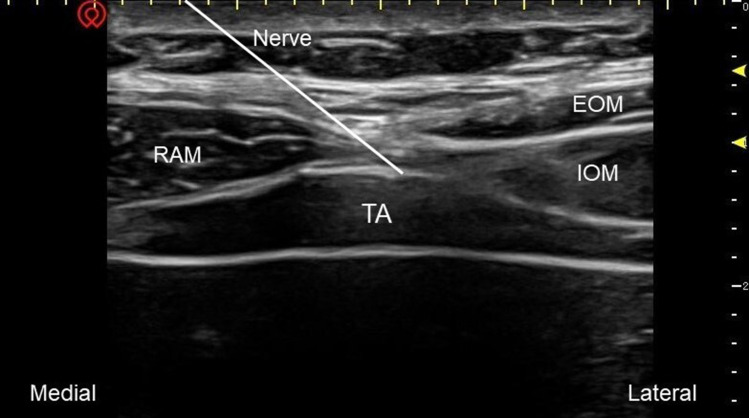
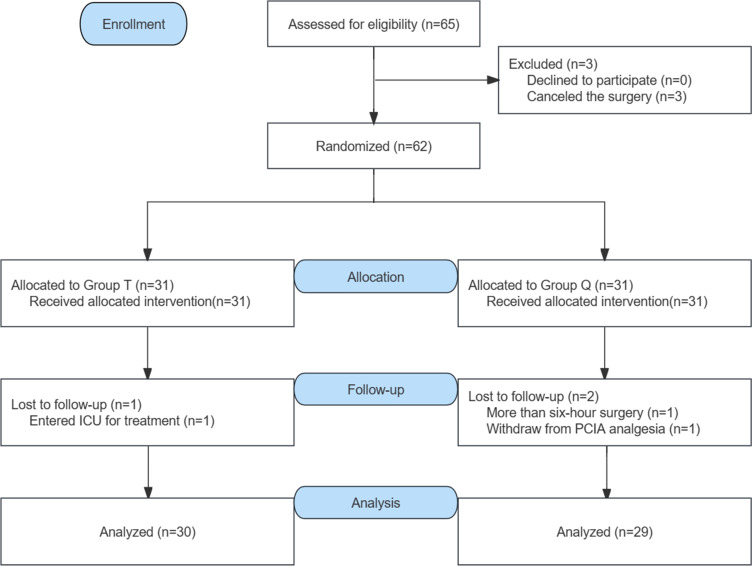
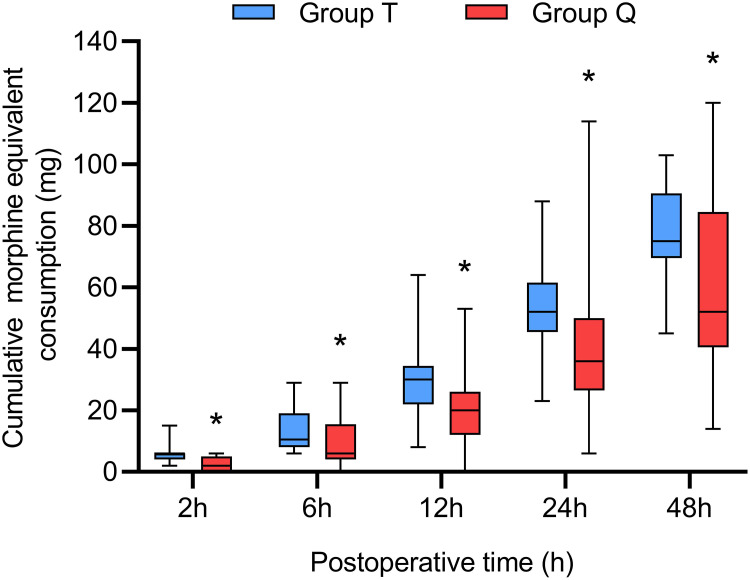
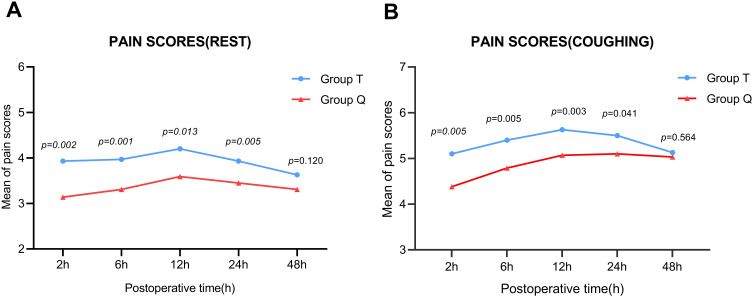
Sixty-two patients undergoing open hepatectomy were enrolled and randomly allocated into the QLB-LSAL group (group Q) and the subcostal TAPB group (group T). Preoperatively, patients received ultrasound-guided bilateral QLB-LSAL or subcostal TAPB with injection of 0.5% ropivacaine (a total volume of 40 mL). The primary outcome was cumulative total morphine equivalent consumption in the first postoperative 24 h. Other outcomes included numerical rating scale (NRS) scores at rest and coughing, cumulative total morphine equivalent consumption at 2, 6, 12, 48 h, Quality of Recovery-15 (QoR-15) scores, time to first patient-controlled intravenous analgesia (PCIA) request, time to first ambulation and adverse effects.
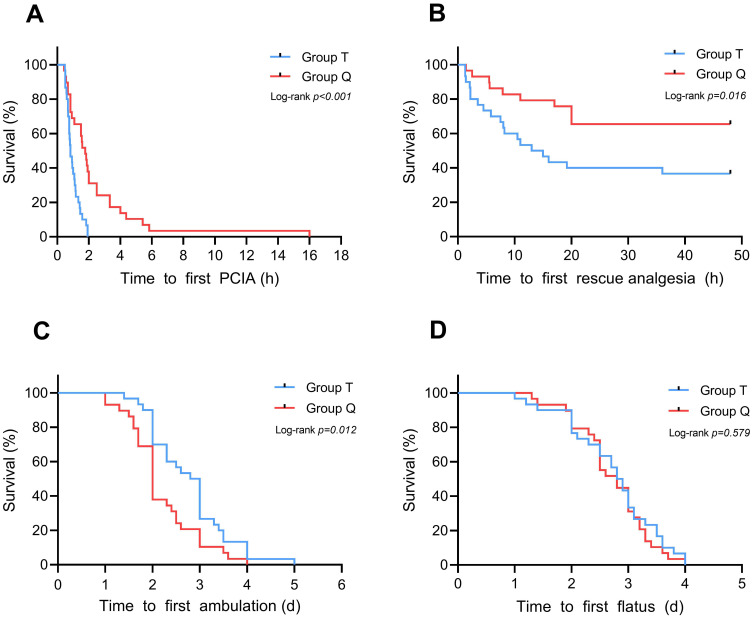
The cumulative total morphine equivalent consumption in group Q was decreased significantly at all postoperative time points ( < 0.01). The postoperative NRS scores at rest and coughing in group Q were lower than those in group T at all postoperative time points except 48 h ( < 0.05). A significant increase was also observed in the QoR-15 scores among patients in group Q. Time to first PCIA request was significantly prolonged in group Q than in group T, and time to first ambulation was shortened. Adverse effects showed no statistical significance between the two groups.
Compared with subcostal TAPB, preoperative bilateral QLB-LSAL provided superior analgesic properties and promoted early postoperative recovery quality in patients undergoing open hepatectomy.
China Clinical Trials Registration Center (http://www.chictr.org.cn) ChiCTR2200063291, 3/9/2022.
多项研究证实,在减少术后阿片类药物用量方面,腰方肌阻滞(QLB)的几种方法优于腹横肌平面阻滞(TAPB)。作为一种在外侧弓形上韧带处进行的新型QLB方法(QLB-LSAL),其在肝切除术患者中的镇痛效果和安全性尚不清楚。本研究旨在比较肝切除术患者中这两种阻滞方法的术后镇痛效果。
纳入62例行肝切除术的患者,并随机分为QLB-LSAL组(Q组)和肋下TAPB组(T组)。术前,患者接受超声引导下双侧QLB-LSAL或肋下TAPB,注射0.5%罗哌卡因(总量40 mL)。主要结局指标为术后24小时内吗啡等效剂量的累计总消耗量。其他结局指标包括静息和咳嗽时的数字评分量表(NRS)评分、术后2、6、12、48小时吗啡等效剂量的累计总消耗量、恢复质量-15(QoR-15)评分、首次患者自控静脉镇痛(PCIA)需求时间、首次下床活动时间及不良反应。
Q组术后各时间点吗啡等效剂量的累计总消耗量均显著降低(<0.01)。除48小时外,Q组术后静息和咳嗽时的NRS评分在所有术后时间点均低于T组(<0.05)。Q组患者的QoR-15评分也显著升高。Q组首次PCIA需求时间比T组显著延长,首次下床活动时间缩短。两组间不良反应无统计学差异。
与肋下TAPB相比,术前双侧QLB-LSAL在肝切除术患者中具有更好的镇痛效果,并能提高术后早期恢复质量。
中国临床试验注册中心(http://www.chictr.org.cn)ChiCTR2200063291,2022年9月3日。