College of Medicine and Health Sciences, Dire Dawa University, Dire Dawa, Ethiopia.
Department of Pediatrics, Dilchora Referal Hospital, Dire Dawa, Ethiopia.
BMC Womens Health. 2023 May 5;23(1):231. doi: 10.1186/s12905-023-02289-0.
Female genital mutilation comprises all procedures involving the partial or total removal of female external genitalia or other injury to the female external organs, whether for religious, cultural or other non-therapeutic reasons. The impact of female genital mutilation is diverse, including physical, social and psychological impact. We report a case of a 36-year-old woman with type three female genital mutilation who did not seek medical treatment due to lack of awareness that there was treatment for it, and use this case as an entry point to comprehensively review literature regarding long-term complications associated with female genital mutilation and its impact on women's quality of life.
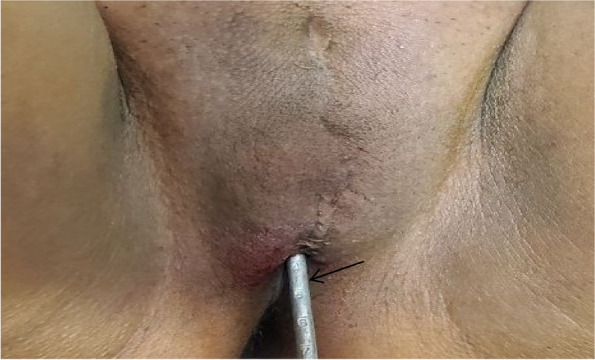
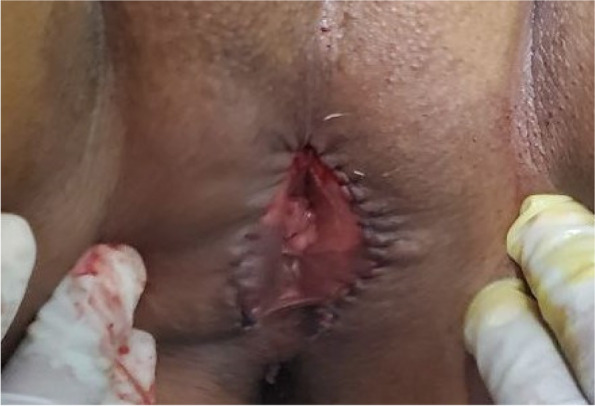
We present a case of a 36-year-old single nulligravida lady with type three female genital mutilation who had presented with difficulty with urination since childhood. She had difficulty with menstruation since her menarche, and she had never had sexual intercourse. She never sought treatment, but recently went to hospital after she heard of a young lady who had the same problem in her neighborhood who was treated surgically and got married. On external genitalia examination, there was no clitoris, no labia minora, and labia majora were fused to each other with a healed old scar between them. There was a 0.5 cm by 0.5 cm opening below the fused labia majora near to the anus through which urine was dribbling. De-infibulation was done. Six months after the procedure, she was married and at that moment she was pregnant.
The physical, sexual, obstetrics and psychosocial consequences of female genital mutilation are neglected issues. The improvement of women's socio-cultural status in combination with planning programs to enhance their information and awareness as well as trying to change the cultural and religious leaders' viewpoints regarding this procedure is essential to reducing female genital mutilation and its burden on women's health.
女性生殖器官割礼包括所有涉及部分或全部切除女性外生殖器或对女性外生殖器其他部位造成伤害的程序,无论其原因是宗教、文化还是其他非治疗性的。女性生殖器官割礼的影响是多方面的,包括身体、社会和心理影响。我们报告了一例 36 岁的 III 型女性生殖器官割礼患者,由于缺乏对治疗方法的认识,她没有寻求治疗,我们以此病例为切入点,全面回顾与女性生殖器官割礼相关的长期并发症及其对女性生活质量的影响的文献。
我们报告了一例 36 岁的单身初产妇,她患有 III 型女性生殖器官割礼,从小就出现排尿困难。她初潮后就出现月经困难,并且从未有过性生活。她从未寻求过治疗,但最近听说附近有一位同样问题的年轻女士接受了手术治疗并结婚了,她才去了医院。外阴检查发现,没有阴蒂,小阴唇缺失,大阴唇相互融合,其间有一道愈合的旧疤痕。在融合的大阴唇下部靠近肛门处有一个 0.5 厘米乘 0.5 厘米的开口,尿液从这里滴出。进行了去阴道横隔术。术后 6 个月,她结婚了,此时她怀孕了。
女性生殖器官割礼的身体、性、产科和心理社会后果是被忽视的问题。提高妇女的社会文化地位,结合规划方案,增强她们的信息和意识,以及努力改变文化和宗教领袖对这一程序的观点,对于减少女性生殖器官割礼及其对妇女健康的负担至关重要。