Tümer Haluk, Bulbuloglu Guney Cem
General Surgery, Seyhan State Hospital, Adana, TUR.
Cureus. 2023 Apr 3;15(4):e37053. doi: 10.7759/cureus.37053. eCollection 2023 Apr.
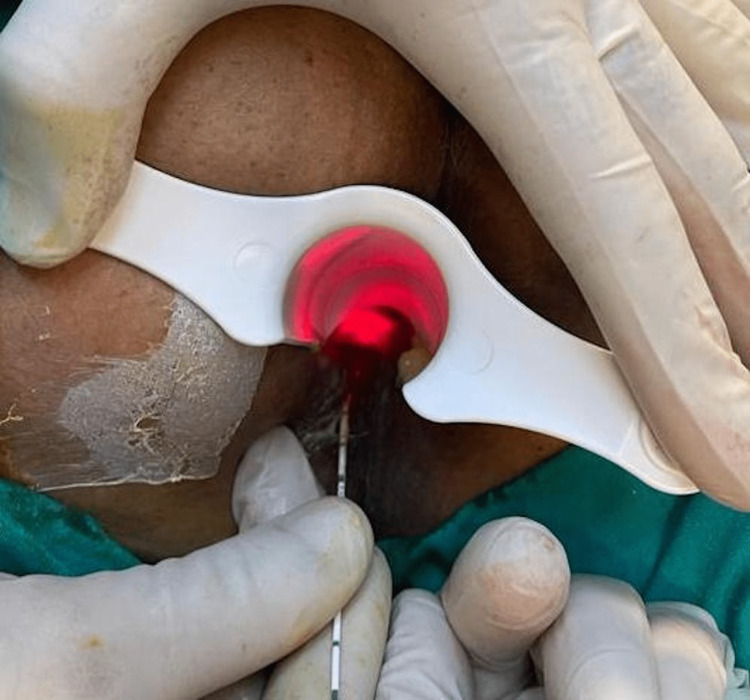
Background Anal fistulas are a common complication of perianal abscesses. The treatment of anal fistulas is challenging, with persistent and high recurrence rates. The aim of this study was to evaluate the efficacy and cost-effectiveness of laser ablation compared to fistulotomy in the treatment of anal fistulas. Materials and methods The patients were examined for external and internal openings of the fistula, its number, length, type, relationship with the sphincters, and any previous history of abscess or proctological surgery. The surgical procedures, complications, incontinence, recurrence, and recovery time were evaluated and compared between the two groups. The laser ablation group received an intermittent laser application at a wavelength of 1470 nm and 10 watts for three seconds, while the fistulotomy group underwent cutting of the fistula tract with electrocautery while keeping a stylet in place. Results A total of 253 patients were included in this retrospective study, with 149 patients undergoing fistulotomy and 104 patients undergoing laser ablation. The patients were evaluated based on the type, number, and location of internal and external openings, and the length of the fistula tract according to the Parks classification. The mean follow-up period was 9.0±4.3 months. The results showed that the laser group had a shorter time to return to work and less postoperative pain compared to the fistulotomy group. However, the recurrence rate was higher in the laser group. The recurrence rate was also found to be higher in patients with low transsphincteric fistulas and in patients with diabetes mellitus. Conclusion Our study findings indicate that while laser ablation may be associated with less pain and quicker recovery time, it may also have a higher recurrence rate compared to fistulotomy. We believe that laser ablation is a valuable option for surgeons to consider early on in the treatment process, especially in cases where fistulotomy is not suitable.
肛瘘是肛周脓肿的常见并发症。肛瘘的治疗具有挑战性,复发率持续居高不下。本研究的目的是评估与肛瘘切开术相比,激光消融治疗肛瘘的疗效和成本效益。
检查患者肛瘘的外口和内口、数量、长度、类型、与括约肌的关系以及既往脓肿或直肠手术史。评估并比较两组的手术过程、并发症、失禁情况、复发率和恢复时间。激光消融组采用波长1470nm、功率10瓦的激光间歇性照射3秒,而肛瘘切开组在置入探针的同时用电灼切除瘘管。
本回顾性研究共纳入253例患者,其中149例行肛瘘切开术,104例行激光消融术。根据Parks分类法,根据内口和外口的类型、数量和位置以及瘘管长度对患者进行评估。平均随访期为9.0±4.3个月。结果显示,与肛瘘切开组相比,激光组恢复工作的时间更短,术后疼痛更少。然而,激光组的复发率更高。低位经括约肌肛瘘患者和糖尿病患者的复发率也更高。
我们的研究结果表明,虽然激光消融可能疼痛较轻、恢复时间较快,但与肛瘘切开术相比,其复发率可能更高。我们认为,激光消融是外科医生在治疗过程早期可考虑的一种有价值的选择,尤其是在不适合进行肛瘘切开术的情况下。