Department of Microbiology and Molecular Genetics, University of Vermont Larner College of Medicine, Burlington, Vermont, United States of America.
Center for Emerging and Neglected Diseases, University of California Berkeley, California, United States of America.
PLoS Biol. 2023 May 8;21(5):e3002110. doi: 10.1371/journal.pbio.3002110. eCollection 2023 May.
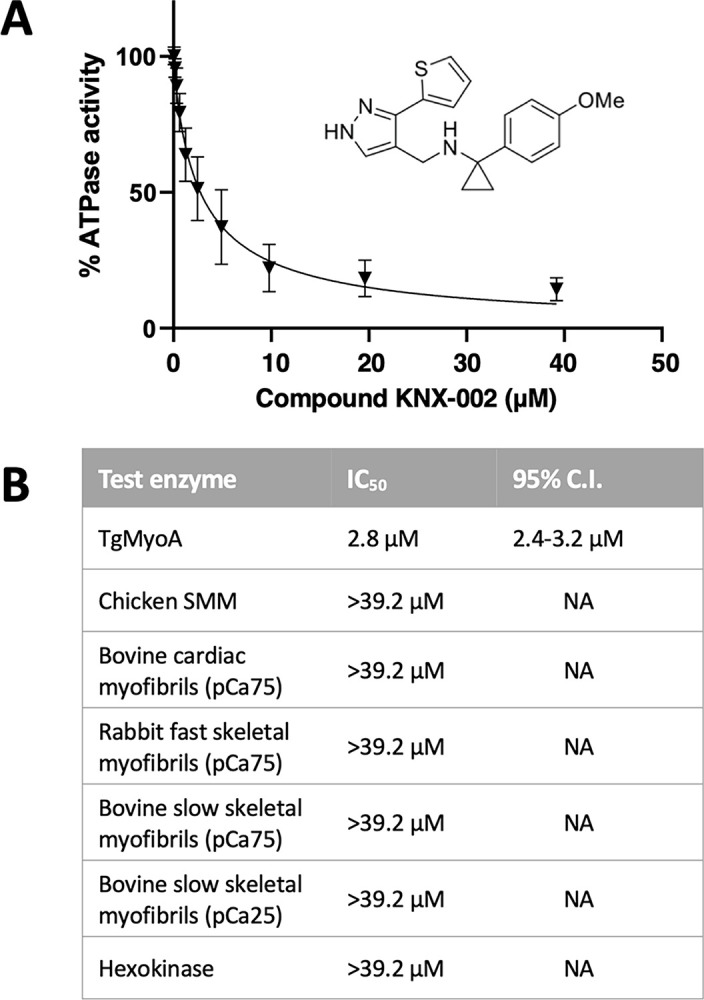
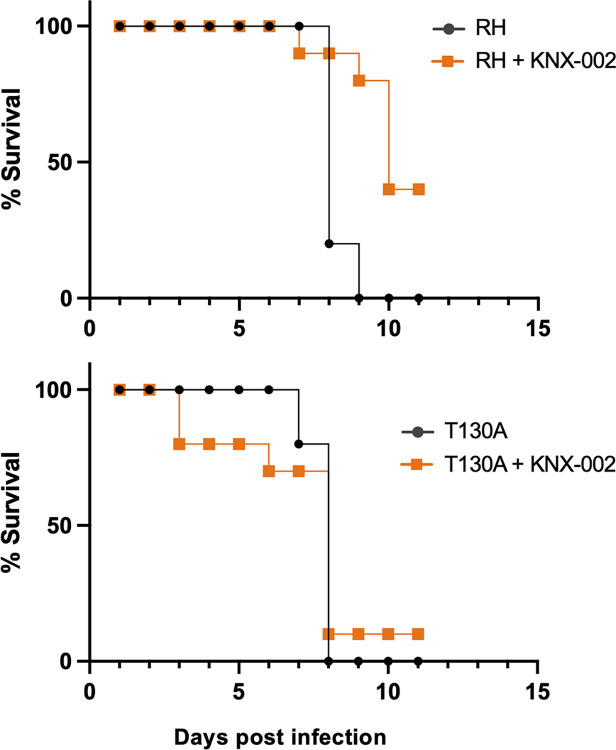
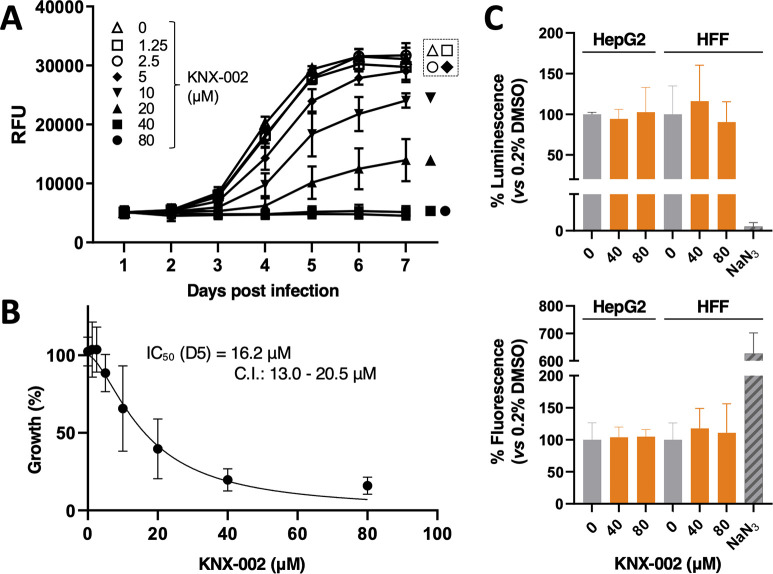
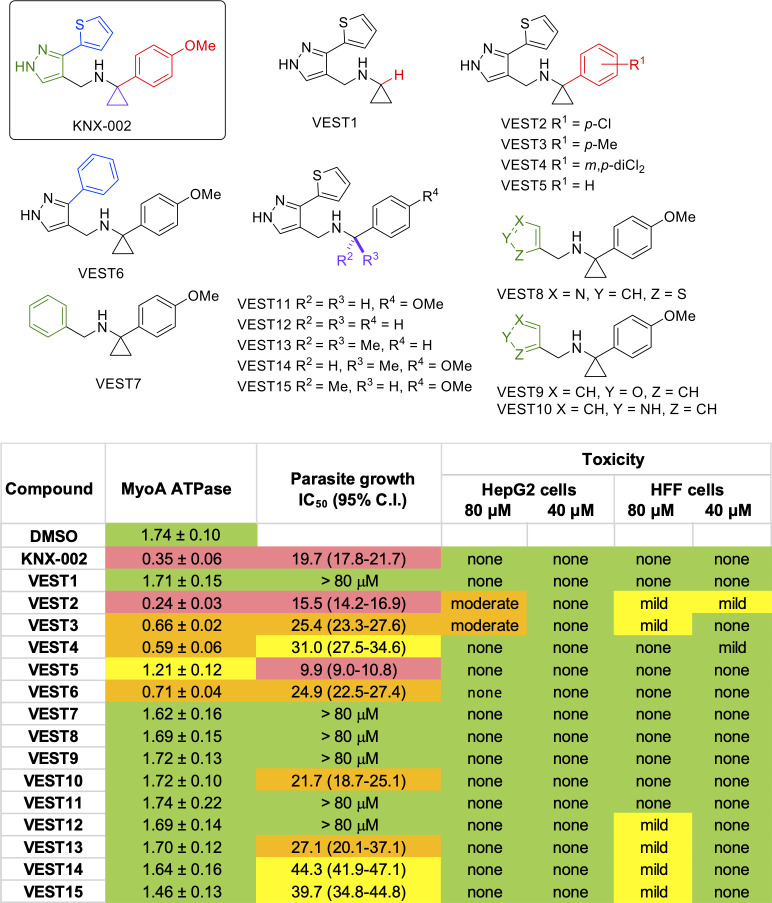
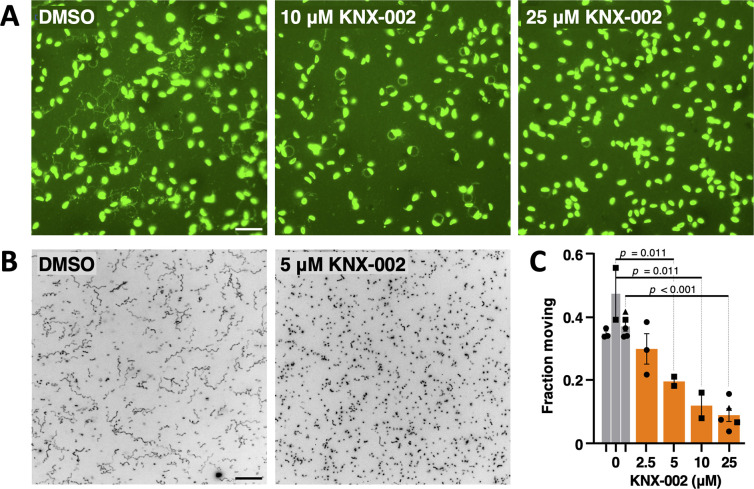
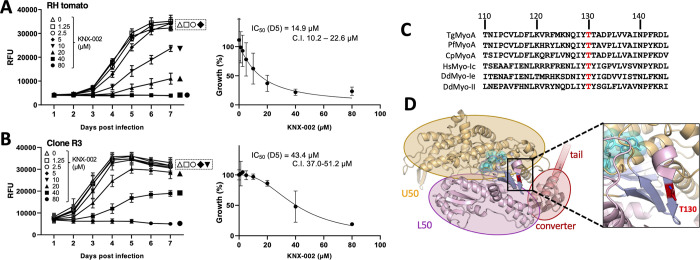
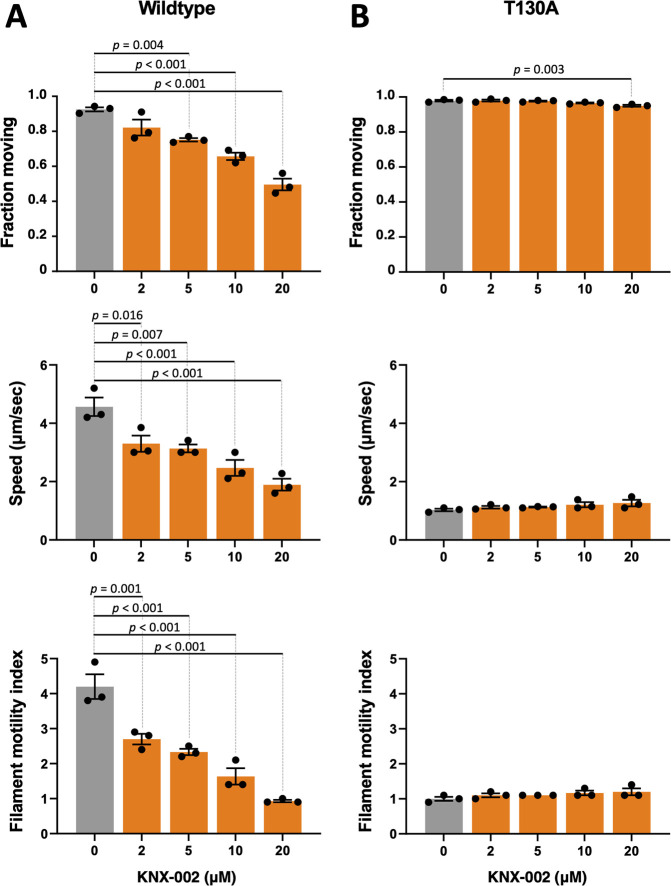
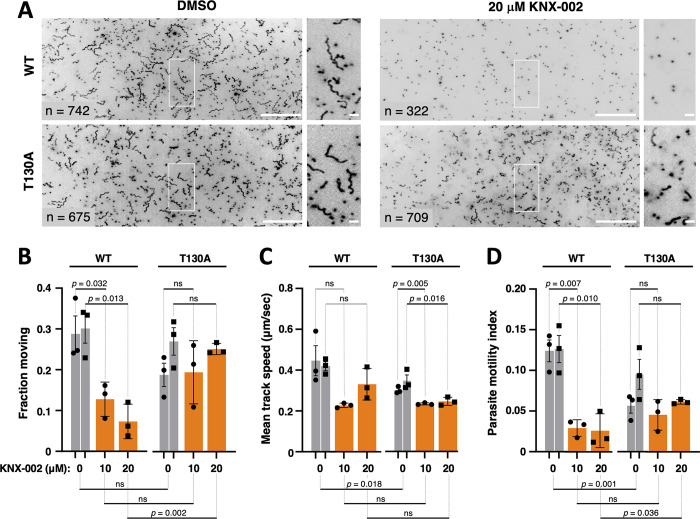
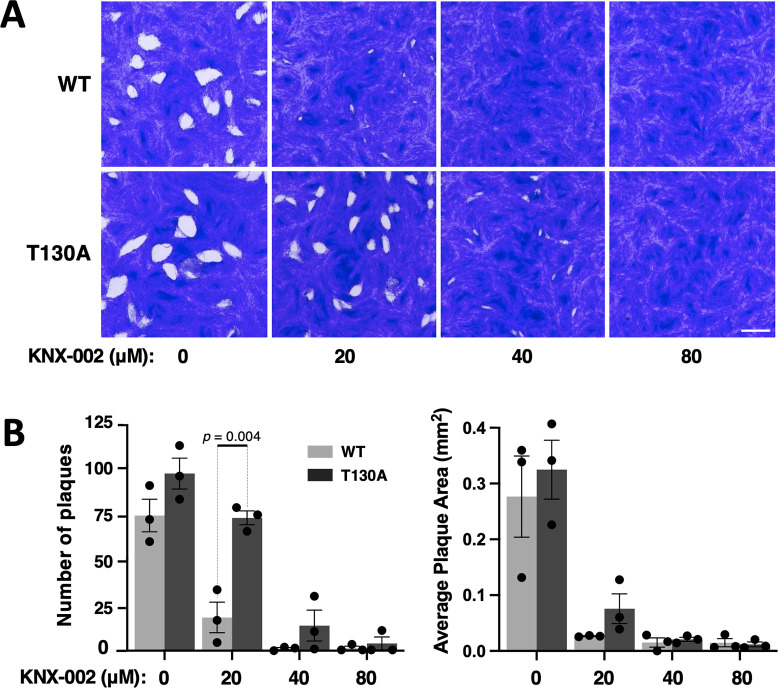
Toxoplasma gondii is a widespread apicomplexan parasite that can cause severe disease in its human hosts. The ability of T. gondii and other apicomplexan parasites to invade into, egress from, and move between cells of the hosts they infect is critical to parasite virulence and disease progression. An unusual and highly conserved parasite myosin motor (TgMyoA) plays a central role in T. gondii motility. The goal of this work was to determine whether the parasite's motility and lytic cycle can be disrupted through pharmacological inhibition of TgMyoA, as an approach to altering disease progression in vivo. To this end, we first sought to identify inhibitors of TgMyoA by screening a collection of 50,000 structurally diverse small molecules for inhibitors of the recombinant motor's actin-activated ATPase activity. The top hit to emerge from the screen, KNX-002, inhibited TgMyoA with little to no effect on any of the vertebrate myosins tested. KNX-002 was also active against parasites, inhibiting parasite motility and growth in culture in a dose-dependent manner. We used chemical mutagenesis, selection in KNX-002, and targeted sequencing to identify a mutation in TgMyoA (T130A) that renders the recombinant motor less sensitive to compound. Compared to wild-type parasites, parasites expressing the T130A mutation showed reduced sensitivity to KNX-002 in motility and growth assays, confirming TgMyoA as a biologically relevant target of KNX-002. Finally, we present evidence that KNX-002 can slow disease progression in mice infected with wild-type parasites, but not parasites expressing the resistance-conferring TgMyoA T130A mutation. Taken together, these data demonstrate the specificity of KNX-002 for TgMyoA, both in vitro and in vivo, and validate TgMyoA as a druggable target in infections with T. gondii. Since TgMyoA is essential for virulence, conserved in apicomplexan parasites, and distinctly different from the myosins found in humans, pharmacological inhibition of MyoA offers a promising new approach to treating the devastating diseases caused by T. gondii and other apicomplexan parasites.
刚地弓形虫是一种广泛存在的顶复门寄生虫,可在人类宿主中引起严重疾病。刚地弓形虫和其他顶复门寄生虫侵入、逸出和在感染宿主的细胞之间移动的能力对寄生虫的毒力和疾病进展至关重要。一种不寻常且高度保守的寄生虫肌球蛋白马达(TgMyoA)在刚地弓形虫的运动中发挥核心作用。这项工作的目标是确定通过药理学抑制 TgMyoA 是否可以破坏寄生虫的运动和裂解周期,从而改变体内疾病的进展。为此,我们首先通过筛选 50,000 种结构多样的小分子文库来寻找 TgMyoA 的抑制剂,以鉴定重组马达的肌动蛋白激活 ATP 酶活性的抑制剂。从筛选中出现的最佳命中物 KNX-002 对 TgMyoA 具有抑制作用,对测试的任何脊椎动物肌球蛋白几乎没有影响。KNX-002 对寄生虫也有效,以剂量依赖性方式抑制寄生虫在培养中的运动和生长。我们使用化学诱变、KNX-002 选择和靶向测序来鉴定 TgMyoA 中的突变(T130A),该突变使重组马达对化合物的敏感性降低。与野生型寄生虫相比,表达 T130A 突变的寄生虫在运动和生长测定中对 KNX-002 的敏感性降低,证实 TgMyoA 是 KNX-002 的生物相关靶标。最后,我们提供了证据表明 KNX-002 可以减缓感染野生型寄生虫的小鼠的疾病进展,但不能减缓表达抗性赋予的 TgMyoA T130A 突变的寄生虫的疾病进展。综上所述,这些数据表明 KNX-002 在体外和体内对 TgMyoA 的特异性,并且验证了 TgMyoA 作为刚地弓形虫感染的可用药靶标。由于 TgMyoA 对毒力至关重要,在顶复门寄生虫中保守,并且与人类中的肌球蛋白明显不同,因此肌球蛋白 A 的药理学抑制为治疗由刚地弓形虫和其他顶复门寄生虫引起的毁灭性疾病提供了一种有前途的新方法。