Lemma Linnea M, Varghese Minu, Ross Tyler D, Thomson Matt, Baskaran Aparna, Dogic Zvonimir
Department of Physics, Brandeis University, 415 South St., Waltham, 02453 MA, USA.
Department of Physics, University of California, Santa Barbara, 93106 CA, USA.
PNAS Nexus. 2023 Apr 12;2(5):pgad130. doi: 10.1093/pnasnexus/pgad130. eCollection 2023 May.
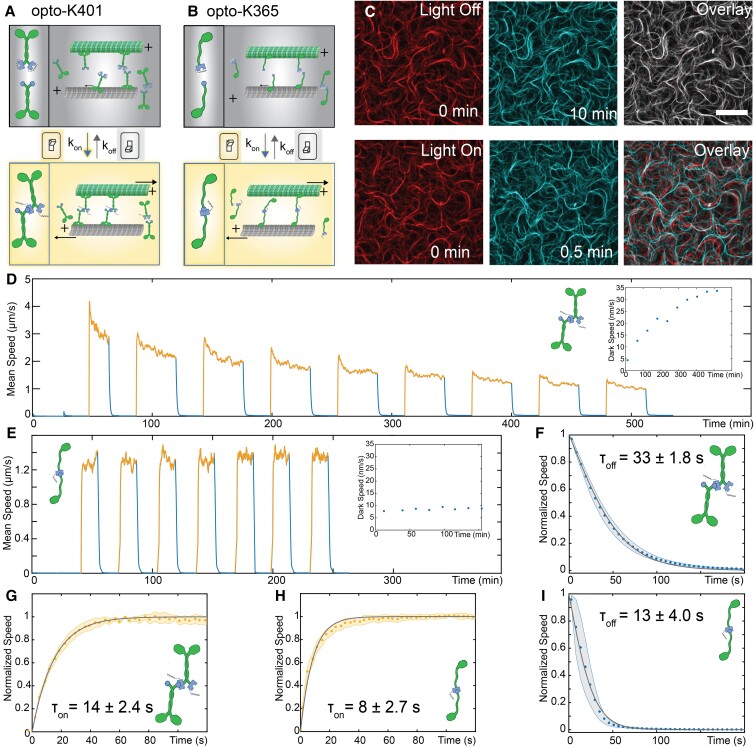
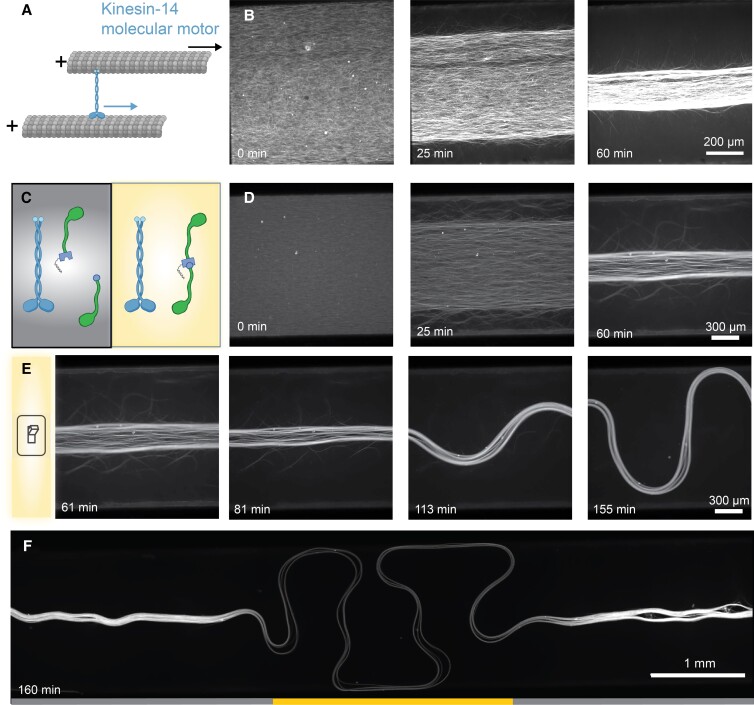
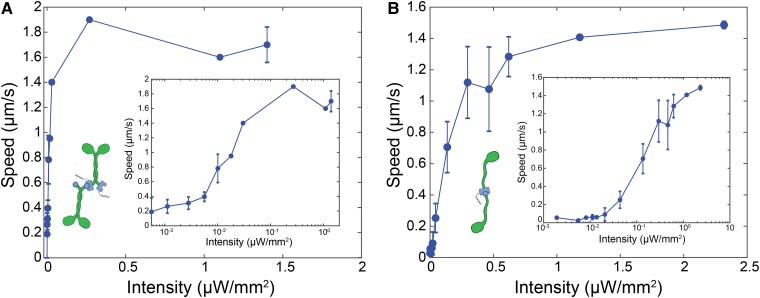
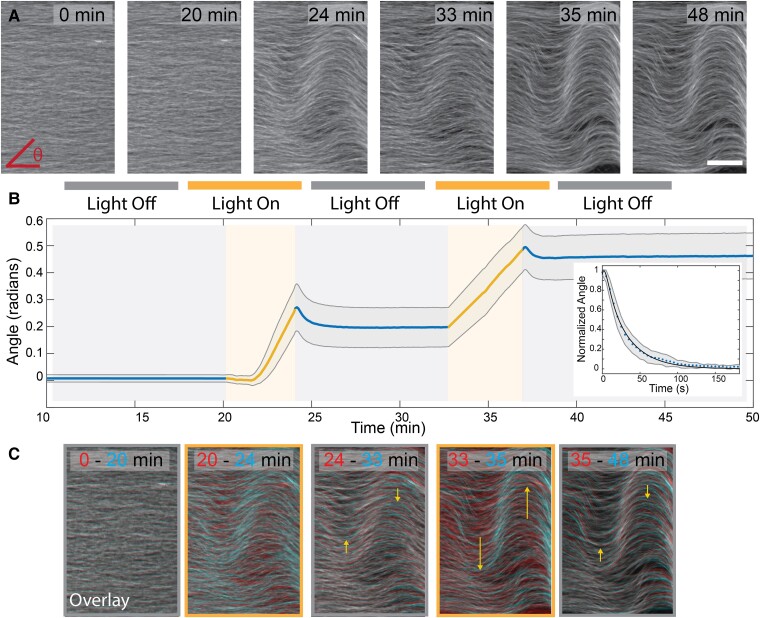
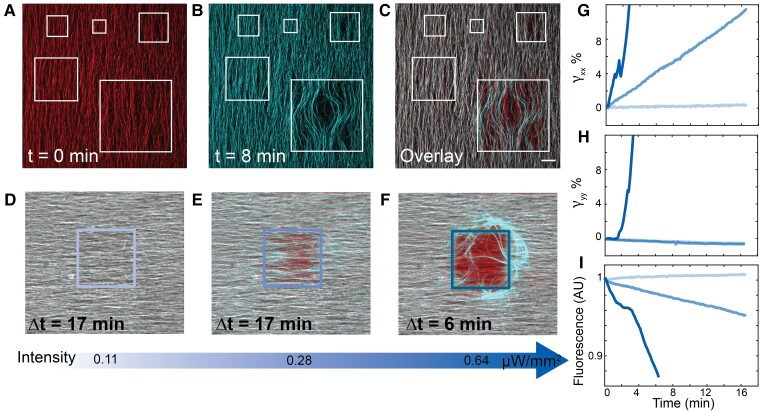
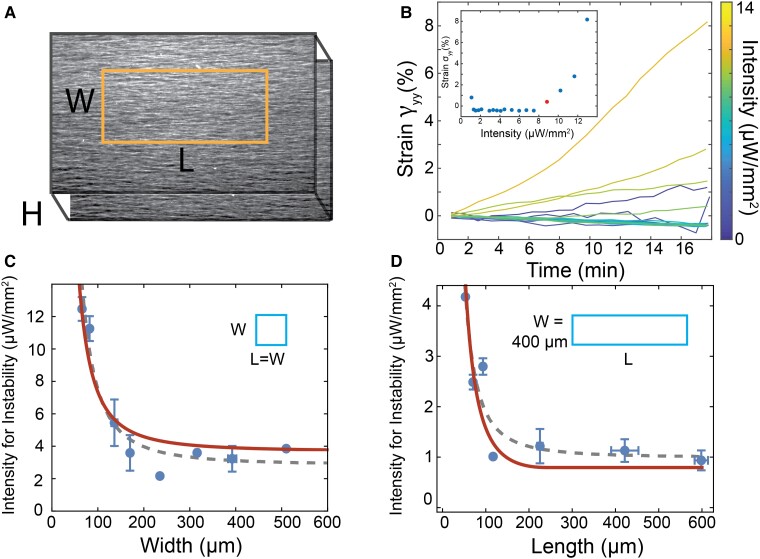
Microtubule-based active fluids exhibit turbulent-like autonomous flows, which are driven by the molecular motor powered motion of filamentous constituents. Controlling active stresses in space and time is an essential prerequisite for controlling the intrinsically chaotic dynamics of extensile active fluids. We design single-headed kinesin molecular motors that exhibit optically enhanced clustering and thus enable precise and repeatable spatial and temporal control of extensile active stresses. Such motors enable rapid, reversible switching between flowing and quiescent states. In turn, spatio-temporal patterning of the active stress controls the evolution of the ubiquitous bend instability of extensile active fluids and determines its critical length dependence. Combining optically controlled clusters with conventional kinesin motors enables one-time switching from contractile to extensile active stresses. These results open a path towards real-time control of the autonomous flows generated by active fluids.
基于微管的活性流体呈现出类似湍流的自主流动,这种流动由丝状成分的分子马达驱动运动所推动。在空间和时间上控制活性应力是控制可伸展活性流体固有混沌动力学的一个基本前提。我们设计了单头驱动蛋白分子马达,其表现出光学增强的聚集,从而能够对可伸展活性应力进行精确且可重复的时空控制。这种马达能够在流动状态和静止状态之间快速、可逆地切换。反过来,活性应力的时空图案化控制了可伸展活性流体普遍存在的弯曲不稳定性的演化,并确定了其临界长度依赖性。将光学控制的聚集体与传统驱动蛋白马达相结合,能够实现从收缩活性应力到可伸展活性应力的一次性切换。这些结果为实时控制活性流体产生的自主流动开辟了一条道路。