Department of Crop Sciences and Agroforestry, Faculty of Tropical AgriSciences, Czech University of Life Sciences Prague, Kamýcká 129, Praha - Suchdol, 165 00, Czech Republic.
Departamento Académico de Ingeniería Civil y Ciencias Básicas, Universidad Nacional Intercutural de Quillabamba, El Arenal s/n, Cusco, Peru.
J Ethnobiol Ethnomed. 2023 May 12;19(1):16. doi: 10.1186/s13002-023-00586-4.
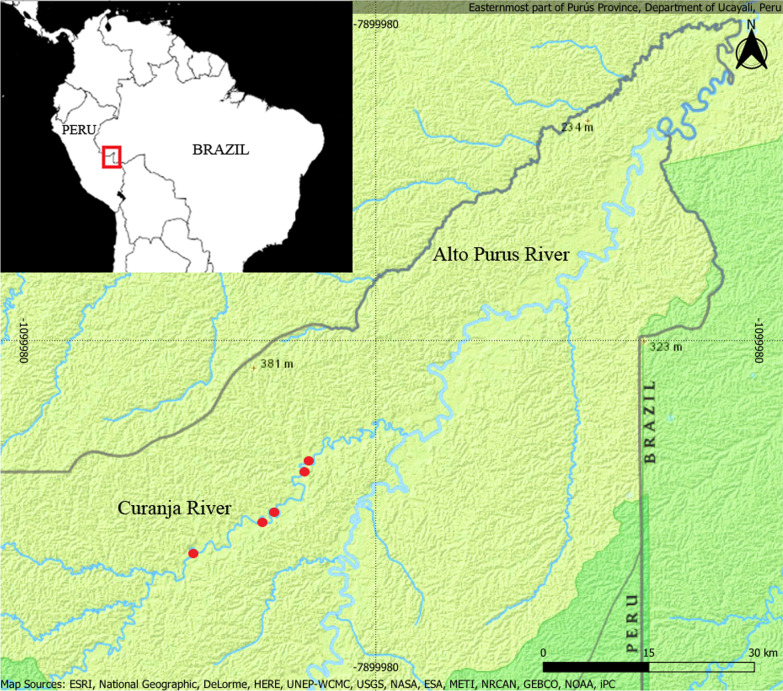
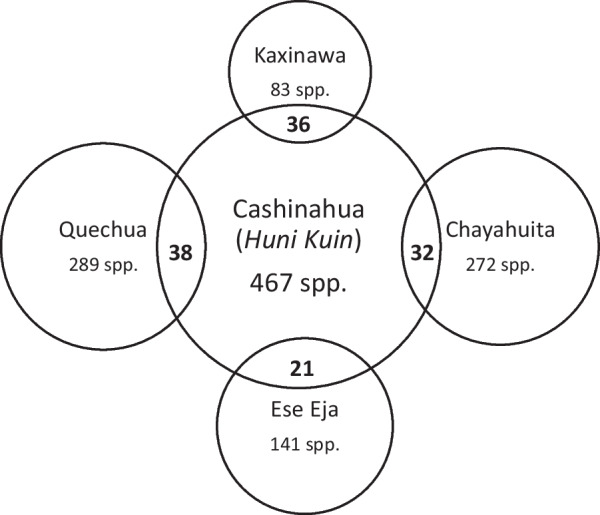
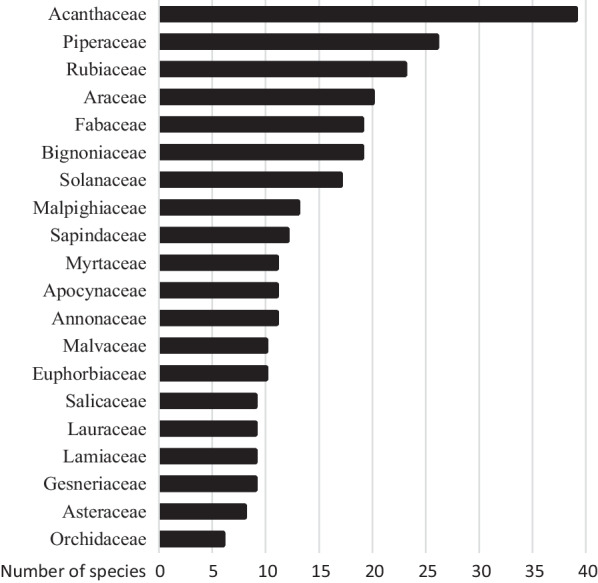
This study aims to document the diversity of medicinal plants used by the Cashinahua people (also known as Huni Kuin) of the Curanja River, as well as describe and compare their uses with pharmacological and phytochemical records from previously published studies. The ethnic has been studied to a limited extent from an ethnobotanical perspective. The study area is located in the Ucayali region, eastern Central Amazon, where ancestral knowledge is preserved due to the limited accessibility of the region. Between November 2010 and June 2015, a total of 11 months were spent on the survey, which included a short-term visit to complete voucher specimen collection and taxonomic identification. We conducted semi-structured interviews with 10 Cashinahua traditional healers and 10 midwives. Vernacular names, ethnomedicinal uses, plant parts used and forms of preparation and administration were recorded. Ethnopharmacological, pharmacological and phytochemical uses were checked through survey of the previously published papers indexed on Web of Science databases between 2018 and 2022. We obtained data on 467 plant taxa, among which we highlighted 79 species unreported or rarely cited for medicinal use or phytochemical analysis. These species were spread over 60 genera and 42 botanical families, with Acanthaceae being the most represented. Leaves were used the most frequently (93.56%). Among the 79 species, the most reported therapeutic activities involved pregnancy and birth disorders (13.84%), followed by poisonings, infections and infestations. The predominant application form was external (87%). Our study indicates that there are locally valuable species that have not yet been studied for their medical potential.
本研究旨在记录卡西亚瓦拉人(也称为胡尼库因)使用的药用植物多样性,并描述和比较其用途与先前发表的药理学和植物化学研究记录。从民族植物学的角度来看,对该民族的研究是有限的。研究区域位于乌卡亚利地区,即亚马逊中部的东部,由于该地区的通行能力有限,因此保留了祖先的知识。在 2010 年 11 月至 2015 年 6 月期间,总共进行了 11 个月的调查,其中包括一次短期访问,以完成凭证标本的采集和分类鉴定。我们对 10 位卡西亚瓦拉传统治疗师和 10 位助产士进行了半结构式访谈。记录了土名、民族医学用途、使用的植物部位以及制备和给药形式。通过对 2018 年至 2022 年期间索引在 Web of Science 数据库中的先前发表的论文进行调查,检查了民族药理学、药理学和植物化学用途。我们获得了 467 种植物类群的数据,其中突出了 79 种未报告或很少被引用用于药用或植物化学分析的物种。这些物种分布在 60 个属和 42 个科中,其中以爵床科最为常见。叶子的使用最为频繁(93.56%)。在 79 种物种中,报道最多的治疗活动涉及妊娠和分娩障碍(13.84%),其次是中毒、感染和寄生虫感染。最主要的应用形式是外部(87%)。我们的研究表明,有一些具有地方价值的物种尚未被研究其医疗潜力。