Istituto Nazionale Tumori IRCCS Fondazione "G. Pascale", Naples, Italy.
Hematology-Oncology and Stem Cell Transplantation Unit, Istituto Nazionale Tumori IRCCS Fondazione "G. Pascale", Naples, Italy.
J Transl Med. 2023 May 11;21(1):318. doi: 10.1186/s12967-023-04184-6.
Nivolumab is an anti-PD1 antibody that has dramatically improved metastatic melanoma patients' outcomes. Nevertheless, many patients are resistant to PD-1 inhibition, occasionally experiencing severe off-target immune toxicity. In addition, no robust and reproducible biomarkers have yet been validated to identify the correct selection of patients who will benefit from anti-PD-1 treatment avoiding unwanted side effects. However, the strength of CD26 expression on CD4 T lymphocytes permits the characterization of three subtypes with variable degrees of responsiveness to tumors, suggesting that the presence of CD26-expressing T cells in patients might be a marker of responsiveness to PD-1-based therapies.
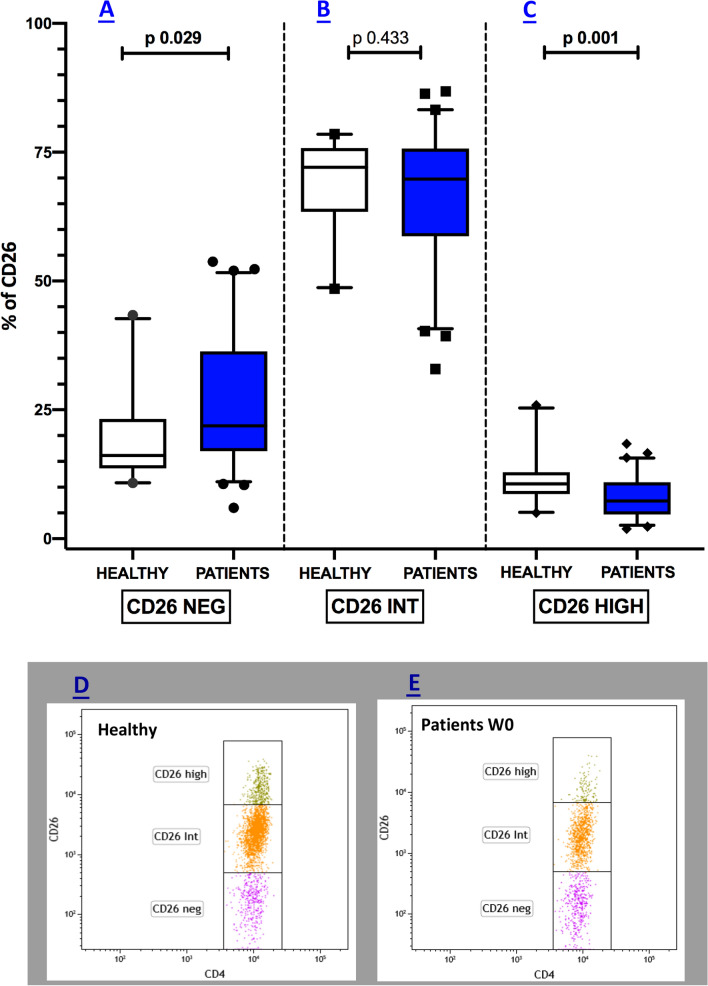
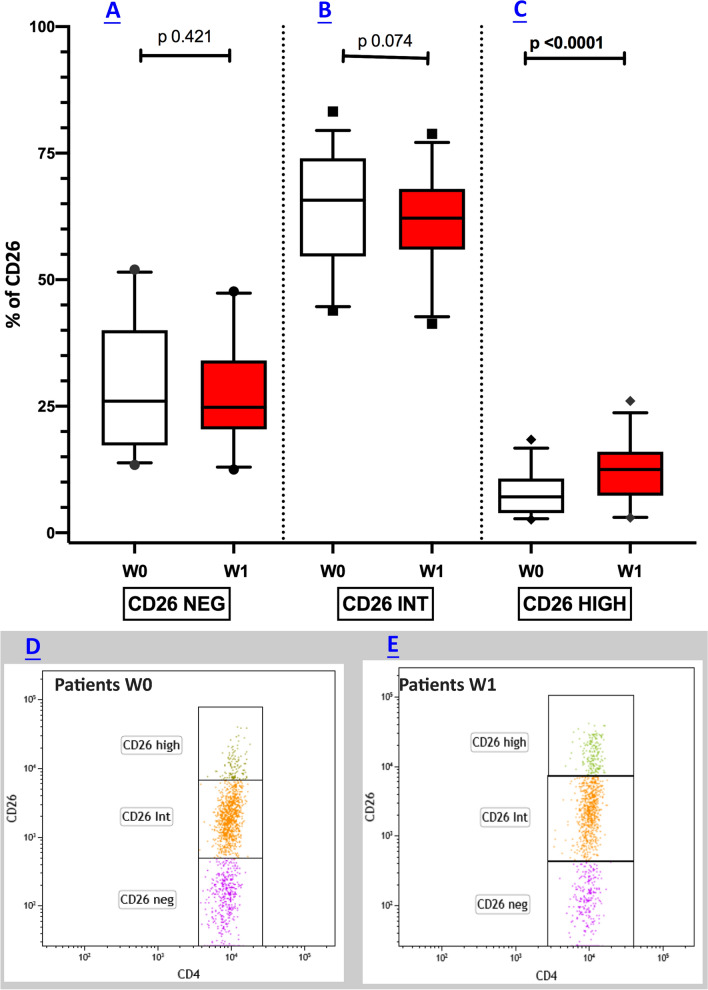
The frequency distribution of peripheral blood CD26-expressing cells was investigated employing multi-parametric flow cytometry in 69 metastatic melanoma patients along with clinical characteristics and blood count parameters at baseline (W0) and compared to 20 age- and sex-matched healthy controls. Percentages of baseline CD4CD26 T cells were correlated with the outcome after nivolumab treatment. In addition, the frequency of CD4CD26 T cells at W0 was compared with those obtained after 12 weeks (W1) of therapy in a sub-cohort of 33 patients.
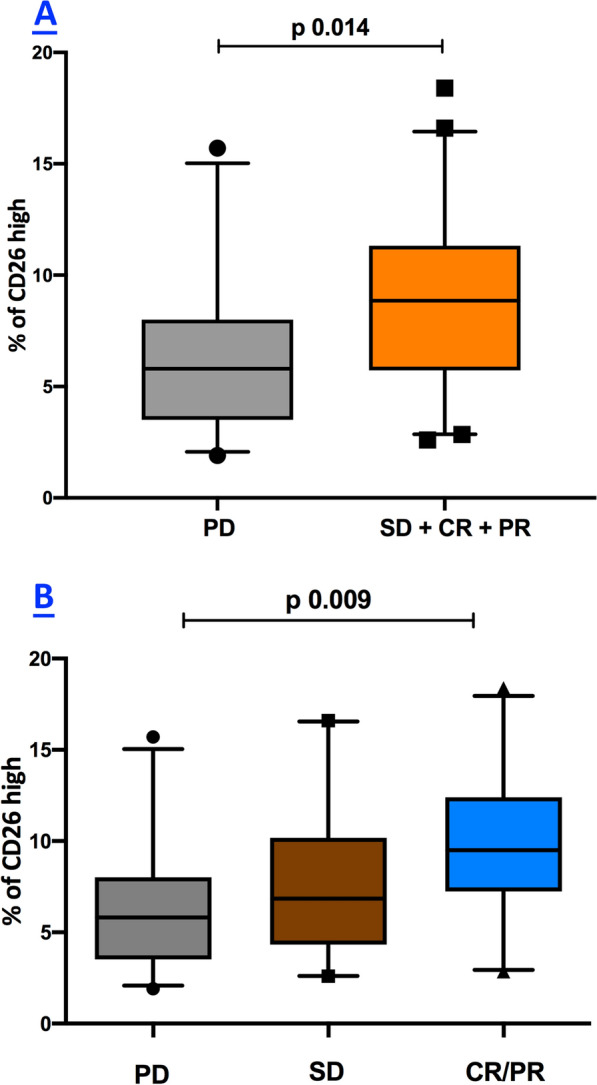
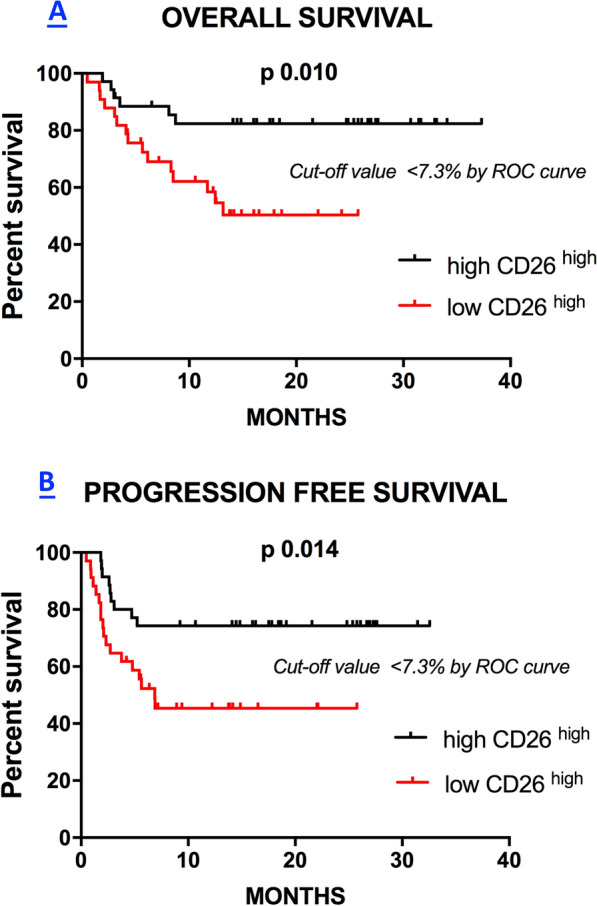
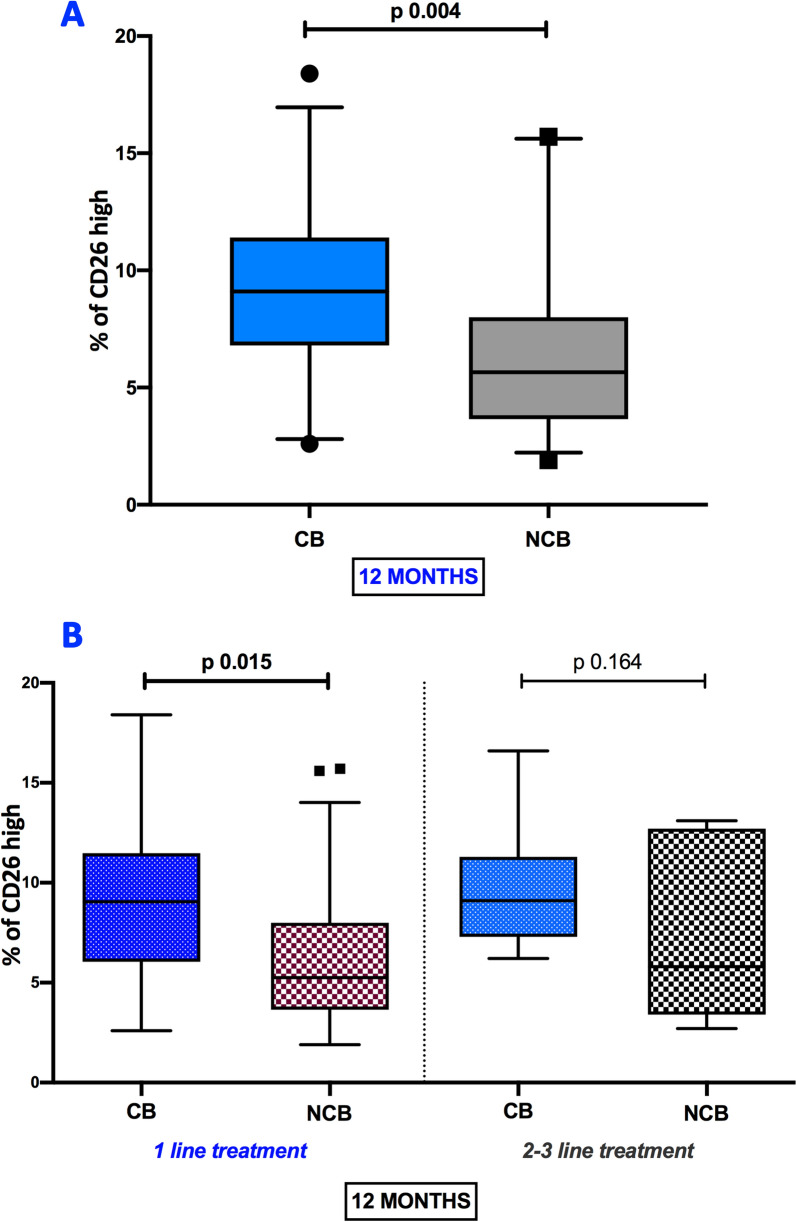
Circulating CD4CD26 T cells were significantly reduced in melanoma patients compared to healthy subjects (p = 0.001). In addition, a significant association was observed between a low baseline percentage of CD4CD26 T cells (< 7.3%) and clinical outcomes, measured as overall survival (p = 0.010) and progression-free survival (p = 0.014). Moreover, patients with clinical benefit from nivolumab therapy had significantly higher frequencies of circulating CD4CD26 T cells than patients with non-clinical benefit (p = 0.004) at 12 months. Also, a higher pre-treatment proportion of circulating CD4CD26 T cells was correlated with Disease Control Rate (p = 0.014) and best Overall Response Rate (p = 0.009) at 12 months. Interestingly, after 12 weeks (W1) of nivolumab treatment, percentages of CD4CD26 T cells were significantly higher in comparison with the frequencies measured at W0 (p < 0.0001), aligning the cell counts with the ranges seen in the blood of healthy subjects.
Our study firstly demonstrates that peripheral blood circulating CD4CD26 T lymphocytes represent potential biomarkers whose perturbations are associated with reduced survival and worse clinical outcomes in melanoma patients.
纳武利尤单抗是一种抗 PD-1 抗体,显著改善了转移性黑色素瘤患者的预后。然而,许多患者对 PD-1 抑制有耐药性,偶尔会出现严重的脱靶免疫毒性。此外,尚未有可靠且可重复的生物标志物来确定正确选择将从抗 PD-1 治疗中获益并避免不必要的副作用的患者。然而,CD4 T 淋巴细胞上 CD26 的表达强度允许对具有不同肿瘤反应程度的三个亚型进行特征描述,表明患者中存在表达 CD26 的 T 细胞可能是对 PD-1 为基础的治疗有反应的标志物。
在 69 名转移性黑色素瘤患者中,采用多参数流式细胞术检测外周血 CD26 表达细胞的频率分布,并结合基线(W0)的临床特征和血细胞计数参数与 20 名年龄和性别匹配的健康对照者进行比较。将基线时 CD4CD26 T 细胞的百分比与纳武利尤单抗治疗后的结果进行相关性分析。此外,在 33 名患者的亚组中,比较了 W0 时的 CD4CD26 T 细胞频率与治疗 12 周(W1)后的频率。
与健康受试者相比,黑色素瘤患者的循环 CD4CD26 T 细胞明显减少(p=0.001)。此外,低基线时 CD4CD26 T 细胞的百分比(<7.3%)与临床结果,包括总生存期(p=0.010)和无进展生存期(p=0.014)之间存在显著相关性。此外,与无临床获益的患者相比,从纳武利尤单抗治疗中获益的患者在 12 个月时具有显著更高的循环 CD4CD26 T 细胞频率(p=0.004)。此外,较高的治疗前循环 CD4CD26 T 细胞比例与 12 个月时疾病控制率(p=0.014)和最佳总体反应率(p=0.009)相关。有趣的是,在纳武利尤单抗治疗 12 周(W1)后,与 W0 时测量的频率相比,CD4CD26 T 细胞的百分比显著升高(p<0.0001),使细胞计数与健康受试者血液中的范围相匹配。
我们的研究首次表明,外周血循环 CD4CD26 T 淋巴细胞是潜在的生物标志物,其波动与黑色素瘤患者生存时间缩短和临床结局恶化相关。