Institute of Biology, University of Szczecin, Wąska 13, 71-415, Szczecin, Poland.
Planta. 2023 May 12;257(6):118. doi: 10.1007/s00425-023-04145-9.
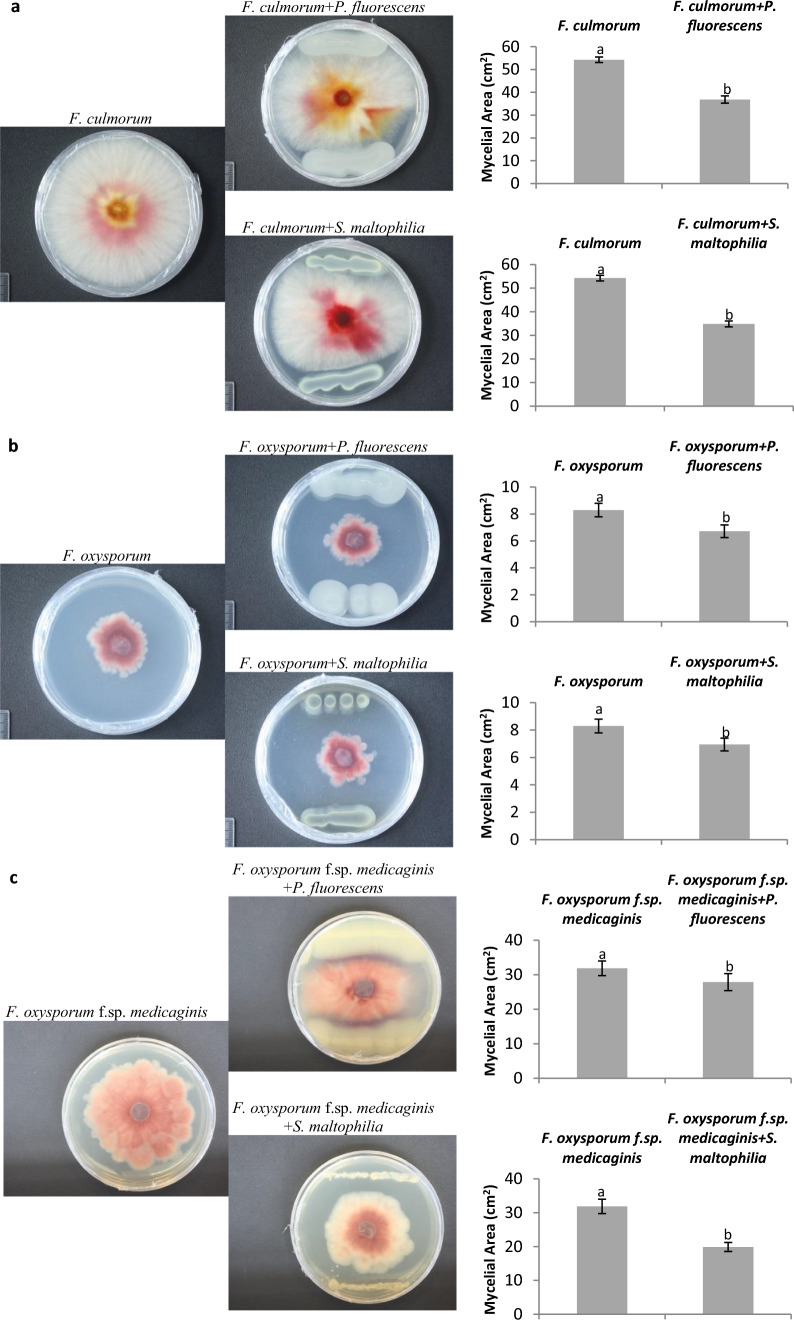
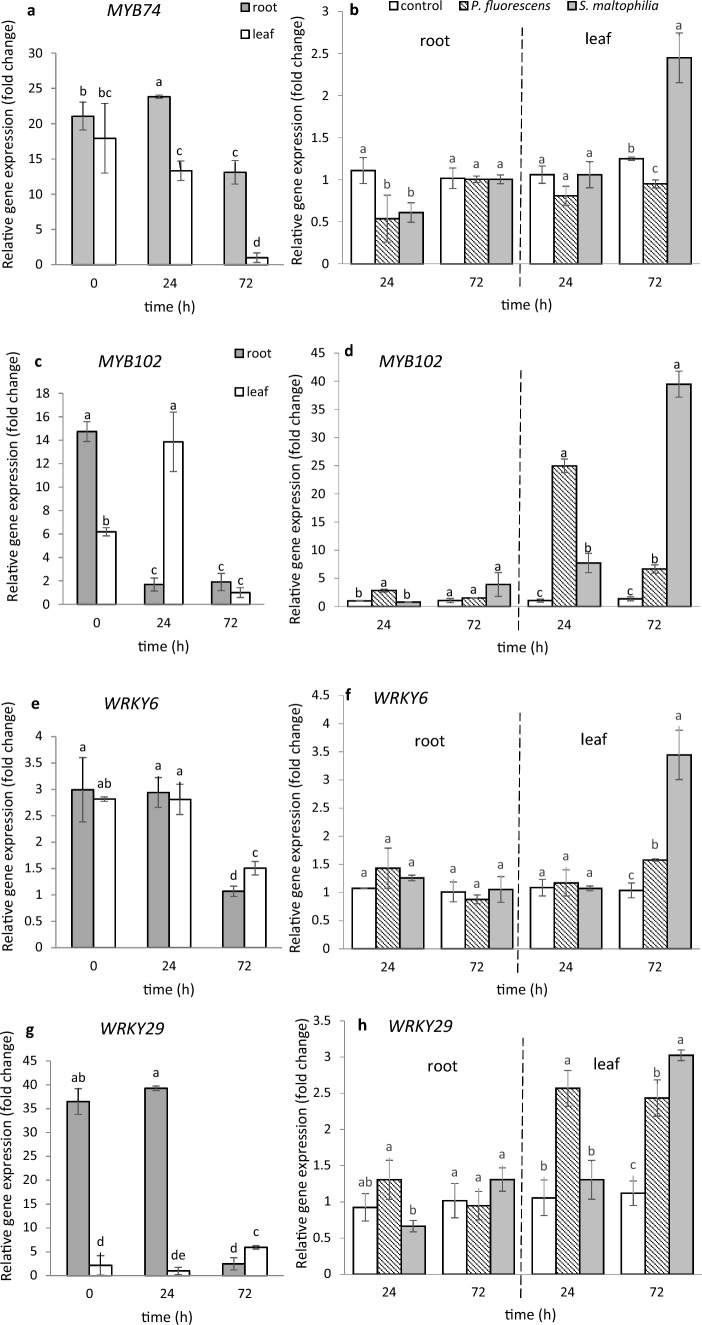
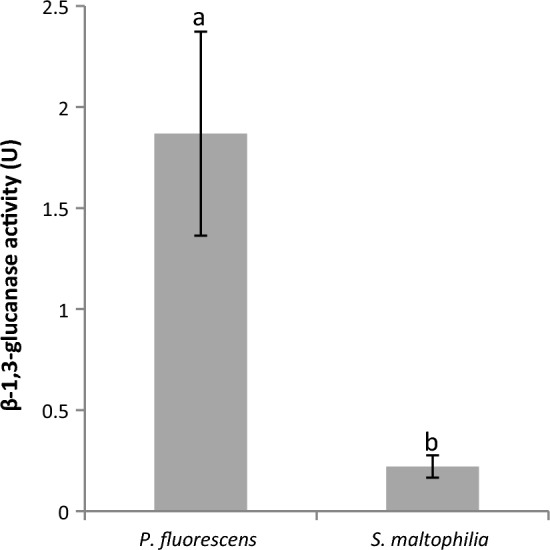
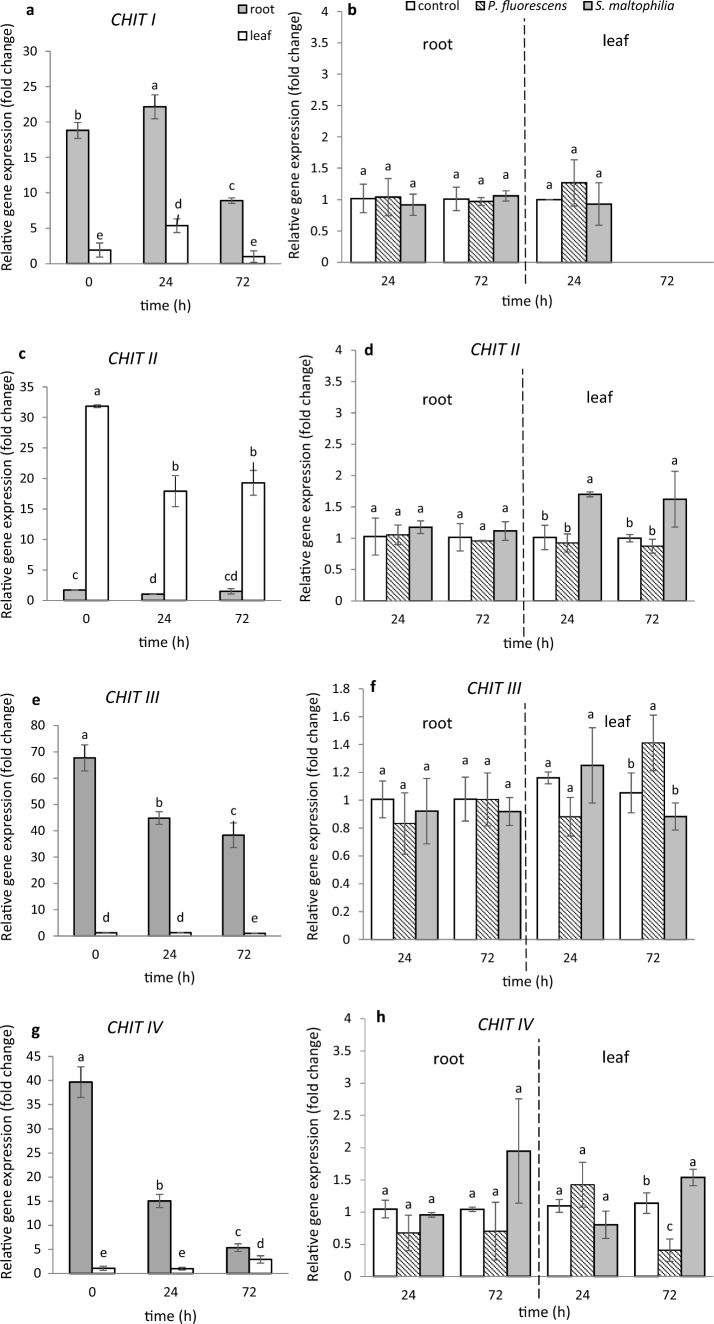
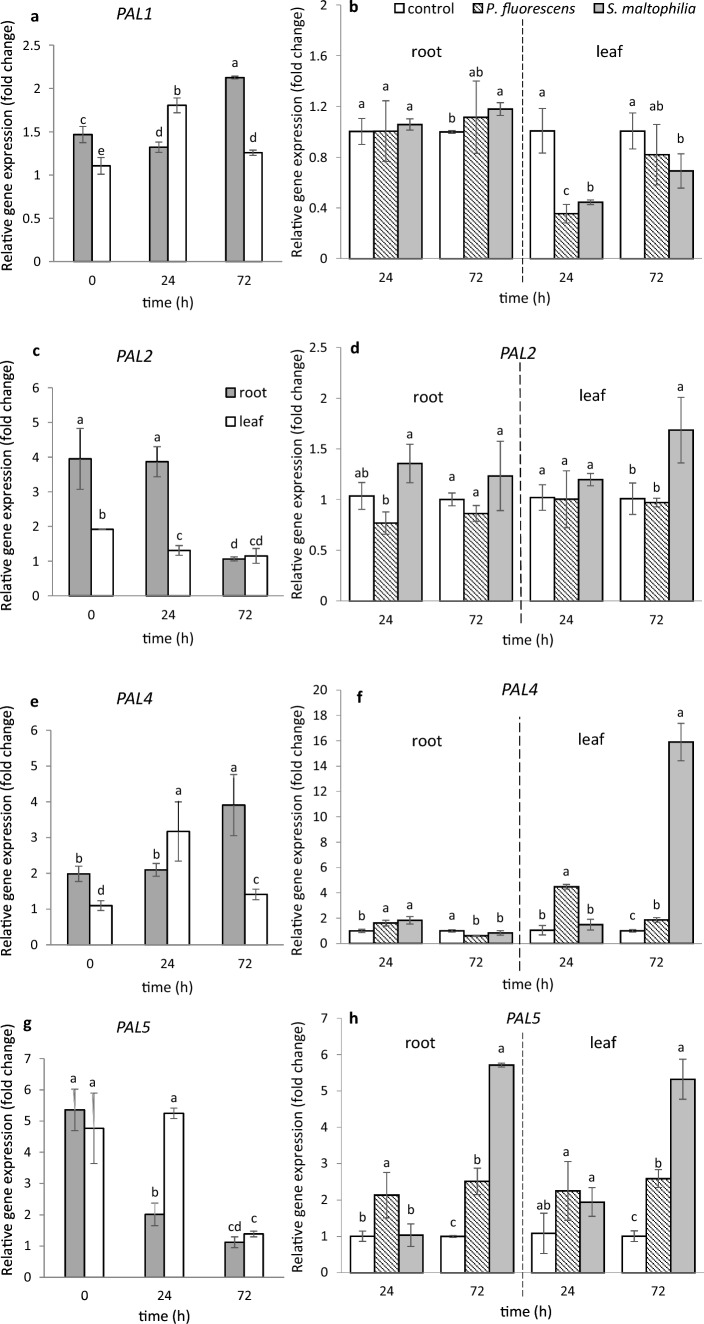
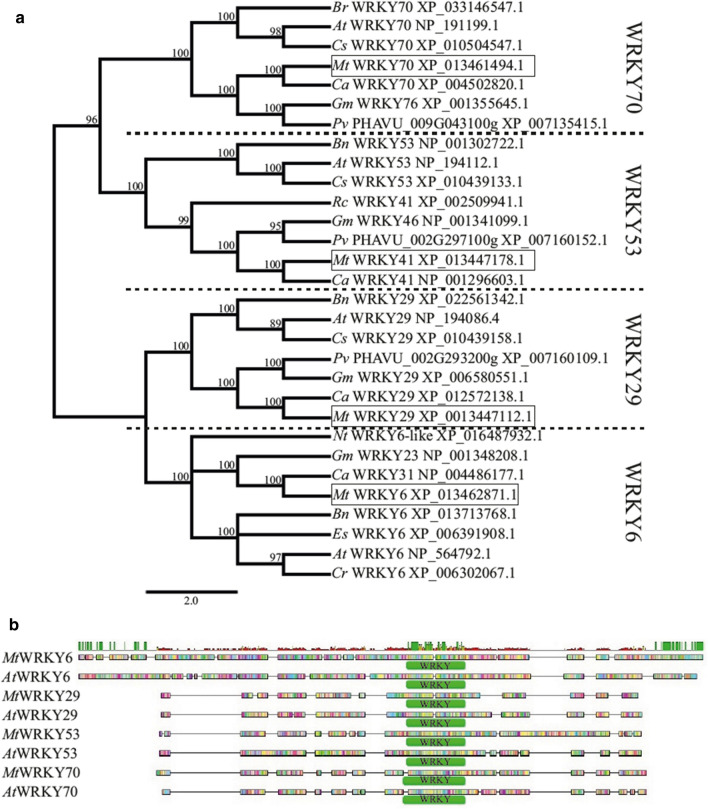
PGPRs: P. fluorescens Ms9N and S. maltophilia Ll4 inhibit in vitro growth of three legume fungal pathogens from the genus Fusarium. One or both trigger up-regulation of some genes (CHIT, GLU, PAL, MYB, WRKY) in M. truncatula roots and leaves in response to soil inoculation. Pseudomonas fluorescens (referred to as Ms9N; GenBank accession No. MF618323, not showing chitinase activity) and Stenotrophomonas maltophilia (Ll4; GenBank accession No. MF624721, showing chitinase activity), previously identified as promoting growth rhizobacteria of Medicago truncatula, were found, during an in vitro experiment, to exert an inhibitory effect on three soil-borne fungi: Fusarium culmorum Cul-3, F. oxysporum 857 and F. oxysporum f. sp. medicaginis strain CBS 179.29, responsible for serious diseases of most legumes including M. truncatula. S. maltophilia was more active than P. fluorescens in suppressing the mycelium growth of two out of three Fusarium strains. Both bacteria showed β-1,3-glucanase activity which was about 5 times higher in P. fluorescens than in S. maltophilia. Upon soil treatment with a bacterial suspension, both bacteria, but particularly S. maltophilia, brought about up-regulation of plant genes encoding chitinases (MtCHITII, MtCHITIV, MtCHITV), glucanases (MtGLU) and phenylalanine ammonia lyases (MtPAL2, MtPAL4, MtPAL5). Moreover, the bacteria up-regulate some genes from the MYB (MtMYB74, MtMYB102) and WRKY (MtWRKY6, MtWRKY29, MtWRKY53, MtWRKY70) families which encode TFs in M. truncatula roots and leaves playing multiple roles in plants, including a defense response. The effect depended on the bacterium species and the plant organ. This study provides novel information about effects of two M. truncatula growth-promoting rhizobacteria strains and suggests that both have a potential to be candidates for PGPR inoculant products on account of their ability to inhibit in vitro growth of Fusarium directly and indirectly by up-regulation of some defense priming markers such as CHIT, GLU and PAL genes in plants. This is also the first study of the expression of some MYB and WRKY genes in roots and leaves of M. truncatula upon soil treatment with two PGPR suspensions.
PGPRs:荧光假单胞菌 Ms9N 和嗜麦芽寡养单胞菌 Ll4 抑制来自镰刀菌属的三种豆科真菌病原体在体外的生长。一种或两种都能触发 M. truncatula 根和叶中一些基因(CHIT、GLU、PAL、MYB、WRKY)的上调,以响应土壤接种。荧光假单胞菌(称为 Ms9N;GenBank 登录号 MF618323,不显示几丁质酶活性)和嗜麦芽寡养单胞菌(Ll4;GenBank 登录号 MF624721,显示几丁质酶活性),先前被鉴定为促进 M. truncatula 生长的根际细菌,在体外实验中发现,对三种土壤传播真菌具有抑制作用:尖孢镰刀菌 Cul-3、F. oxysporum 857 和 F. oxysporum f. sp. medicaginis 菌株 CBS 179.29,负责包括 M. truncatula 在内的大多数豆科植物的严重疾病。与荧光假单胞菌相比,嗜麦芽寡养单胞菌在抑制三种镰刀菌菌株中的两种菌丝生长方面更为活跃。两种细菌都显示出β-1,3-葡聚糖酶活性,荧光假单胞菌的活性比嗜麦芽寡养单胞菌高约 5 倍。在细菌悬浮液处理土壤后,两种细菌,特别是嗜麦芽寡养单胞菌,使植物编码几丁质酶(MtCHITII、MtCHITIV、MtCHITV)、葡聚糖酶(MtGLU)和苯丙氨酸解氨酶(MtPAL2、MtPAL4、MtPAL5)的基因上调。此外,细菌还使 M. truncatula 根和叶中的一些 MYB(MtMYB74、MtMYB102)和 WRKY(MtWRKY6、MtWRKY29、MtWRKY53、MtWRKY70)家族的基因上调,这些基因编码在植物中发挥多种作用的 TF,包括防御反应。这种效果取决于细菌种类和植物器官。这项研究提供了关于两种促进 M. truncatula 生长的根际细菌菌株的影响的新信息,并表明由于它们能够通过直接和间接上调植物中一些防御启动标记物(如 CHIT、GLU 和 PAL 基因)来抑制 Fusarium 的体外生长,因此它们都有可能成为 PGPR 接种产品的候选物。这也是首次研究在土壤处理两种 PGPR 悬浮液后,M. truncatula 根和叶中一些 MYB 和 WRKY 基因的表达。