de Mouzon Charlotte, Leboucher Gérard
Laboratoire Ethologie Cognition Développement, Université Paris Nanterre, 92000 Nanterre, France.
EthoCat-Cat Behaviour Research and Consulting Institute, 33000 Bordeaux, France.
Animals (Basel). 2023 May 3;13(9):1528. doi: 10.3390/ani13091528.
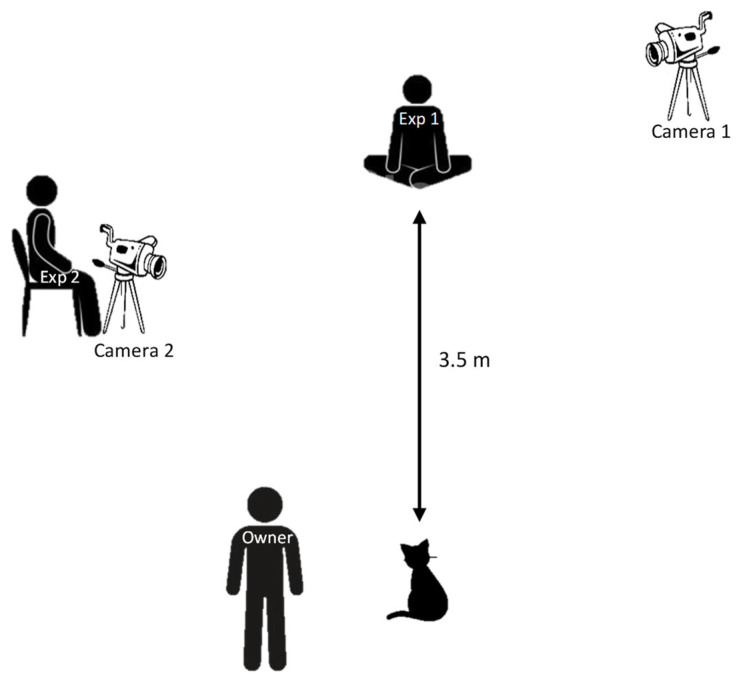
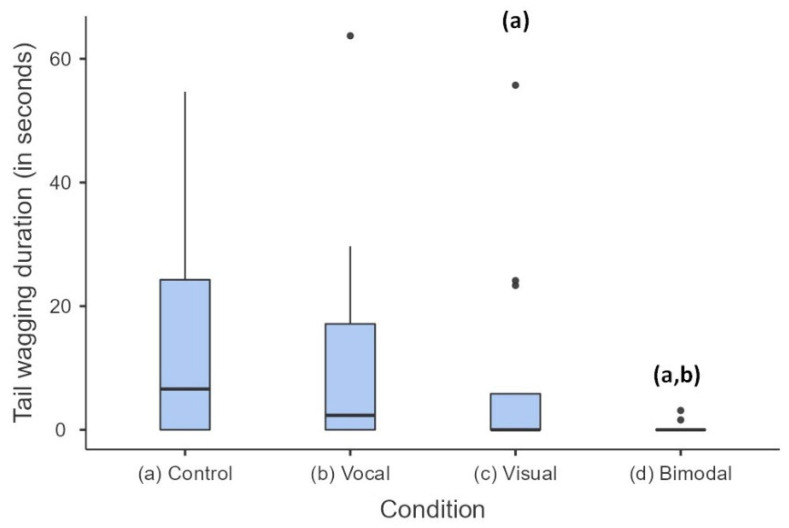
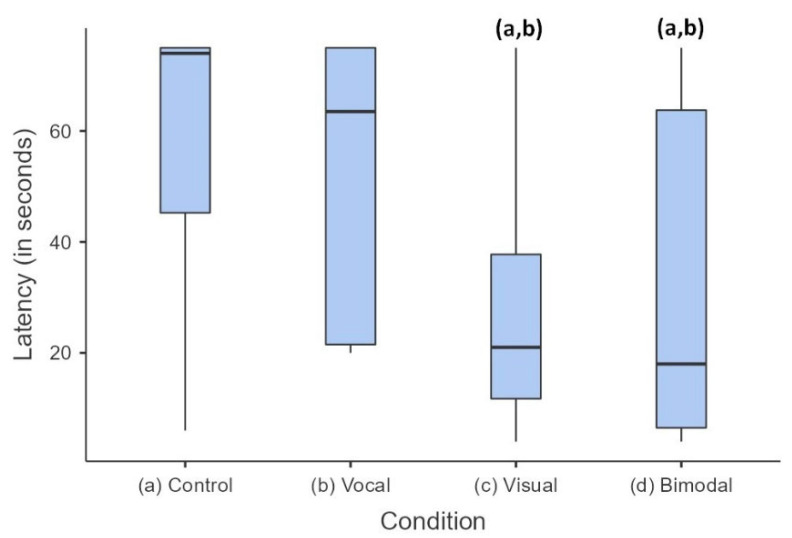
Across all species, communication implies that an emitter sends signals to a receiver, through one or more channels. Cats can integrate visual and auditory signals sent by humans and modulate their behaviour according to the valence of the emotion perceived. However, the specific patterns and channels governing cat-to-human communication are poorly understood. This study addresses whether, in an extraspecific interaction, cats are sensitive to the communication channel used by their human interlocutor. We examined three types of interactions-vocal, visual, and bimodal-by coding video clips of 12 cats living in cat cafés. In a fourth (control) condition, the human interlocutor refrained from emitting any communication signal. We found that the modality of communication had a significant effect on the latency in the time taken for cats to approach the human experimenter. Cats interacted significantly faster to visual and bimodal communication compared to the "no communication" pattern, as well as to vocal communication. In addition, communication modality had a significant effect on tail-wagging behaviour. Cats displayed significantly more tail wagging when the experimenter engaged in no communication (control condition) compared to visual and bimodal communication modes, indicating that they were less comfortable in this control condition. Cats also displayed more tail wagging in response to vocal communication compared to the bimodal communication. Overall, our data suggest that cats display a marked preference for both visual and bimodal cues addressed by non-familiar humans compared to vocal cues only. Results arising from the present study may serve as a basis for practical recommendations to navigate the codes of human-cat interactions.
在所有物种中,交流意味着发出者通过一个或多个渠道向接收者发送信号。猫可以整合人类发出的视觉和听觉信号,并根据所感知到的情感效价来调节它们的行为。然而,关于猫与人类交流的具体模式和渠道,我们知之甚少。本研究探讨在种间互动中,猫是否对人类对话者使用的交流渠道敏感。我们通过对生活在猫咪咖啡馆的12只猫的视频片段进行编码,研究了三种互动类型——声音、视觉和多模态。在第四种(对照)条件下,人类对话者不发出任何交流信号。我们发现,交流方式对猫接近人类实验者所需的延迟时间有显著影响。与“无交流”模式以及声音交流相比,猫对视觉和多模态交流的反应明显更快。此外,交流方式对摇尾行为有显著影响。与视觉和多模态交流模式相比,当实验者不进行交流(对照条件)时,猫摇尾的次数明显更多,这表明它们在这种对照条件下不太自在。与多模态交流相比,猫对声音交流的反应也表现出更多的摇尾行为。总体而言,我们的数据表明,与仅声音线索相比,猫对不熟悉的人类发出的视觉和多模态线索表现出明显的偏好。本研究的结果可为指导人类与猫互动的准则提供实际建议的基础。