Department of Pharmacology and Clinical Pharmacology, I. Horbachevsky Ternopil National Medical University, 46001 Ternopil, Ukraine.
Department of Medical Biochemistry, I. Horbachevsky Ternopil National Medical University, 46001 Ternopil, Ukraine.
Cells. 2023 May 2;12(9):1297. doi: 10.3390/cells12091297.
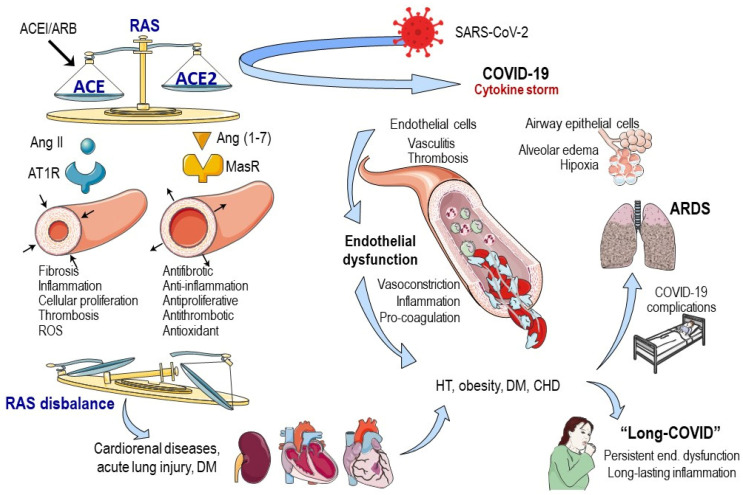
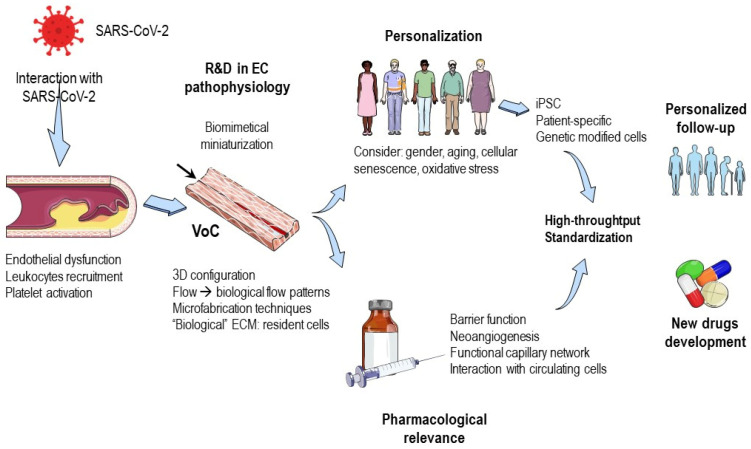
Coronavirus disease (COVID-19) causes various vascular and blood-related reactions, including exacerbated responses. The role of endothelial cells in this acute response is remarkable and may remain important beyond the acute phase. As we move into a post-COVID-19 era (where most people have been or will be infected by the SARS-CoV-2 virus), it is crucial to define the vascular consequences of COVID-19, including the long-term effects on the cardiovascular system. Research is needed to determine whether chronic endothelial dysfunction following COVID-19 could lead to an increased risk of cardiovascular and thrombotic events. Endothelial dysfunction could also serve as a diagnostic and therapeutic target for post-COVID-19. This review covers these topics and examines the potential of emerging vessel-on-a-chip technology to address these needs. Vessel-on-a-chip would allow for the study of COVID-19 pathophysiology in endothelial cells, including the analysis of SARS-CoV-2 interactions with endothelial function, leukocyte recruitment, and platelet activation. "Personalization" could be implemented in the models through induced pluripotent stem cells, patient-specific characteristics, or genetic modified cells. Adaptation for massive testing under standardized protocols is now possible, so the chips could be incorporated for the personalized follow-up of the disease or its sequalae (long COVID) and for the research of new drugs against COVID-19.
冠状病毒病(COVID-19)引起各种血管和血液相关反应,包括加重反应。内皮细胞在这种急性反应中的作用非常显著,甚至在急性期过后可能仍然很重要。随着我们进入后 COVID-19 时代(大多数人已经或将要被 SARS-CoV-2 病毒感染),定义 COVID-19 的血管后果至关重要,包括对心血管系统的长期影响。需要研究慢性 COVID-19 后内皮功能障碍是否会导致心血管和血栓事件风险增加。内皮功能障碍也可以作为 COVID-19 的诊断和治疗靶点。这篇综述涵盖了这些主题,并探讨了新兴的芯片上血管技术满足这些需求的潜力。芯片上血管可用于研究内皮细胞中的 COVID-19 病理生理学,包括分析 SARS-CoV-2 与内皮功能、白细胞募集和血小板激活的相互作用。通过诱导多能干细胞、患者特异性特征或基因修饰细胞,可以在模型中实现“个性化”。现在已经可以在标准化方案下进行大规模测试的适应性,因此可以将芯片用于疾病或其后遗症(长 COVID)的个性化随访,以及针对 COVID-19 的新药研究。