Department of Dermatology, University at Buffalo, Buffalo, NY, United States.
Front Immunol. 2023 Apr 25;14:1159351. doi: 10.3389/fimmu.2023.1159351. eCollection 2023.
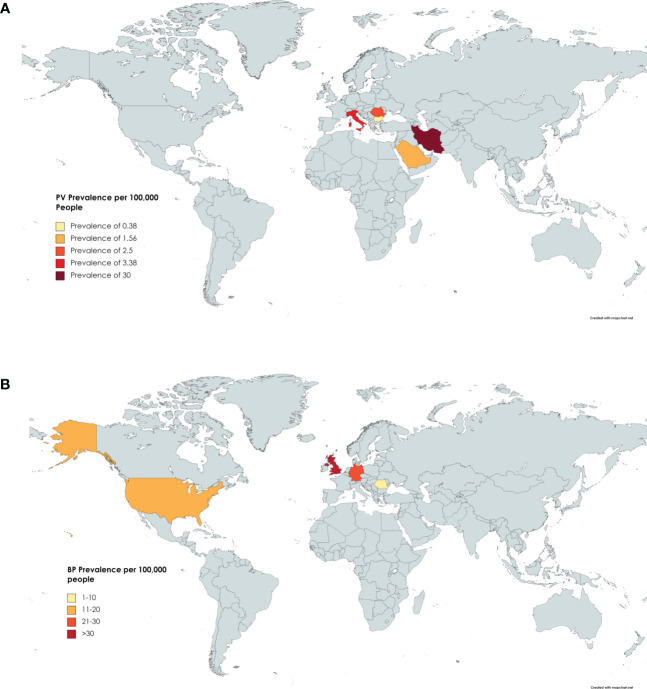
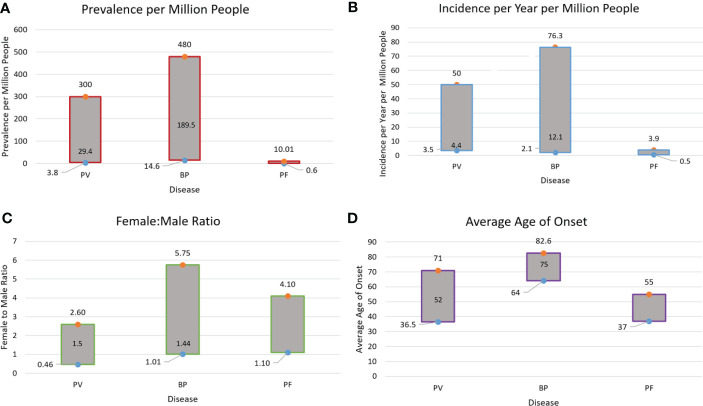
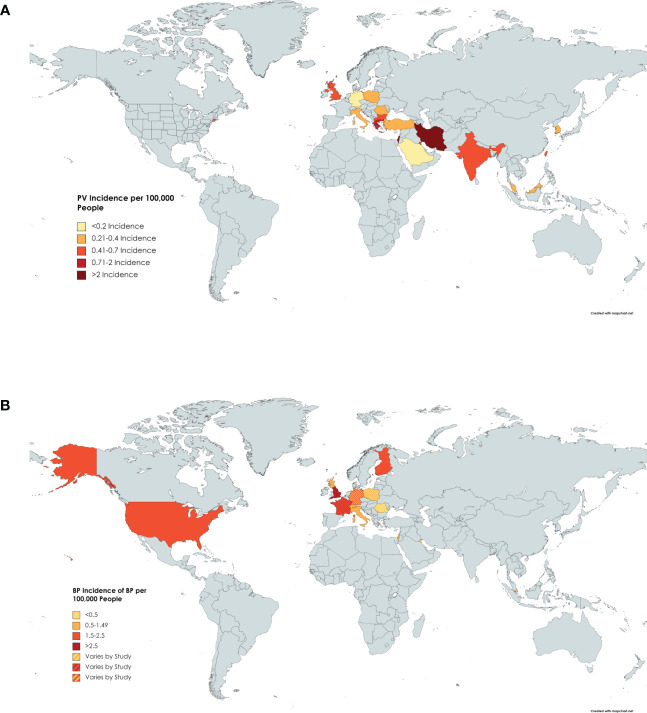
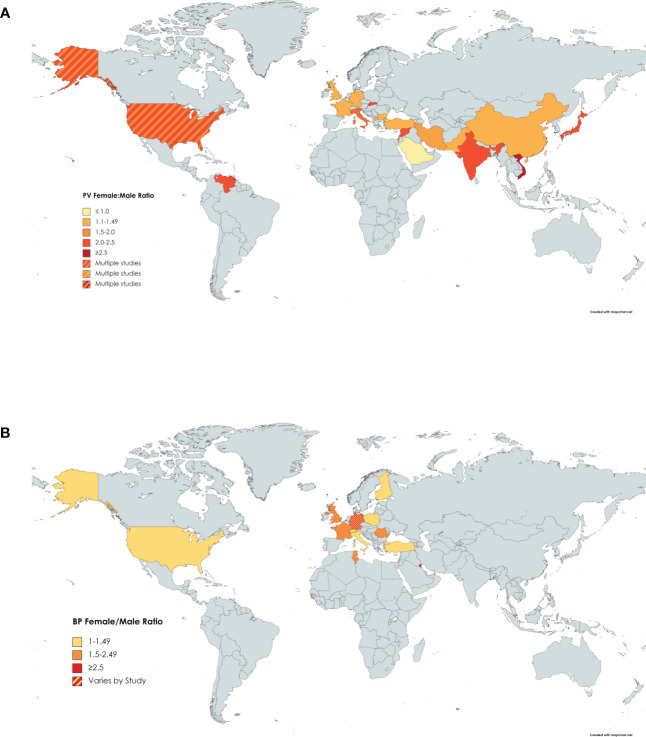
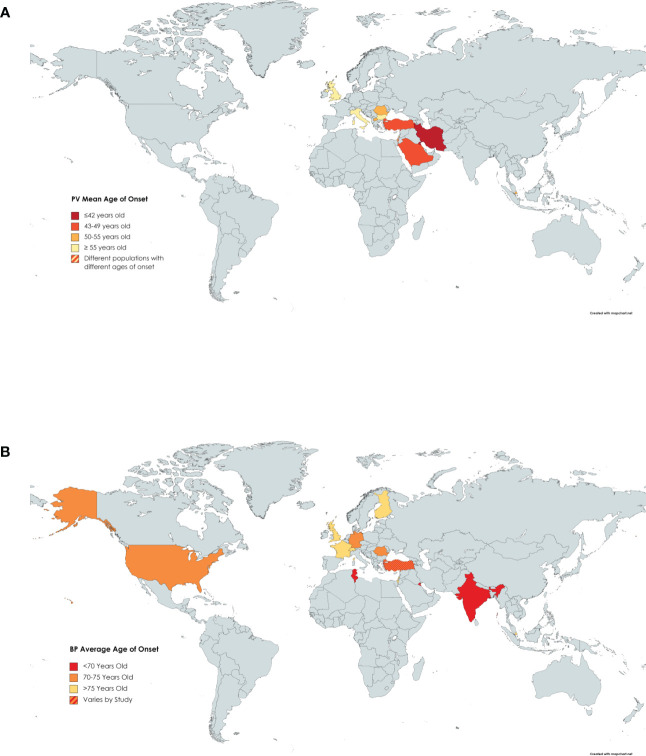
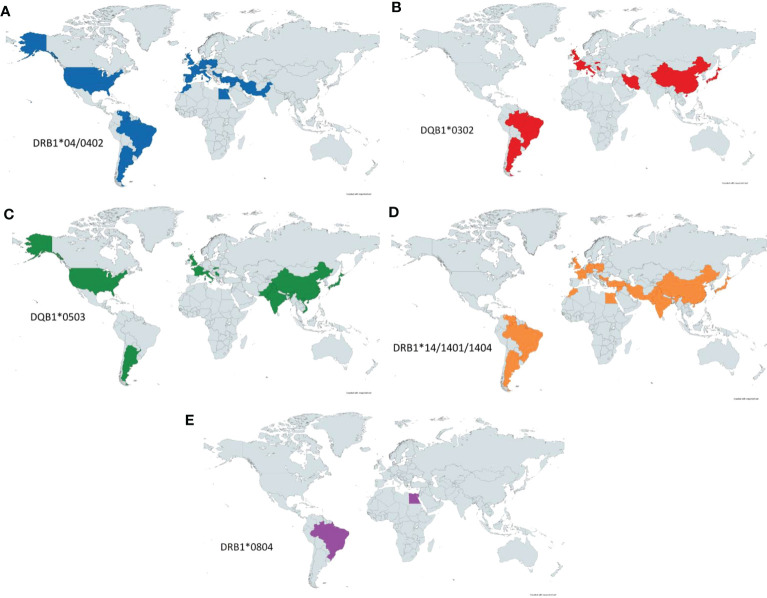
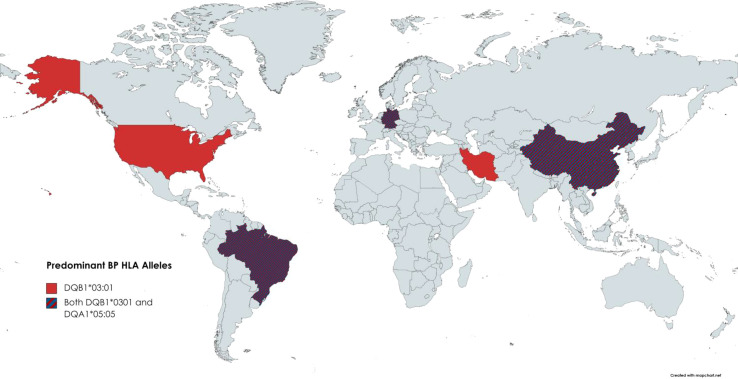
Autoimmune blistering diseases such as bullous pemphigoid (BP) and pemphigus vulgaris (PV) are complex, multifactorial, and polygenic diseases, whose exact pathogenesis is difficult to pinpoint. Research aimed at elucidating the associated epidemiologic risk factors of these two diseases has been hampered by their rare disease status. Further, a lack of centralization and standardization of available data makes the practical application of this information challenging. In order to collate and clarify the available literature we comprehensively reviewed 61 PV articles from 37 different countries and 35 BP articles from 16 different countries addressing a range of disease relevant clinical parameters including age of onset, sex, incidence, prevalence, and HLA allele association. The reported incidence of PV ranged from 0.098 to 5 patients per 100,000 people, while BP ranged from 0.21 to 7.63 patients per 100,000. Prevalence of PV ranged from 0.38 to 30 per 100,000 people and BP ranged from 1.46 to 47.99 per 100,000. The mean age of onset in patients ranged from 36.5 to 71 years for PV and 64 to 82.6 years for BP. Female-to-male ratios ranged from 0.46 to 4.4 in PV and 1.01 to 5.1 in BP. Our analysis provides support for the reported linkage disequilibrium of HLA DRB10402 (an allele previously shown to be associated with PV) and DQB10302 alleles in Europe, North America, and South America. Our data also highlight that HLA DQB10503 (also known to be associated with PV) appears in linkage disequilibrium with DRB11404 and DRB11401, mainly in Europe, the Middle East, and Asian countries. The HLA DRB10804 allele was only associated with PV in patients of Brazilian and Egyptian descent. Only two HLA alleles were reported as associated with BP more than twice in our review, DQB10301 and DQA10505. Collectively, our findings provide detailed insights into the variation of disease parameters relevant to PV and BP that can be expected to inform future work aimed at unraveling the complex pathogenesis of these conditions across the globe.
自身免疫性水疱性疾病,如大疱性类天疱疮(BP)和寻常型天疱疮(PV)是复杂的、多因素的、多基因疾病,其确切发病机制难以确定。由于这些疾病属于罕见病,旨在阐明与这两种疾病相关的流行病学风险因素的研究受到了阻碍。此外,由于现有数据的集中化和标准化程度较低,实际应用这些信息具有挑战性。为了整理和阐明现有文献,我们全面回顾了来自 37 个不同国家的 61 篇 PV 文章和来自 16 个不同国家的 35 篇 BP 文章,这些文章涉及一系列与疾病相关的临床参数,包括发病年龄、性别、发病率、患病率和 HLA 等位基因关联。报道的 PV 发病率范围为每 10 万人中有 0.098 至 5 例,而 BP 发病率范围为每 10 万人中有 0.21 至 7.63 例。PV 的患病率范围为每 10 万人中有 0.38 至 30 例,BP 的患病率范围为每 10 万人中有 1.46 至 47.99 例。PV 患者的平均发病年龄范围为 36.5 至 71 岁,BP 为 64 至 82.6 岁。女性与男性的比例范围为 PV 中的 0.46 至 4.4,BP 中的 1.01 至 5.1。我们的分析支持 HLA-DRB10402(先前与 PV 相关的等位基因)和 DQB10302 等位基因在欧洲、北美和南美报道的连锁不平衡。我们的数据还强调,HLA-DQB10503(也与 PV 相关)与 DRB11404 和 DRB11401 呈连锁不平衡,主要在欧洲、中东和亚洲国家。HLA-DRB10804 等位基因仅与巴西和埃及裔 PV 患者相关。在我们的综述中,只有两个 HLA 等位基因被报道与 BP 相关两次以上,即 DQB10301 和 DQA10505。总的来说,我们的研究结果提供了与 PV 和 BP 相关的疾病参数变化的详细见解,预计这些发现将为未来旨在揭示这些疾病在全球范围内复杂发病机制的工作提供信息。