Erdem Saliha, Titus Anoop, Patel Dhruvil, Patel Neel N, Sattar Yasar, Glazier James, Alraies M Chadi
Internal Medicine, Wayne State University School of Medicine, Detroit, USA.
Internal Medicine, Saint Vincent Hospital, Worcester, USA.
Cureus. 2023 Apr 8;15(4):e37310. doi: 10.7759/cureus.37310. eCollection 2023 Apr.
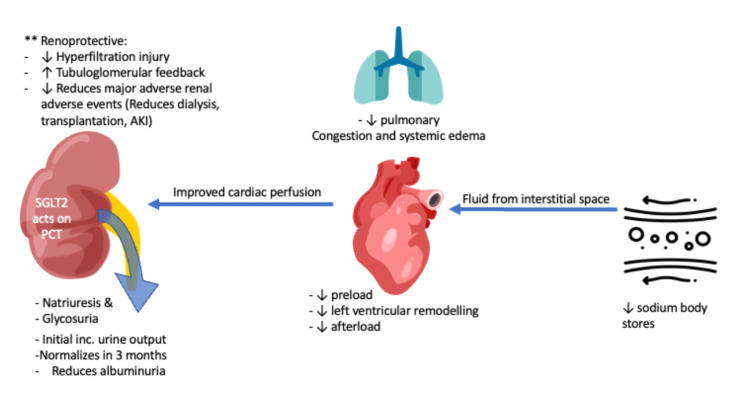
Cardiorenal benefits of sodium-glucose cotransporter 2 inhibitors (SGLT2is) have been demonstrated in patients with type 2 diabetes in multiple trials. We aim to provide a comprehensive review of the role of SGLT2i in cardiovascular disease. Reducing blood glucose to provide more effective vascular function, lowering the circulating volume, reducing cardiac stress, and preventing pathological cardiac re-modeling and function are the mechanisms implicated in the beneficial cardiovascular effects of SGLT2 inhibitors. Treatment with SGLT2i was associated with a decrease in cardiovascular and all-cause mortality, acute heart failure exacerbation hospitalization, and composite adverse renal outcomes. Improved symptoms, better functional status, and quality of life were also seen in heart failure with reduced ejection fraction (HFrEF), heart failure and mildly reduced ejection fraction (HFmrEF), and heart failure with preserved ejection fraction (HFpEF) patients. Recent trials have shown a notable therapeutic benefit of SGLT2is in acute heart failure and also suggest that SGLT2is have the potential to strengthen recovery after acute myocardial infarction (AMI) in percutaneous coronary Intervention (PCI) patients. The mechanism behind the cardio-metabolic and renal-protective effects of SGLT2i is multifactorial. Adverse events may occur with their usage including increased risk of genital infections, diabetic ketoacidosis, and perhaps limited amputations; however, all of them are preventable. Overall, SGLT2i clearly has many beneficial effects, and the benefits of using SGLT2i by far outweigh the risks.
多项试验已证实,钠-葡萄糖协同转运蛋白2抑制剂(SGLT2i)对2型糖尿病患者具有心肾保护作用。我们旨在全面综述SGLT2i在心血管疾病中的作用。降低血糖以提供更有效的血管功能、降低循环血容量、减轻心脏压力以及预防病理性心脏重塑和功能障碍,这些都是SGLT2抑制剂产生心血管有益作用的潜在机制。使用SGLT2i进行治疗与心血管死亡率和全因死亡率降低、急性心力衰竭加重住院率降低以及复合性不良肾脏结局减少相关。射血分数降低的心力衰竭(HFrEF)、射血分数轻度降低的心力衰竭(HFmrEF)以及射血分数保留的心力衰竭(HFpEF)患者的症状改善、功能状态和生活质量也得到了提高。最近的试验表明,SGLT2i对急性心力衰竭具有显著的治疗益处,并且还表明SGLT2i有可能增强经皮冠状动脉介入治疗(PCI)的急性心肌梗死(AMI)患者的恢复能力。SGLT2i产生心脏代谢和肾脏保护作用的机制是多因素的。使用SGLT2i可能会发生不良事件,包括生殖器感染、糖尿病酮症酸中毒风险增加以及可能的截肢风险增加;然而,所有这些都是可以预防的。总体而言,SGLT2i显然具有许多有益作用,使用SGLT2i的益处远远超过风险。