Melanoma and Sarcoma Medical Oncology Unit, State Key Laboratory of Oncology in South China, Collaborative Innovation Center for Cancer Medicine, Sun Yat-sen University Cancer Center, Guangzhou, China.
State Key Laboratory of Oncology in South China, Collaborative Innovation Center for Cancer Medicine, Sun Yat-sen University Cancer Center, Guangzhou, China.
Clin Cancer Res. 2023 Aug 1;29(15):2869-2884. doi: 10.1158/1078-0432.CCR-22-3567.
Radiation-induced sarcomas (RIS) have a poor prognosis and lack effective treatments. Its genome and tumor microenvironment are not well characterized and need further exploration.
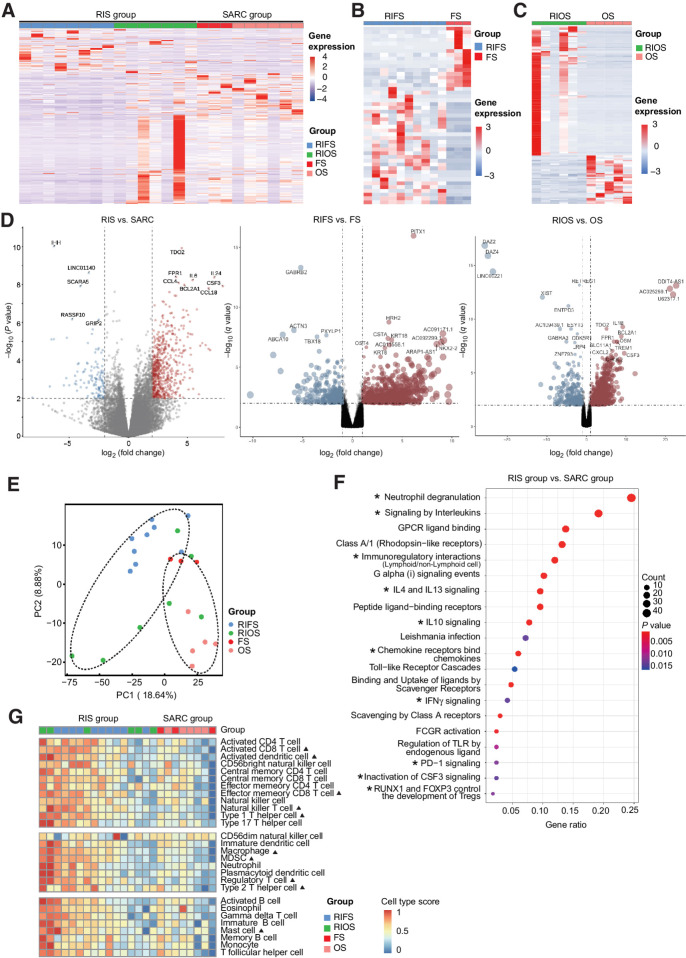
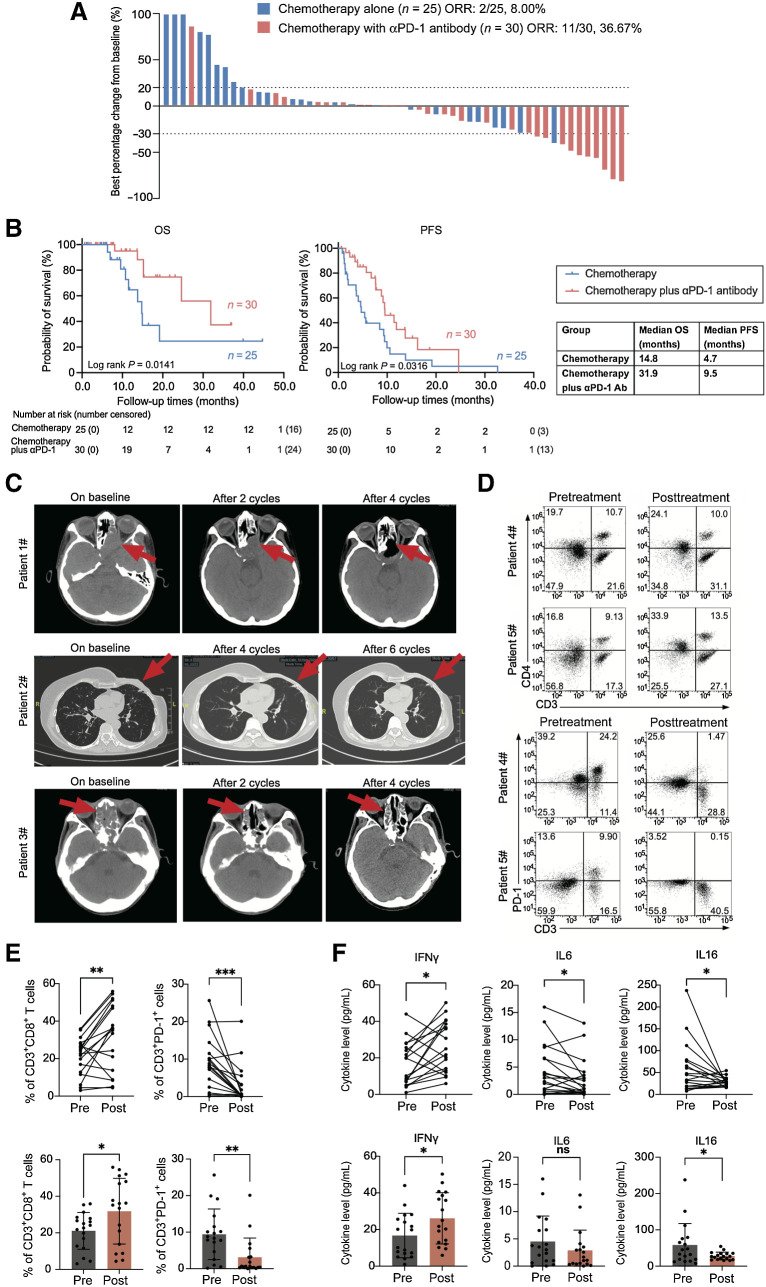
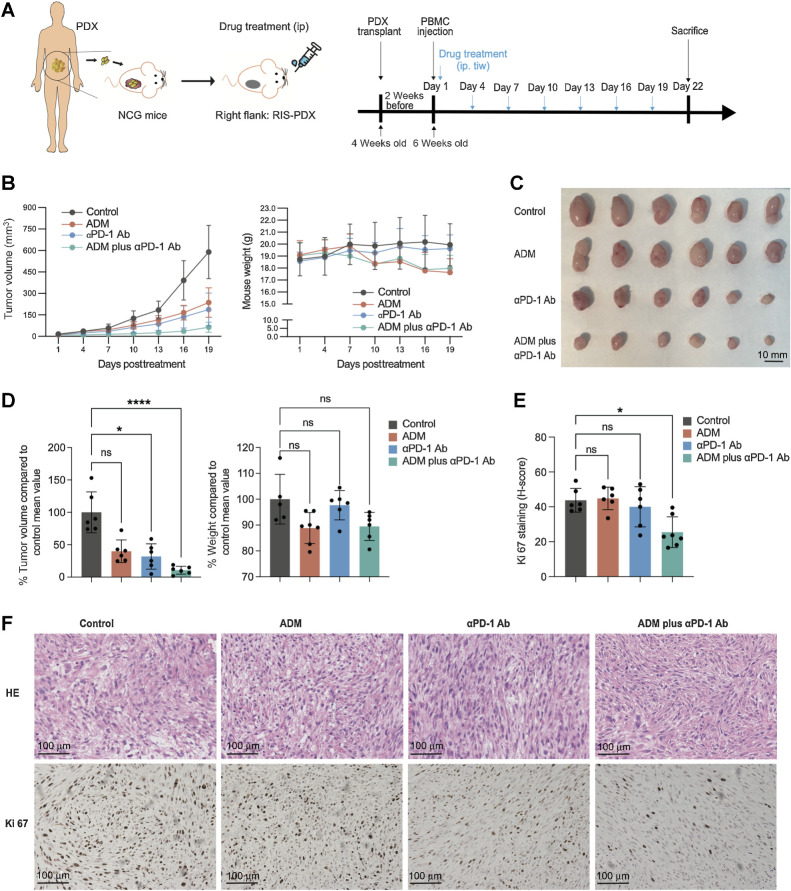
Here, we performed whole-exome sequencing (WES) and mRNA sequencing (mRNA-seq) on patients with RIS and primary sarcomas (WES samples 46 vs. 48, mRNA-seq samples 16 vs. 8, mainly in head and neck), investigated the antitumor effect of programmed cell death protein 1 (PD-1) blockade in RIS patient-derived xenograft models, and analyzed clinical data of patients with RIS treated with chemotherapy alone or combined with an anti-PD-1 antibody.
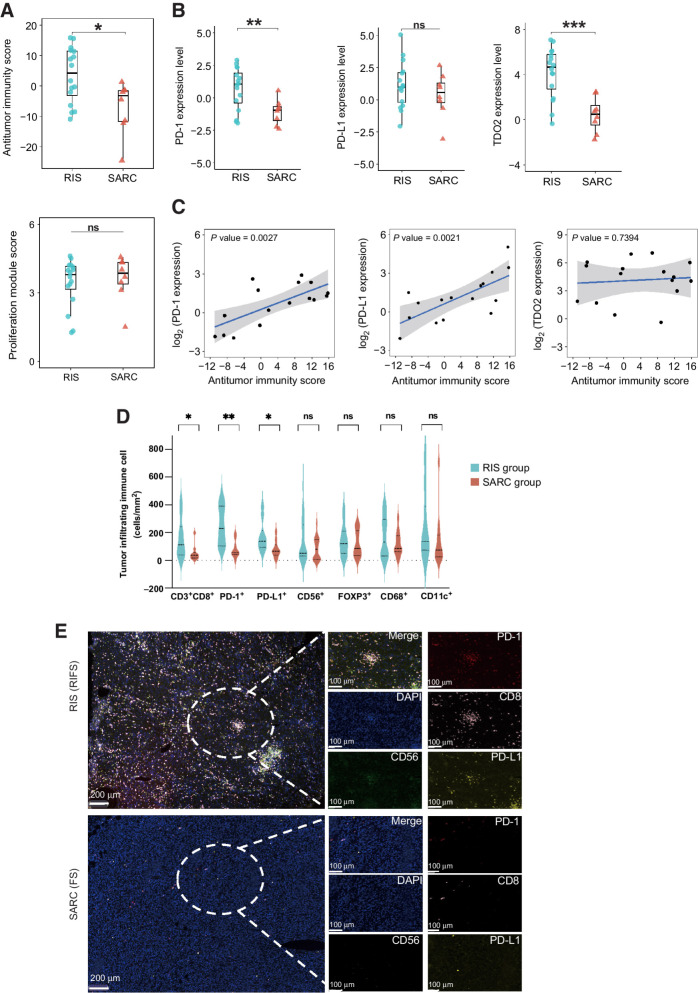
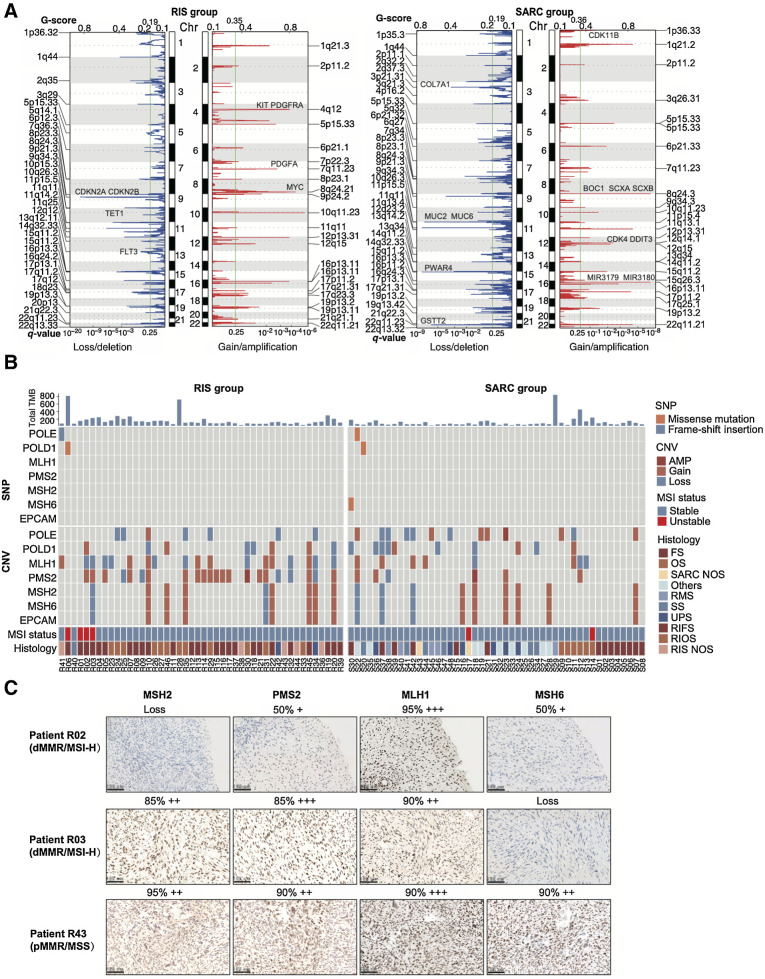
Compared with primary sarcomas, RIS manifested different patterns of copy-number variations, a significantly higher number of predicted strong MHC-binding neoantigens, and significantly increased immune cell infiltration. Clinical data showed that the combinatorial use of chemotherapy and PD-1 blockade achieved a higher objective response rate (36.67% vs. 8.00%; P = 0.003), longer overall survival (31.9 months vs. 14.8 months; P = 0.014), and longer progression-free survival (4.7 months vs. 9.5 months; P = 0.032) in patients with RIS compared with single chemotherapy.
Elevated genomic instability and higher immune cell infiltrations were found in RIS than in primary sarcomas. Moreover, higher efficacy of chemotherapy plus PD-1 blockade was observed in animal experiments and clinical practice. This evidence indicated the promising application of immune checkpoint inhibitors in the treatment of RIS.
放射性诱导肉瘤(RIS)预后不良,缺乏有效治疗方法。其基因组和肿瘤微环境尚未得到很好的描述,需要进一步探索。
在这里,我们对 RIS 和原发性肉瘤患者进行了全外显子测序(WES)和 mRNA 测序(mRNA-seq)(WES 样本 46 对 48,mRNA-seq 样本 16 对 8,主要来自头颈部),研究了程序性细胞死亡蛋白 1(PD-1)阻断在 RIS 患者来源异种移植模型中的抗肿瘤作用,并分析了单独化疗或联合抗 PD-1 抗体治疗 RIS 患者的临床数据。
与原发性肉瘤相比,RIS 表现出不同的拷贝数变异模式,预测的强 MHC 结合新抗原数量明显增加,免疫细胞浸润明显增加。临床数据显示,化疗联合 PD-1 阻断的组合疗法在 RIS 患者中实现了更高的客观缓解率(36.67%比 8.00%;P = 0.003)、更长的总生存期(31.9 个月比 14.8 个月;P = 0.014)和更长的无进展生存期(4.7 个月比 9.5 个月;P = 0.032),与单独化疗相比。
RIS 中的基因组不稳定性升高和免疫细胞浸润增加。此外,在动物实验和临床实践中观察到化疗加 PD-1 阻断的疗效更高。这些证据表明免疫检查点抑制剂在 RIS 治疗中的应用前景广阔。