Department of Biochemistry and Molecular Biology, University of Oklahoma Health Sciences Center, 940 Stanton L Young Blvd, Oklahoma City, OK, 73104, USA.
Center for Geroscience and Healthy Brain Aging, University of Oklahoma Health Sciences Center, 940 Stanton L Young Blvd, Oklahoma City, OK, 73104, USA.
Nat Commun. 2023 Apr 25;14(1):2367. doi: 10.1038/s41467-023-37840-y.
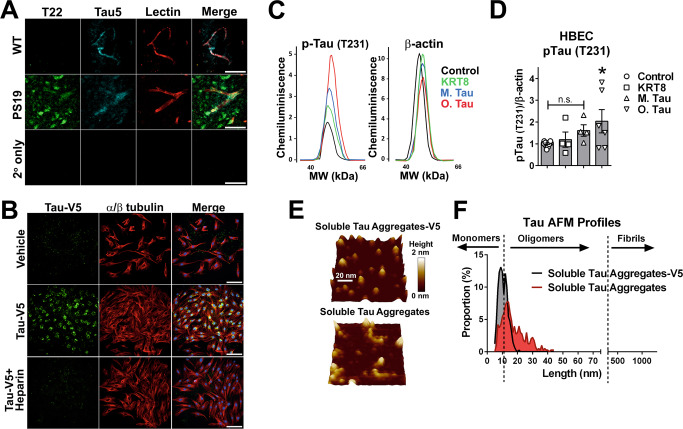
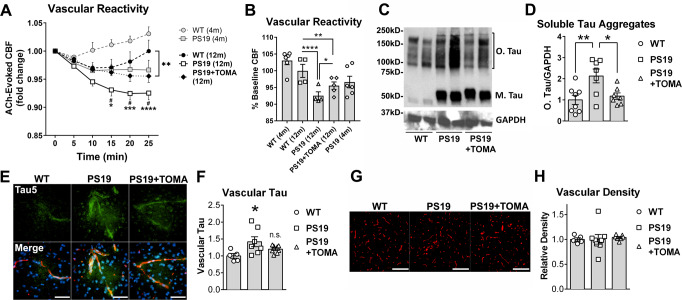
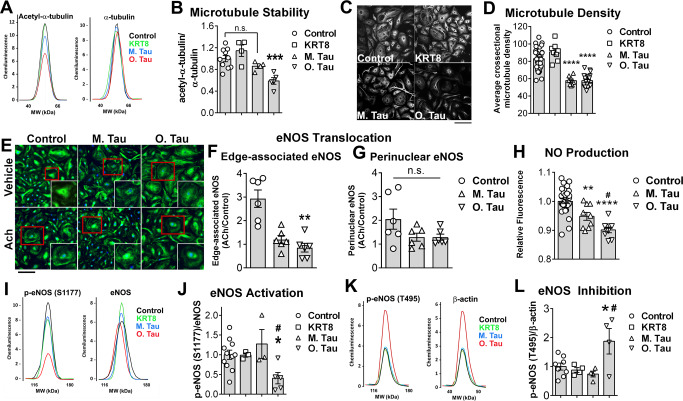
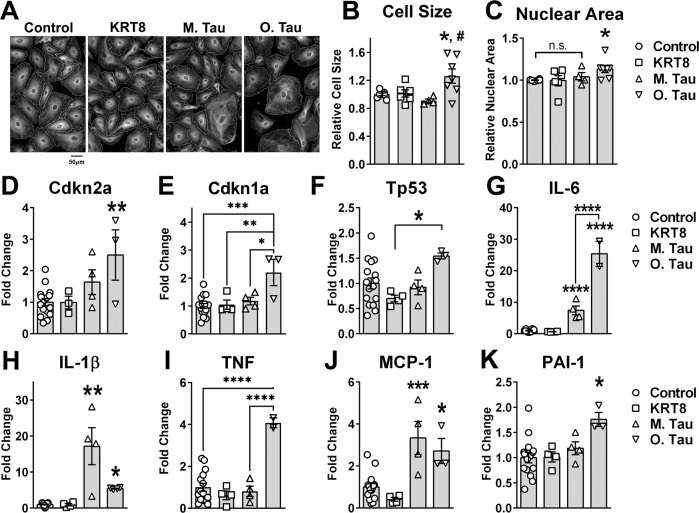
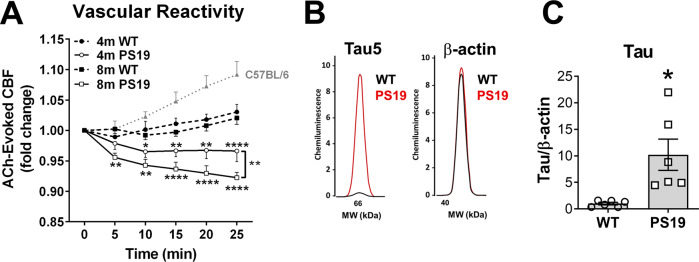
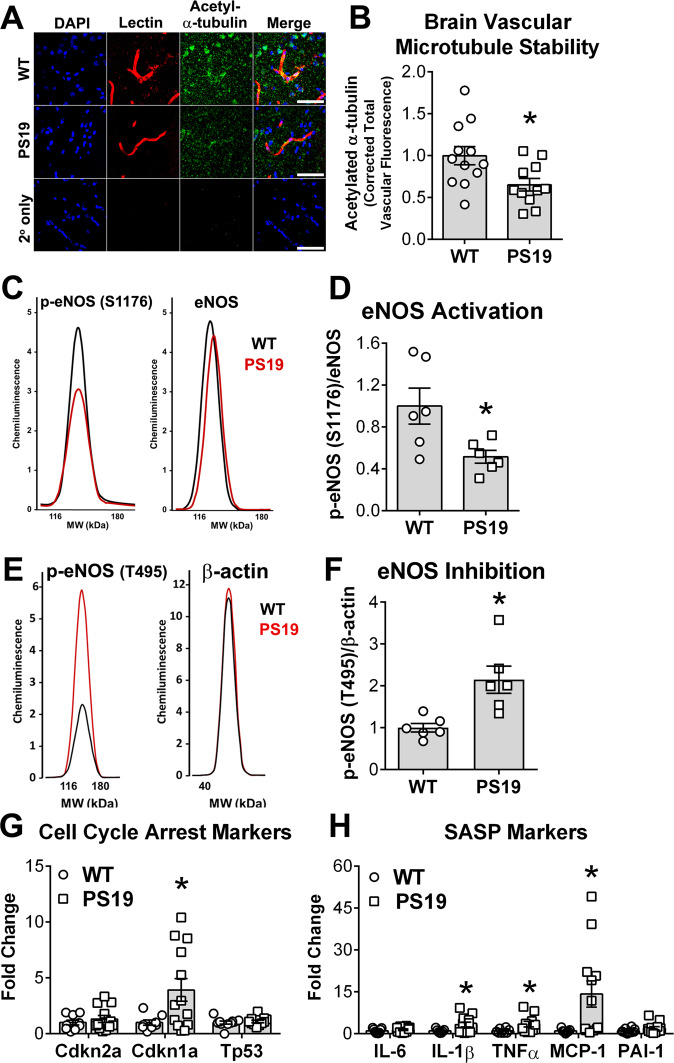
Vascular mechanisms of Alzheimer's disease (AD) may constitute a therapeutically addressable biological pathway underlying dementia. We previously demonstrated that soluble pathogenic forms of tau (tau oligomers) accumulate in brain microvasculature of AD and other tauopathies, including prominently in microvascular endothelial cells. Here we show that soluble pathogenic tau accumulates in brain microvascular endothelial cells of P301S(PS19) mice modeling tauopathy and drives AD-like brain microvascular deficits. Microvascular impairments in P301S(PS19) mice were partially negated by selective removal of pathogenic soluble tau aggregates from brain. We found that similar to trans-neuronal transmission of pathogenic forms of tau, soluble tau aggregates are internalized by brain microvascular endothelial cells in a heparin-sensitive manner and induce microtubule destabilization, block endothelial nitric oxide synthase (eNOS) activation, and potently induce endothelial cell senescence that was recapitulated in vivo in microvasculature of P301S(PS19) mice. Our studies suggest that soluble pathogenic tau aggregates mediate AD-like brain microvascular deficits in a mouse model of tauopathy, which may arise from endothelial cell senescence and eNOS dysfunction triggered by internalization of soluble tau aggregates.
阿尔茨海默病(AD)的血管机制可能构成痴呆症潜在的可治疗的生物学途径。我们之前的研究表明,可溶性致病性tau 形式(tau 寡聚物)在 AD 和其他 tau 病的脑微血管中积累,包括在微血管内皮细胞中显著积累。在这里,我们显示可溶性致病性 tau 在模拟 tau 病的 P301S(PS19)小鼠的脑微血管内皮细胞中积累,并导致类似 AD 的脑微血管缺陷。通过选择性地从大脑中去除致病性可溶性 tau 聚集体,P301S(PS19)小鼠的微血管损伤得到部分缓解。我们发现,类似于致病性 tau 形式的跨神经元传递,可溶性 tau 聚集体以肝素敏感的方式被脑微血管内皮细胞内化,并诱导微管不稳定、阻断内皮型一氧化氮合酶(eNOS)激活,并强烈诱导内皮细胞衰老,这在 P301S(PS19)小鼠的微血管中得到了体内重现。我们的研究表明,可溶性致病性 tau 聚集体在 tau 病的小鼠模型中介导类似 AD 的脑微血管缺陷,这可能是由可溶性 tau 聚集体内化引发的内皮细胞衰老和 eNOS 功能障碍引起的。