Cellular Neuroscience, Neurodegeneration and Repair Program, Departments of Neurology and Neuroscience, Yale School of Medicine, New Haven, CT, USA.
Graduate School of Cellular and Molecular Neuroscience, University of Tübingen, D-72074, Tübingen, Germany.
Mol Neurodegener. 2022 May 3;17(1):32. doi: 10.1186/s13024-022-00526-y.
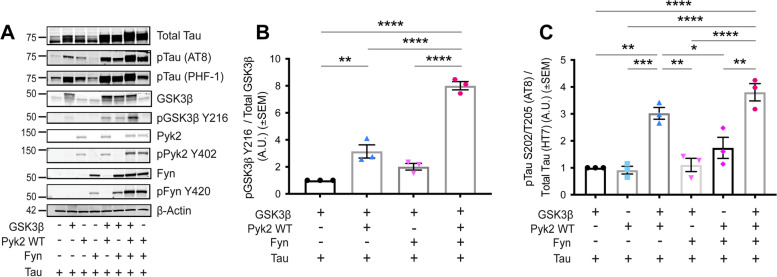
Genetic variation at the PTK2B locus encoding the protein Pyk2 influences Alzheimer's disease risk. Neurons express Pyk2 and the protein is required for Amyloid-β (Aβ) peptide driven deficits of synaptic function and memory in mouse models, but Pyk2 deletion has minimal effect on neuro-inflammation. Previous in vitro data suggested that Pyk2 activity might enhance GSK3β-dependent Tau phosphorylation and be required for tauopathy. Here, we examine the influence of Pyk2 on Tau phosphorylation and associated pathology.
The effect of Pyk2 on Tau phosphorylation was examined in cultured Hek cells through protein over-expression and in iPSC-derived human neurons through pharmacological Pyk2 inhibition. PS19 mice overexpressing the P301S mutant of human Tau were employed as an in vivo model of tauopathy. Phenotypes of PS19 mice with a targeted deletion of Pyk2 expression were compared with PS19 mice with intact Pyk2 expression. Phenotypes examined included Tau phosphorylation, Tau accumulation, synapse loss, gliosis, proteomic profiling and behavior.
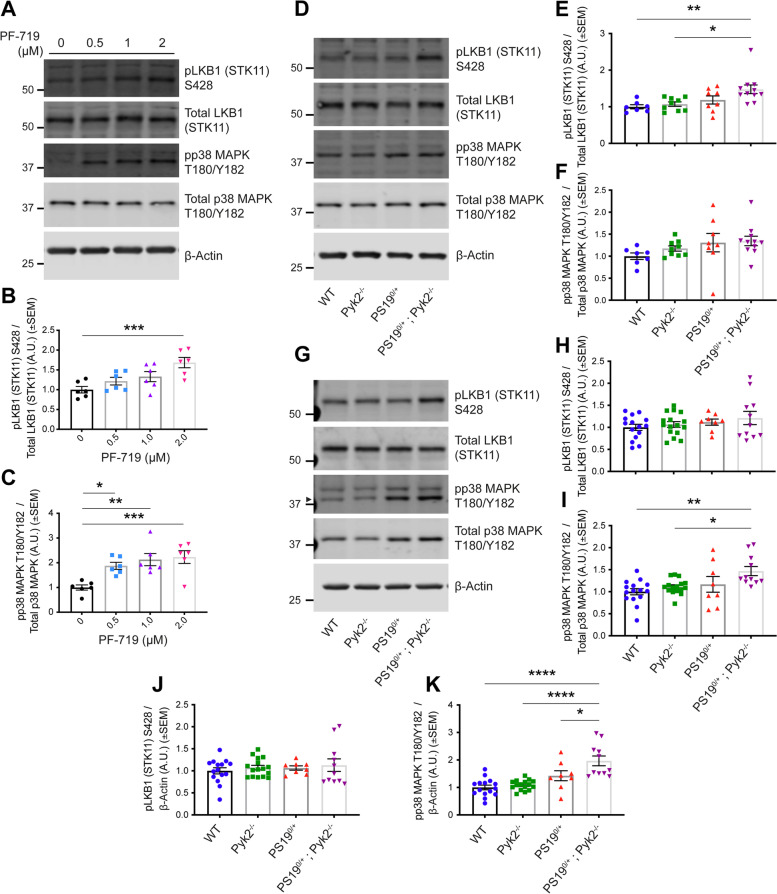
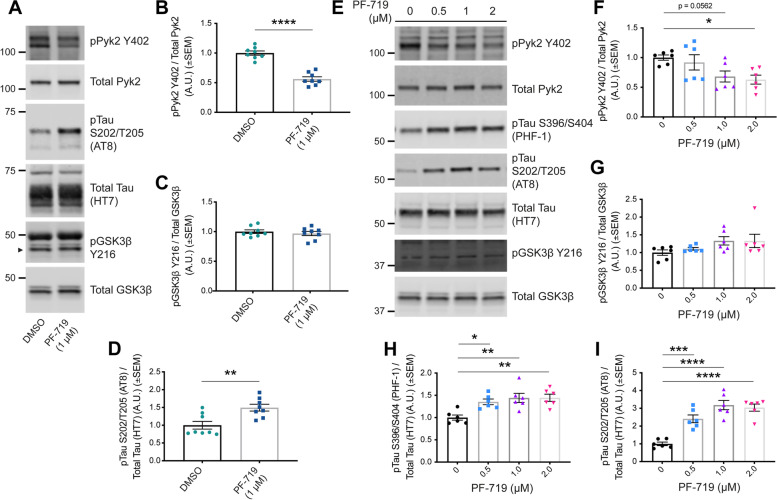
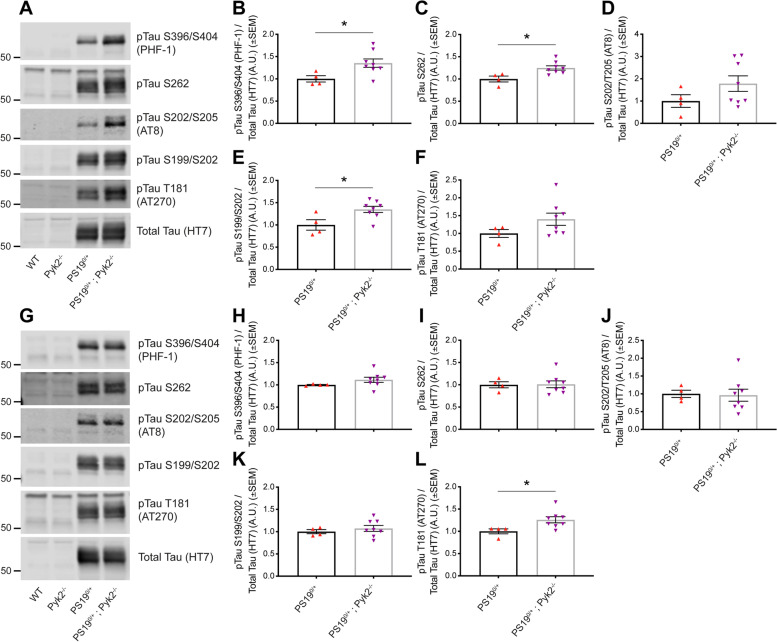
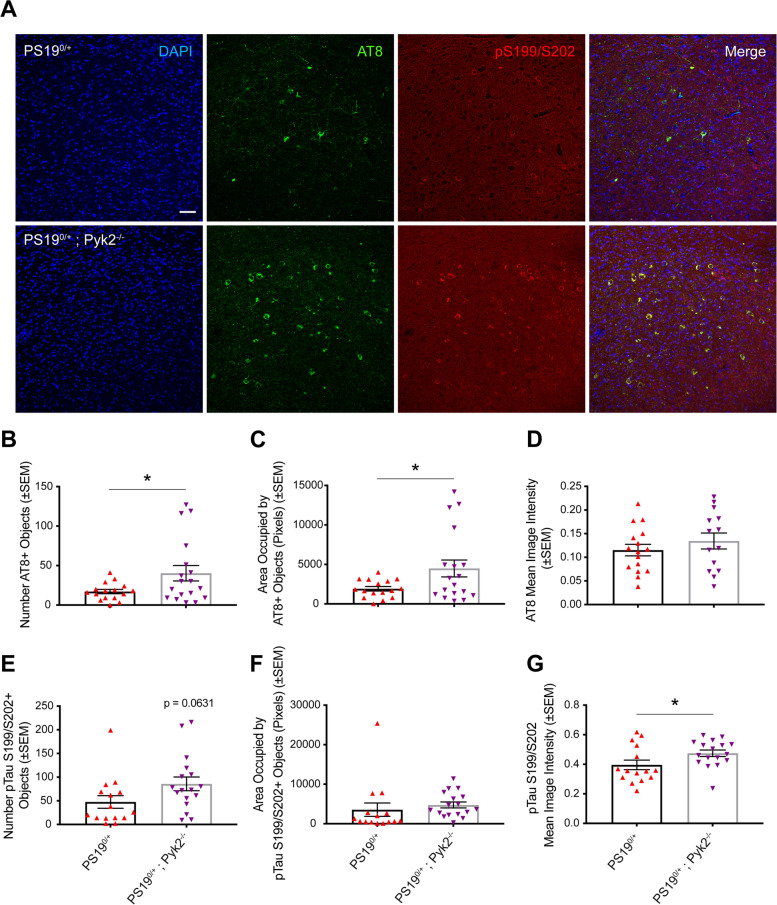
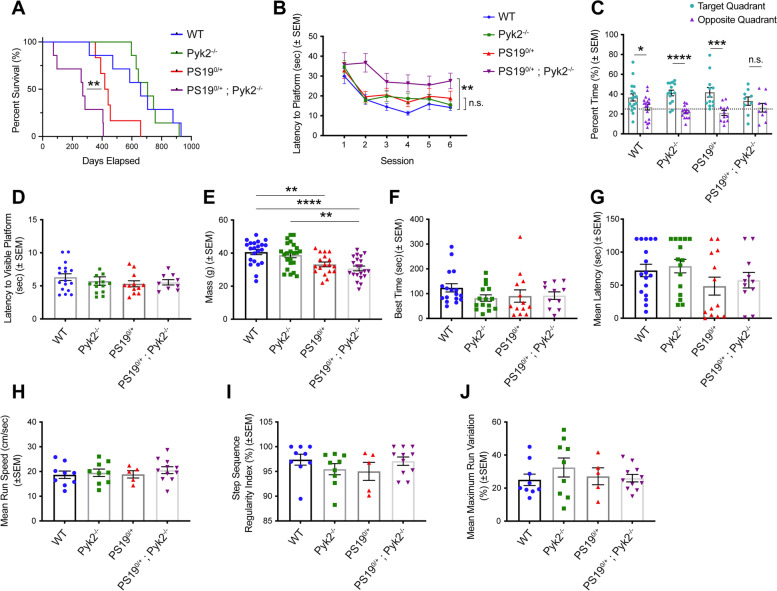
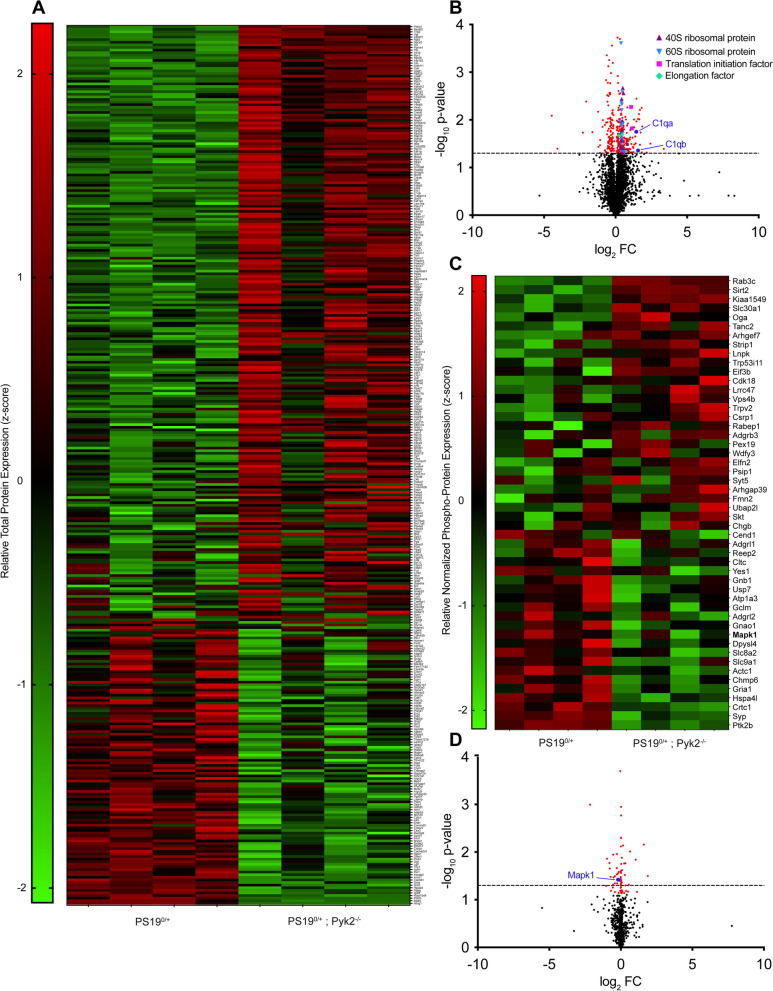
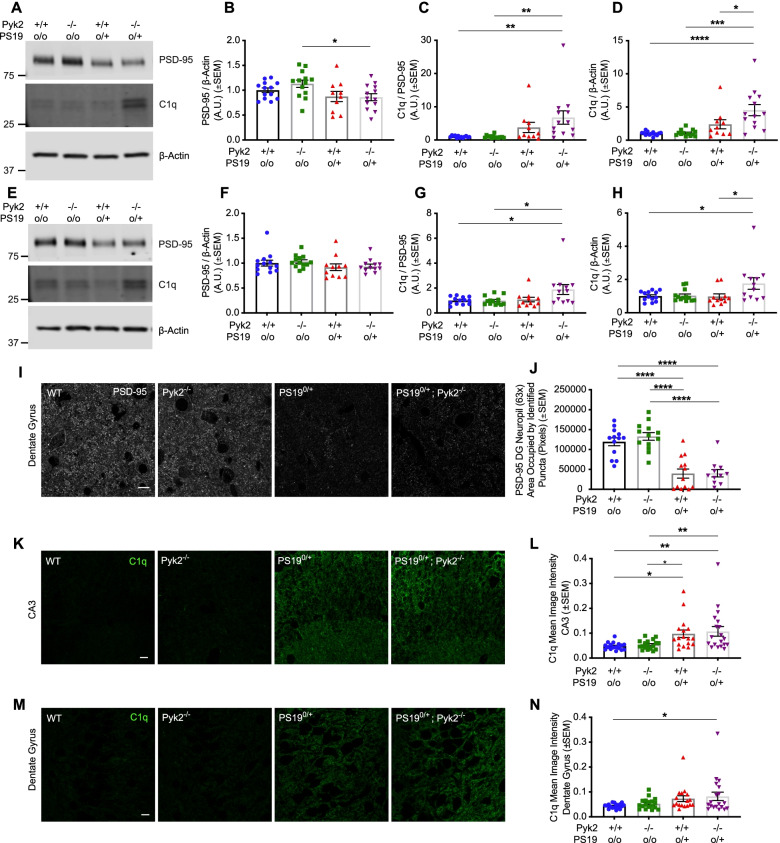
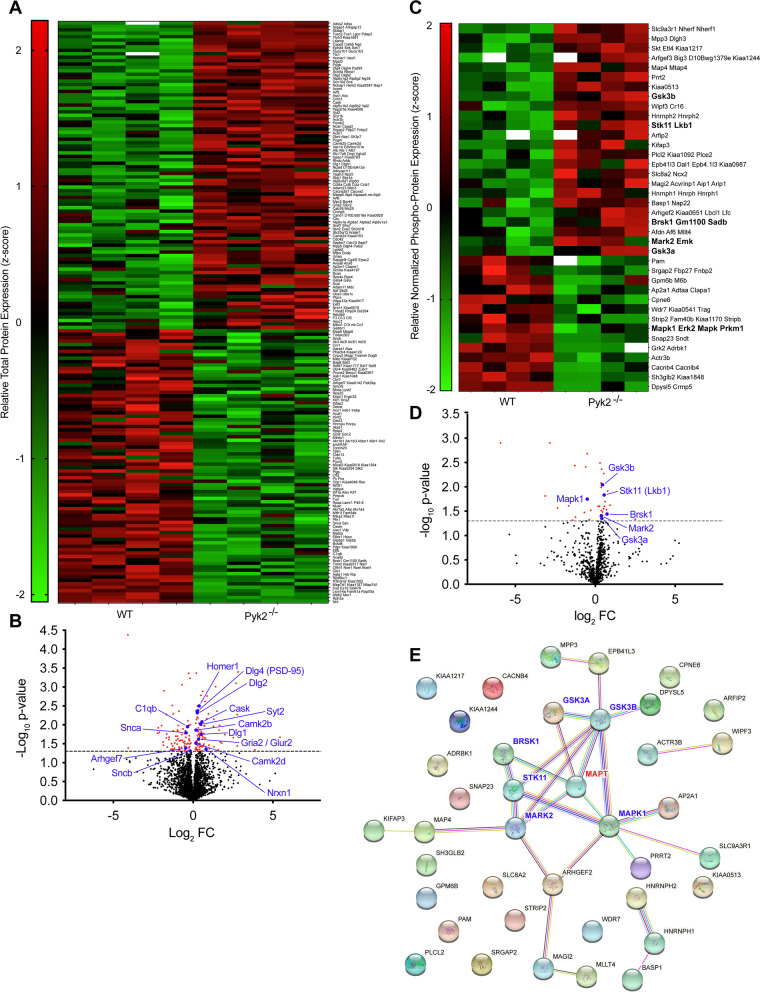
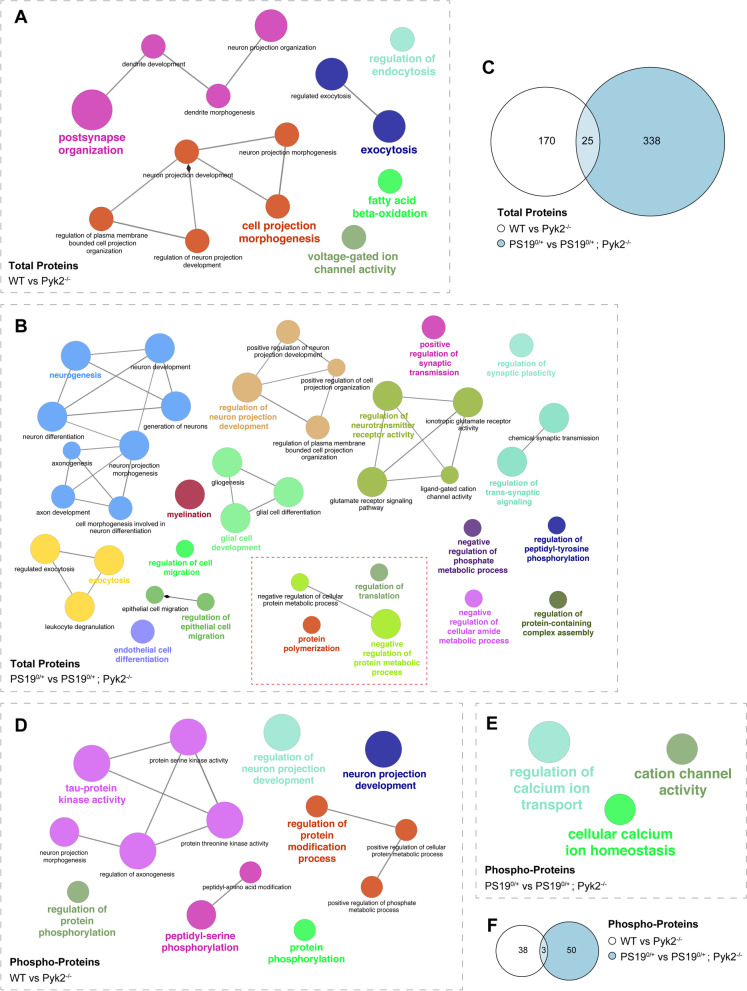
Over-expression experiments from Hek293T cells indicated that Pyk2 contributed to Tau phosphorylation, while iPSC-derived human neuronal cultures with endogenous protein levels supported the opposite conclusion. In vivo, multiple phenotypes of PS19 were exacerbated by Pyk2 deletion. In Pyk2-null PS19 mice, Tau phosphorylation and accumulation increased, mouse survival decreased, spatial memory was impaired and hippocampal C1q deposition increased relative to PS19 littermate controls. Proteomic profiles of Pyk2-null mouse brain revealed that several protein kinases known to interact with Tau are regulated by Pyk2. Endogenous Pyk2 suppresses LKB1 and p38 MAPK activity, validating one potential pathway contributing to increased Tau pathology.
The absence of Pyk2 results in greater mutant Tau-dependent phenotypes in PS19 mice, in part via increased LKB1 and MAPK activity. These data suggest that in AD, while Pyk2 activity mediates Aβ-driven deficits, Pyk2 suppresses Tau-related phenotypes.
编码蛋白 Pyk2 的 PTK2B 基因座的遗传变异会影响阿尔茨海默病的风险。神经元表达 Pyk2,该蛋白是淀粉样β(Aβ)肽驱动的突触功能和记忆损伤的小鼠模型所必需的,但 Pyk2 缺失对神经炎症的影响很小。先前的体外数据表明,Pyk2 活性可能增强 GSK3β 依赖性 Tau 磷酸化,并且是 Tau 病所必需的。在这里,我们研究了 Pyk2 对 Tau 磷酸化的影响及其相关病理学。
通过蛋白过表达在培养的 Hek 细胞中以及通过药理学 Pyk2 抑制在 iPSC 衍生的人类神经元中检查 Pyk2 对 Tau 磷酸化的影响。过表达人 Tau 的 P301S 突变的 PS19 小鼠被用作 Tau 病的体内模型。比较了靶向敲除 Pyk2 表达的 PS19 小鼠与具有完整 Pyk2 表达的 PS19 小鼠的表型。检查的表型包括 Tau 磷酸化、Tau 积累、突触损失、神经胶质增生、蛋白质组学谱和行为。
来自 Hek293T 细胞的过表达实验表明 Pyk2 有助于 Tau 磷酸化,而具有内源性蛋白水平的 iPSC 衍生的人类神经元培养物则支持相反的结论。在体内,Pyk2 缺失使 PS19 的多种表型恶化。在 Pyk2 缺失的 PS19 小鼠中,Tau 磷酸化和积累增加,小鼠存活率降低,空间记忆受损,海马 C1q 沉积增加,与 PS19 同窝对照相比。Pyk2 缺失的小鼠大脑的蛋白质组学谱表明,几种已知与 Tau 相互作用的蛋白激酶受 Pyk2 调节。内源性 Pyk2 抑制 LKB1 和 p38 MAPK 活性,验证了导致 Tau 病理增加的潜在途径之一。
在 PS19 小鼠中,缺乏 Pyk2 导致更大的突变 Tau 依赖性表型,部分原因是 LKB1 和 MAPK 活性增加。这些数据表明,在 AD 中,虽然 Pyk2 活性介导 Aβ 驱动的缺陷,但 Pyk2 抑制 Tau 相关表型。