University of New England, Arimidale, New South Wales, Australia.
PeerJ. 2023 May 9;11:e15160. doi: 10.7717/peerj.15160. eCollection 2023.
Intimate partner violence (IPV) is a serious public health issue that consists of physical, sexual, and psychological violence perpetrated by a current or former partner. Informal supporters (, family and friends) of survivors are more often witness to IPV or are the first people a survivor will disclose abuse to and are more able to provide consistent ongoing support than professional services. Therefore, greater understanding of informal supporters is warranted to aid in reducing the risks experienced by survivors. This systematic review aimed to: (1) identify factors associated with either an increase or decrease in helping behaviour toward a survivor, (2), identify the most effective self-care strategies employed by informal supporters, and (3) consider the current theoretical approaches used to understand informal supporters help-giving behavioural intention.
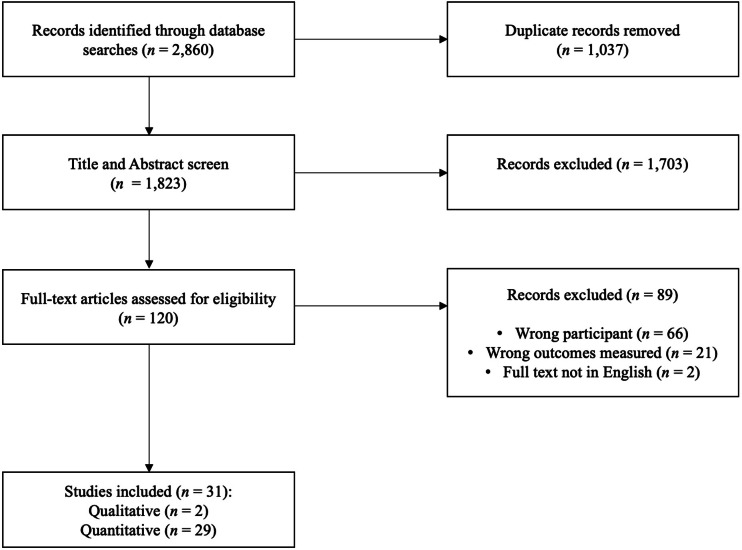
A systematic literature search was conducted following the PRISMA guidelines. The search included English language articles published between 2005 and 2021 in the databases Psych Articles, Scopus, Proquest Social Services Abstracts, and Ebscohost. Studies were included if the primary research aims explored the motivators and inhibitors of helping intention or self-care strategies of adult social network members of adult IPV survivors. Two reviewers independently screened all identified articles for inclusion suitability.
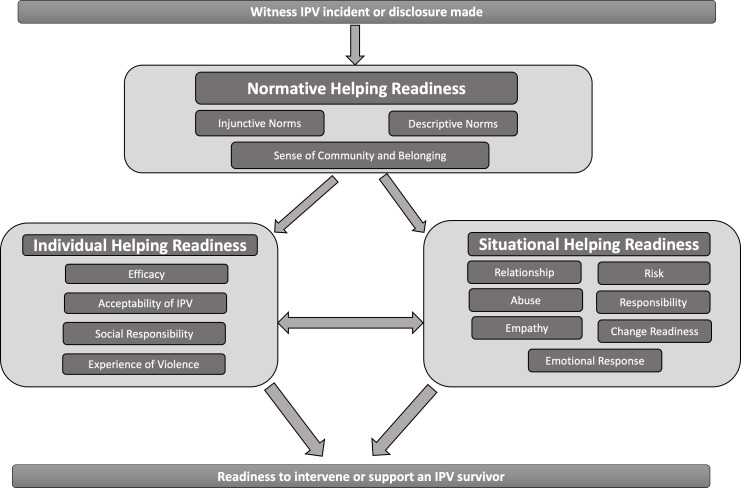
One hundred and twenty articles were subjected to full text screening resulting in 31 articles being identified as meeting inclusion criteria. Synthesis of the findings identified the following three key areas associated with help-giving behavioural intentions: normative factors, individual factors, and situational factors. There were no articles identified that considered self-care of informal supporters. Of the 31 articles, 22 had a theoretical underpinning. None of the utilised theories explained all three of the identified factors of help-giving behavioural intention.
These results are integrated into a proposed Intimate Partner Violence Model of Informal Supporter Readiness (IPV-MISR), incorporating the identified factors associated with help-giving behavioural intention. This model provides a framework for conceptualising the readiness of an informal supporter to provide adequate support to IPV survivors. The model extends existing theoretical standpoints and has utility in both practice and research.
亲密伴侣暴力(IPV)是一个严重的公共卫生问题,包括当前或前任伴侣实施的身体、性和心理暴力。幸存者的非专业支持者(如家人和朋友)更经常目睹 IPV 或成为幸存者首先透露虐待行为的人,并且比专业服务更能够提供持续的支持。因此,为了帮助减少幸存者所面临的风险,更有必要了解非专业支持者。本系统评价旨在:(1)确定与增加或减少对幸存者的帮助行为相关的因素;(2)确定非专业支持者采用的最有效的自我保健策略;(3)考虑用于理解非专业支持者帮助行为意图的当前理论方法。
按照 PRISMA 指南进行系统文献检索。检索包括 2005 年至 2021 年在 Psych Articles、Scopus、Proquest Social Services Abstracts 和 Ebscohost 数据库中发表的英文文章。如果主要研究目的是探索成人 IPV 幸存者成人社交网络成员的帮助意图或自我保健策略的激励因素和抑制因素,则纳入研究。两名审查员独立筛选所有符合纳入标准的文章。
有 120 篇文章进行了全文筛选,最终确定 31 篇文章符合纳入标准。综合研究结果确定了与帮助行为意图相关的以下三个关键领域:规范因素、个体因素和情境因素。没有发现考虑非专业支持者自我保健的文章。在 31 篇文章中,有 22 篇有理论基础。没有一种理论能够解释帮助行为意图的所有三个确定因素。
这些结果被整合到一个亲密伴侣暴力非专业支持者准备度模型(IPV-MISR)中,纳入了与帮助行为意图相关的确定因素。该模型为概念化非专业支持者为 IPV 幸存者提供足够支持的准备度提供了一个框架。该模型扩展了现有的理论观点,在实践和研究中都具有实用性。