Department of Pathology & Immunology, Baylor College of Medicine, Houston, TX, USA.
Jan and Dan Duncan Neurological Research Institute at Texas Children's Hospital, Houston, TX, USA.
Nat Commun. 2023 May 15;14(1):2771. doi: 10.1038/s41467-023-38475-9.
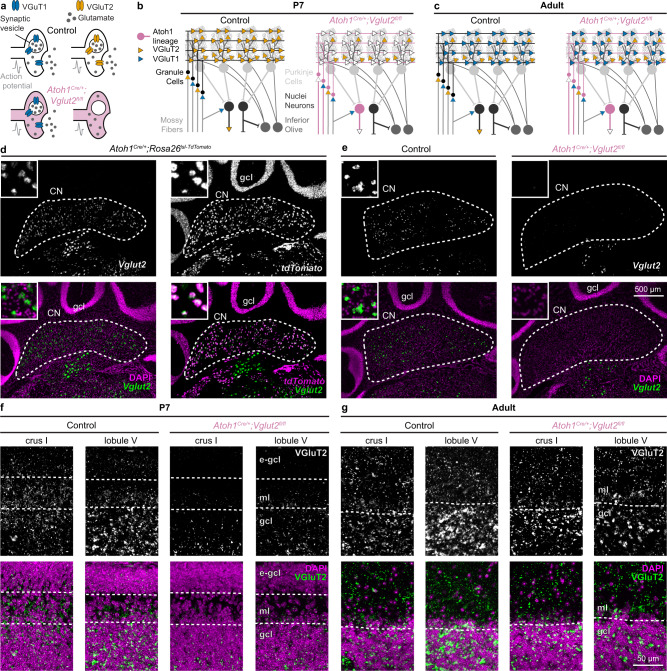
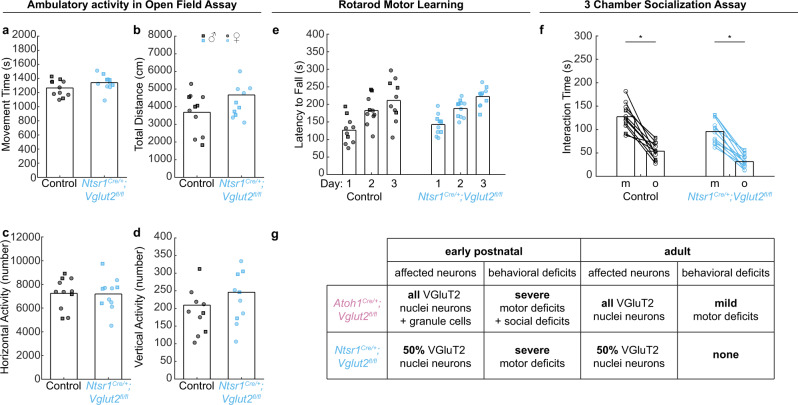
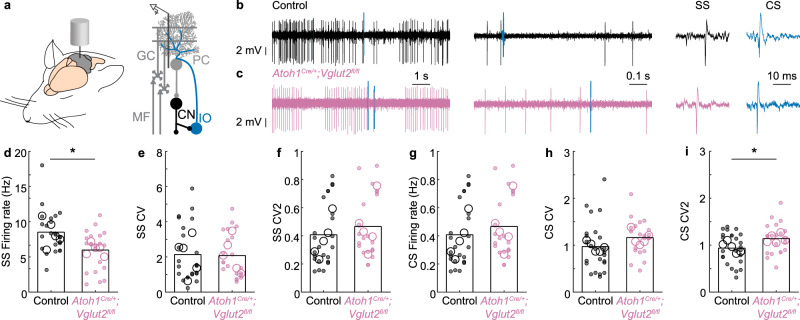
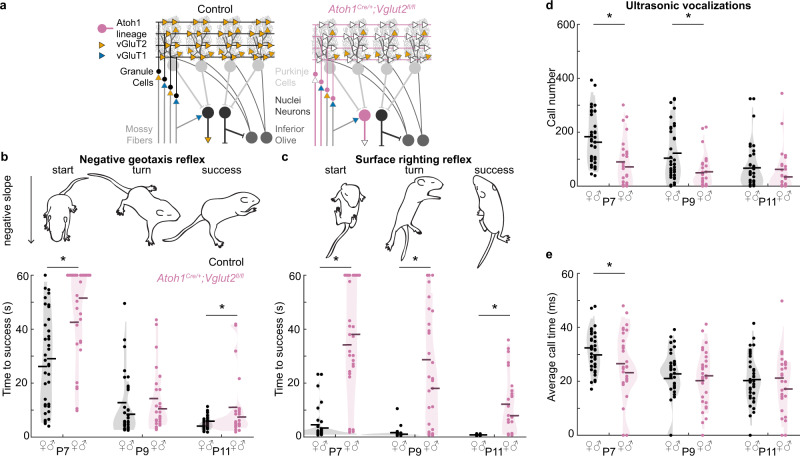
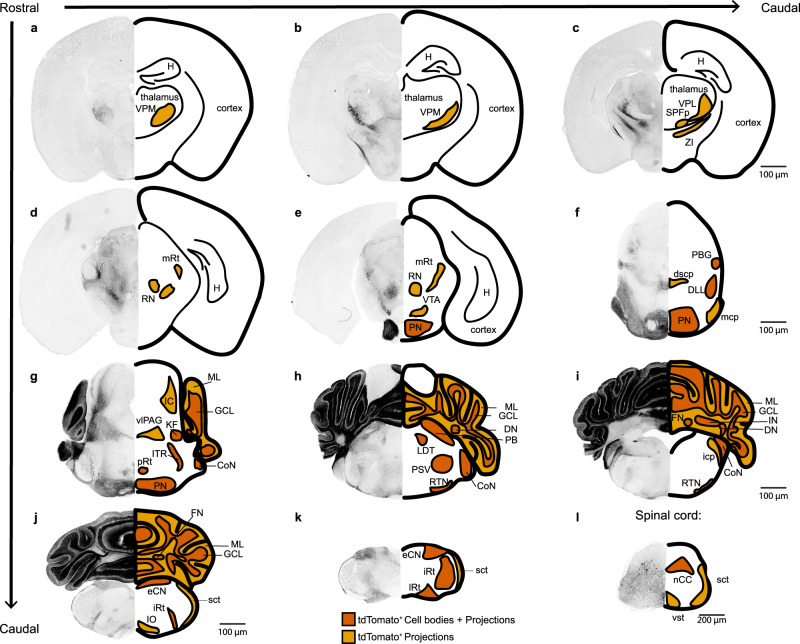
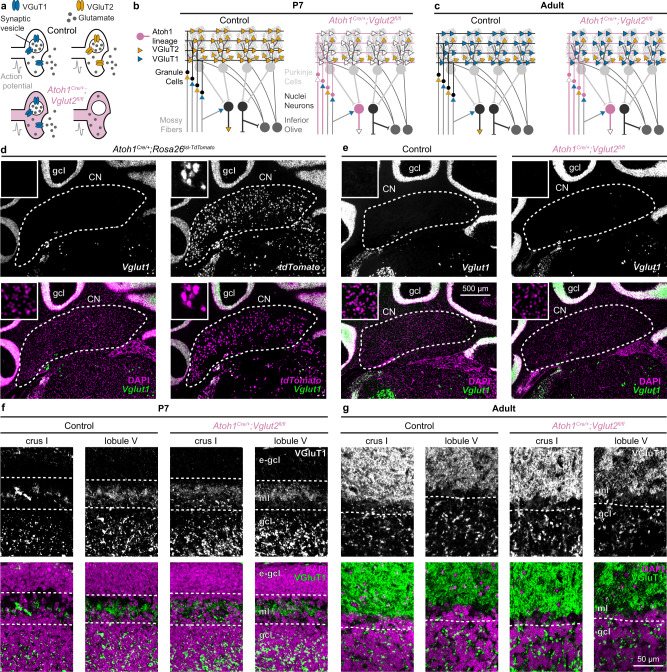
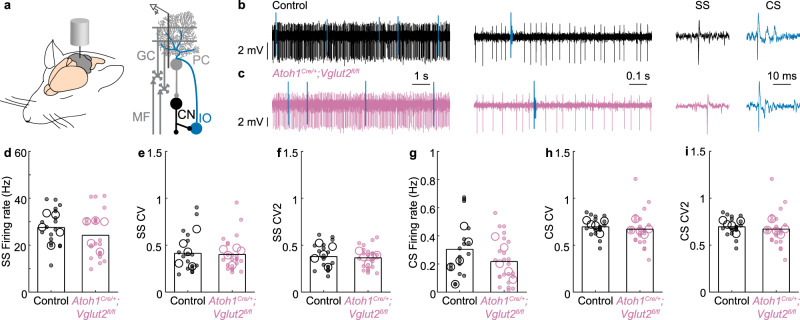
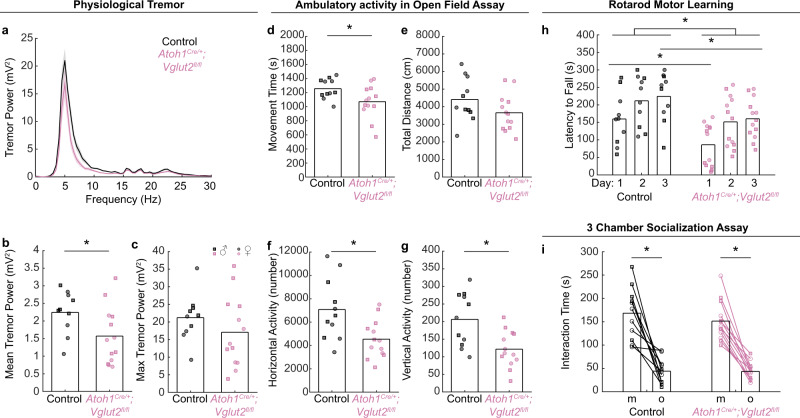
Insults to the developing cerebellum can cause motor, language, and social deficits. Here, we investigate whether developmental insults to different cerebellar neurons constrain the ability to acquire cerebellar-dependent behaviors. We perturb cerebellar cortical or nuclei neuron function by eliminating glutamatergic neurotransmission during development, and then we measure motor and social behaviors in early postnatal and adult mice. Altering cortical and nuclei neurons impacts postnatal motor control and social vocalizations. Normalizing neurotransmission in cortical neurons but not nuclei neurons restores social behaviors while the motor deficits remain impaired in adults. In contrast, manipulating only a subset of nuclei neurons leaves social behaviors intact but leads to early motor deficits that are restored by adulthood. Our data uncover that glutamatergic neurotransmission from cerebellar cortical and nuclei neurons differentially control the acquisition of motor and social behaviors, and that the brain can compensate for some but not all perturbations to the developing cerebellum.
对发育中的小脑的损伤会导致运动、语言和社交缺陷。在这里,我们研究了对不同小脑神经元的发育损伤是否会限制获得小脑依赖行为的能力。我们通过在发育过程中消除谷氨酸能神经传递来干扰小脑皮质或核神经元的功能,然后在新生和成年小鼠中测量运动和社交行为。改变皮质和核神经元会影响出生后的运动控制和社交发声。皮质神经元的神经传递正常化而核神经元的神经传递异常并不会改善运动缺陷,而社交行为在成年后仍会受到影响。相比之下,仅操纵核神经元的一部分会使社交行为保持正常,但会导致早期的运动缺陷,这些缺陷在成年后会得到恢复。我们的数据揭示了小脑皮质和核神经元的谷氨酸能神经传递对运动和社交行为的获得有不同的控制作用,并且大脑可以对发育中的小脑的一些但不是所有的损伤进行代偿。