Discipline of Public Health Medicine, College of Health Sciences, University of KwaZulu-Natal, Durban, 4000, South Africa.
Geosciences Department, School of Geosciences, Disaster and Development, Faculty of Science and Engineering, Bindura University of Science Education, Bag 1020, Bindura, Zimbabwe.
Sci Rep. 2023 May 15;13(1):7845. doi: 10.1038/s41598-023-34122-x.
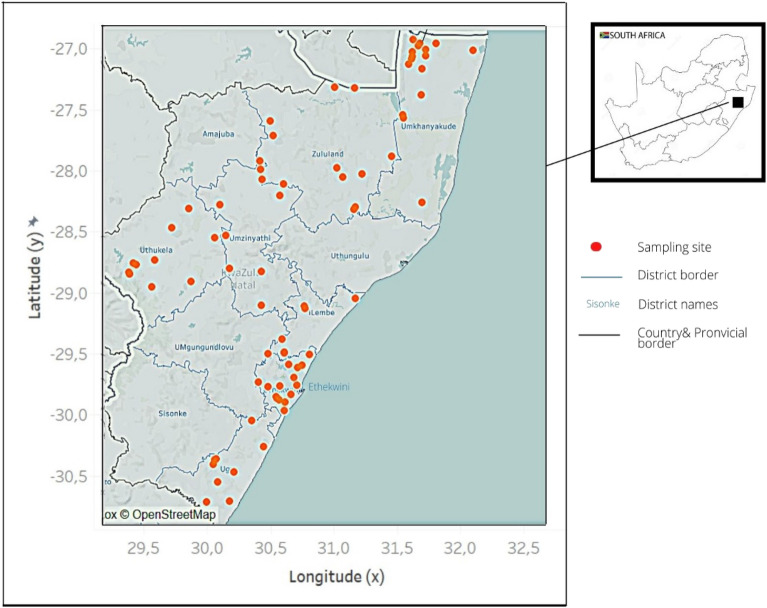
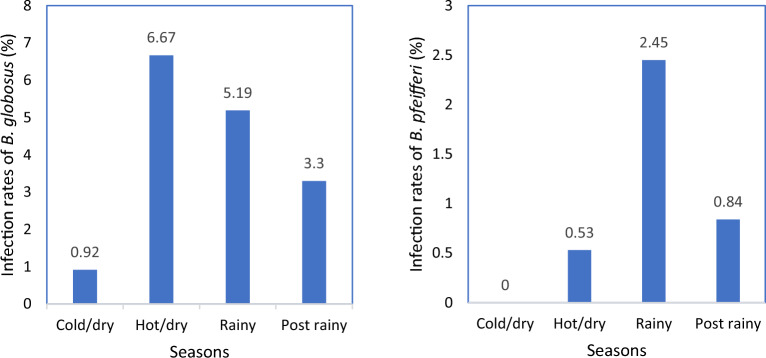
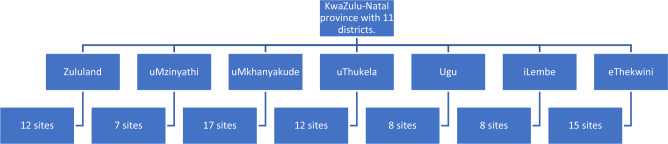
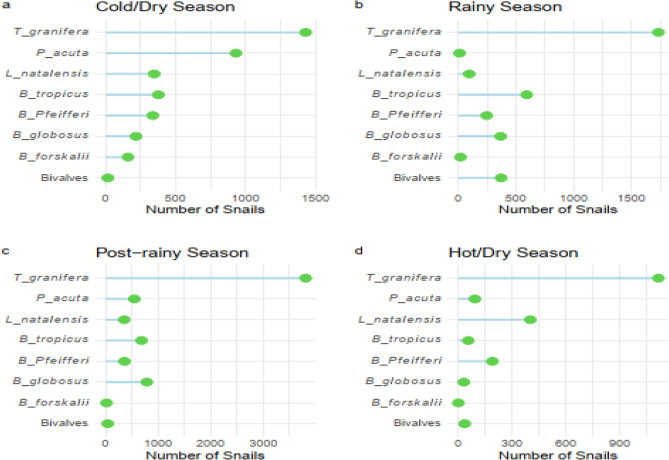
The spatial and seasonal distribution, abundance, and infection rates of human schistosomiasis intermediate host snails and interactions with other freshwater snails, water physicochemical parameters, and climatic factors was determined in this study. A longitudinal malacology survey was conducted at seventy-nine sites in seven districts in KwaZulu-Natal province between September 2020 and August 2021. Snail sampling was done simultaneously by two trained personnel for fifteen minutes, once in three months. A total of 15,756 snails were collected during the study period. Eight freshwater snails were found: Bulinus globosus (n = 1396), Biomphalaria pfeifferi (n = 1130), Lymnaea natalensis (n = 1195), Bulinus tropicus (n = 1722), Bulinus forskalii (n = 195), Tarebia granifera (n = 8078), Physa acuta (n = 1579), and Bivalves (n = 461). The infection rates of B. globosus and B. pfeifferi are 3.5% and 0.9%, respectively. In our study, rainfall, pH, type of habitats, other freshwater snails and seasons influenced the distribution, abundance, and infection rates of human schistosomiasis intermediate host snails (p-value < 0.05). Our findings provide useful information which can be adopted in designing and implementing snail control strategies as part of schistosomiasis control in the study area.
本研究旨在确定人类血吸虫中间宿主蜗牛的时空分布、丰度和感染率,以及与其他淡水蜗牛、水理化参数和气候因素的相互作用。2020 年 9 月至 2021 年 8 月,在夸祖鲁-纳塔尔省的七个区的 79 个地点进行了纵向贝类学调查。蜗牛采样由两名经过培训的人员同时进行,每 3 个月进行一次,每次 15 分钟。在研究期间共采集了 15756 只蜗牛。发现了 8 种淡水蜗牛:Bulinus globosus(n = 1396)、Biomphalaria pfeifferi(n = 1130)、Lymnaea natalensis(n = 1195)、Bulinus tropicus(n = 1722)、Bulinus forskalii(n = 195)、Tarebia granifera(n = 8078)、Physa acuta(n = 1579)和双壳类动物(n = 461)。B. globosus 和 B. pfeifferi 的感染率分别为 3.5%和 0.9%。在我们的研究中,降雨量、pH 值、栖息地类型、其他淡水蜗牛和季节影响了人类血吸虫中间宿主蜗牛的分布、丰度和感染率(p 值<0.05)。我们的研究结果提供了有用的信息,可以在设计和实施蜗牛控制策略时采用,作为研究区域血吸虫病控制的一部分。