ICMR-Regional Medical Research Centre, Bhubaneswar, Odisha, India.
Infect Dis Poverty. 2023 May 16;12(1):50. doi: 10.1186/s40249-023-01101-3.
Africa sees the surge of plague cases in recent decades, with hotspots in the Democratic Republic of Congo, Madagascar, and Peru. A rodent-borne scourge, the bacterial infection known as plague is transmitted to humans via the sneaky bites of fleas, caused by Yersinia pestis. Bubonic plague has a case fatality rate of 20.8% with treatment, but in places such as Madagascar the mortality rate can increase to 40-70% without treatment.
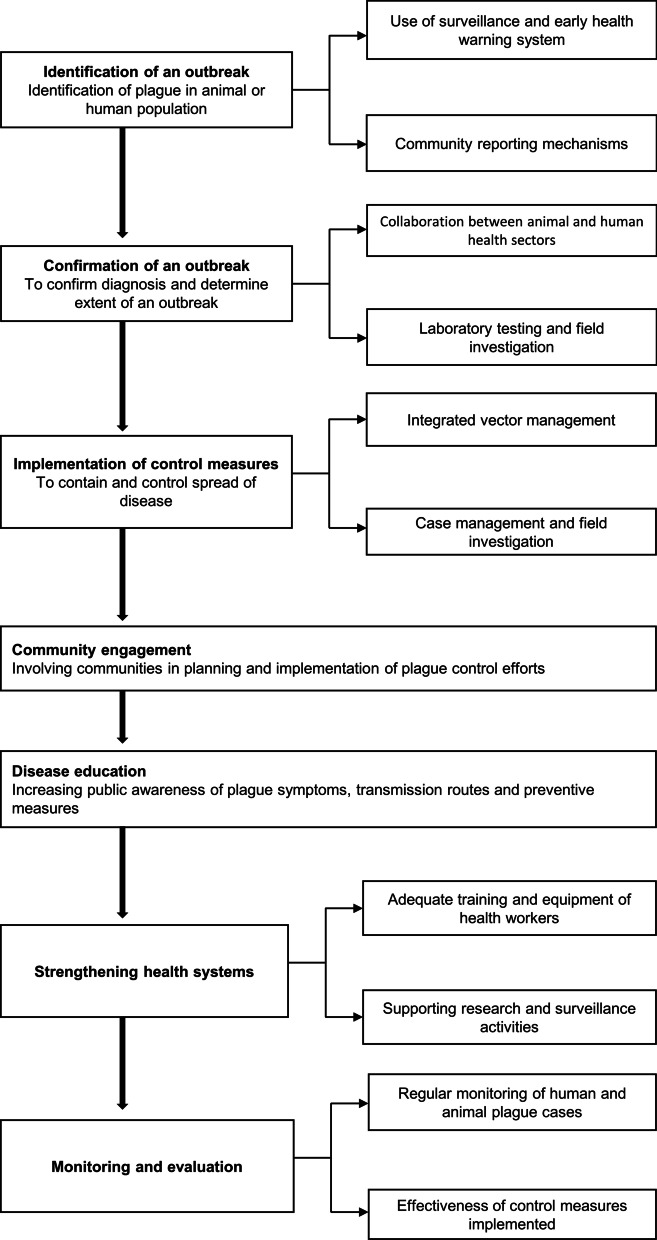
Tragedy strikes in the Ambohidratrimo district as three lives are claimed by the plague outbreak and three more fight for survival in the hospitals, including one man in critical condition, from the Ambohimiadana, Antsaharasty, and Ampanotokana communes, bringing the total plague victims in the area to a grim to five. Presently, the biggest concern is the potential plague spread among humans during the ongoing COVID-19 pandemic. Effective disease control can be achieved through training and empowering local leaders and healthcare providers in rural areas, implementing strategies to reduce human-rodent interactions, promoting water, sanitation and hygiene practices (WASH) practices, and carrying out robust vector, reservoir and pest control, diversified animal surveillance along with human surveillance should be done to more extensively to fill the lacunae of knowledge regarding the animal to human transmission. The lack of diagnostic laboratories equipped represents a major hurdle in the early detection of plague in rural areas. To effectively combat plague, these tests must be made more widely available. Additionally, raising awareness among the general population through various means such as campaigns, posters and social media about the signs, symptoms, prevention, and infection control during funerals would greatly decrease the number of cases. Furthermore, healthcare professionals should be trained on the latest methods of identifying cases, controlling infections and protecting themselves from the disease.
Despite being endemic to Madagascar, the outbreak's pace is unparalleled, and it may spread to non-endemic areas. The utilization of a One Health strategy that encompasses various disciplines is crucial for minimizing catastrophe risk, antibiotic resistance, and outbreak readiness. Collaboration across sectors and proper planning ensures efficient and consistent communication, risk management, and credibility during disease outbreaks.
非洲近几十年来 plague 病例激增,热点地区在刚果民主共和国、马达加斯加和秘鲁。这种由啮齿动物传播的瘟疫是由鼠疫耶尔森菌引起的,通过跳蚤偷偷叮咬人类传播。有治疗的情况下,腺鼠疫的病死率为 20.8%,但在马达加斯加等地方,如果没有治疗,死亡率可能会增加到 40-70%。
这场悲剧发生在安布希德拉特里莫区,爆发的鼠疫导致三人死亡,另外三人在医院中挣扎求生,其中包括一名来自安布希马迪纳、安萨哈拉斯蒂和安潘诺托卡纳社区的危重病人,使该地区的鼠疫总受害者人数达到了令人沮丧的五人。目前,最大的担忧是在持续的 COVID-19 大流行期间,鼠疫可能在人类中传播。通过培训和赋予农村地区的当地领导人和医疗保健提供者权力,可以实现有效的疾病控制,实施减少人与啮齿动物相互作用的策略,促进水、环境卫生和个人卫生(WASH)做法,并进行强有力的病媒、储存宿主和害虫控制,多样化的动物监测以及人类监测应该做得更广泛,以填补关于动物向人类传播的知识空白。缺乏配备诊断实验室代表着在农村地区早期发现鼠疫的主要障碍。为了有效地对抗鼠疫,必须更广泛地提供这些测试。此外,通过各种方式,如运动、海报和社交媒体,向公众宣传葬礼期间的症状、预防和感染控制意识,可以大大减少病例数量。此外,应该培训医疗保健专业人员使用最新方法识别病例、控制感染并保护自己免受疾病侵害。
尽管鼠疫在马达加斯加流行,但此次爆发的速度是前所未有的,它可能会传播到非流行地区。利用涵盖多个学科的“同一健康”策略对于降低灾难风险、抗生素耐药性和爆发准备至关重要。跨部门协作和适当的规划确保了在疾病爆发期间的高效和一致的沟通、风险管理和可信度。