Karim Shahid, Madani Batoul, Burzangi Abdulhadi S, Alsieni Mohammed, Bazuhair Mohammed A, Jamal Maha, Daghistani Hussam, Barasheed Mohammed O, Alkreathy Huda, Khan Mohammad Ahmed, Khan Lateef M
Department of Pharmacology, Faculty of Medicine, King Abdulaziz University, Jeddah 21589, Saudi Arabia.
Department of Clinical Biochemistry, Faculty of Medicine, King Abdulaziz University, Jeddah 21589, Saudi Arabia.
Biomedicines. 2023 Apr 7;11(4):1125. doi: 10.3390/biomedicines11041125.
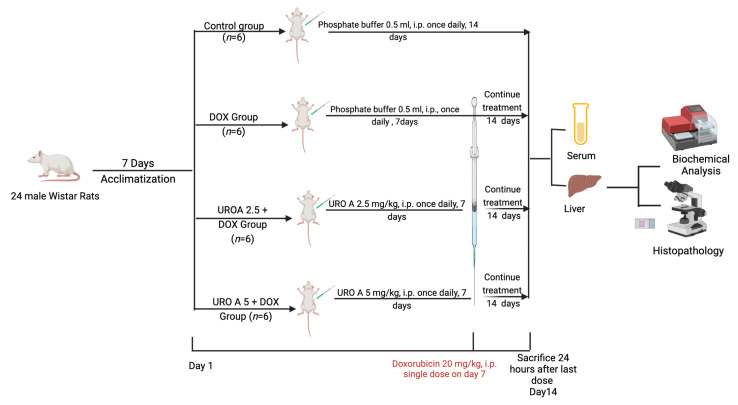
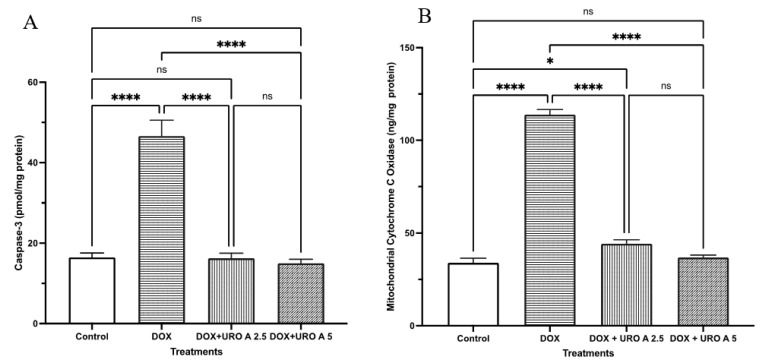
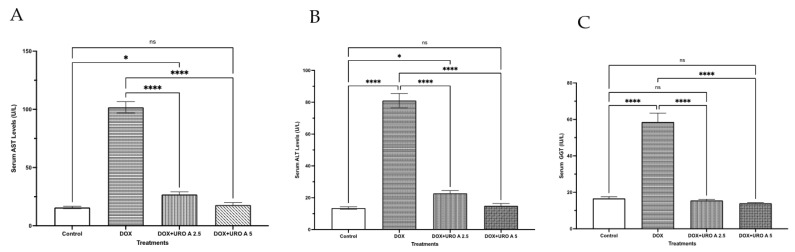
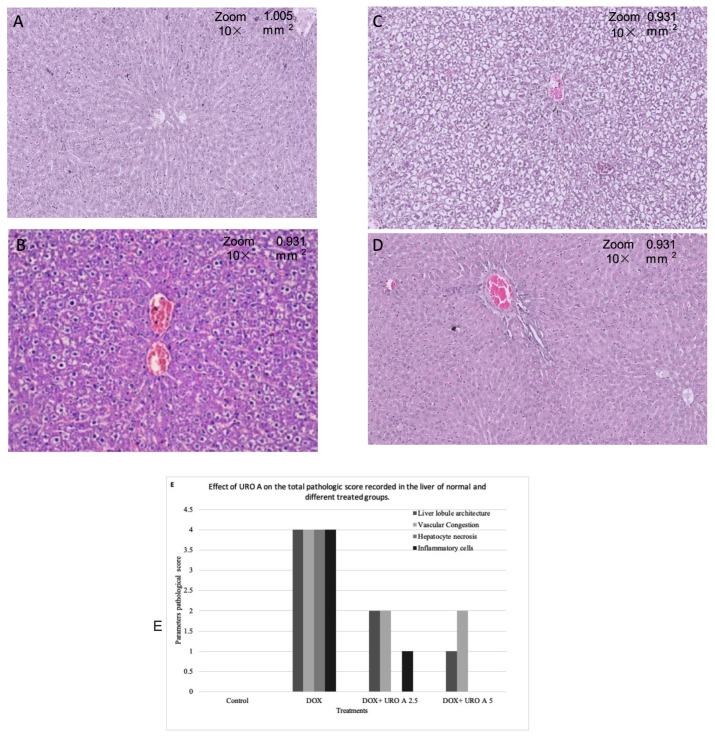
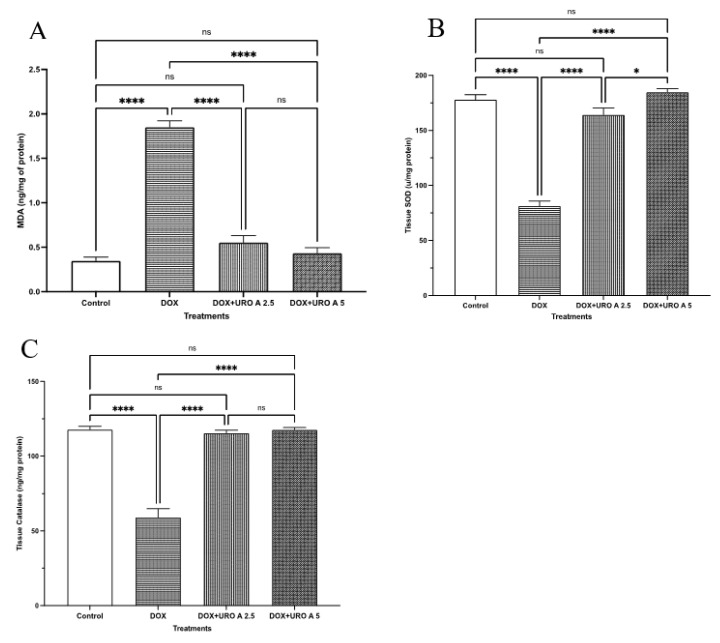
Human colon microbiota produce a metabolite called urolithin A (URO A) from ellagic acid and linked compounds, and this metabolite has been demonstrated to have antioxidant, anti-inflammatory, and antiapoptotic activities. The current work examines the various mechanisms through which URO A protects against doxorubicin (DOX)-induced liver injury in Wistar rats. In this experiment, Wistar rats were administered DOX intraperitoneally (20 mg kg) on day 7 while given URO A intraperitoneally (2.5 or 5 mg kg d) for 14 days. The serum levels of aspartate aminotransferase (AST), alanine aminotransferase (ALT), and gamma glutamyl transferase (GGT) were measured. Hematoxylin and eosin (HE) staining was used to evaluate histopathological characteristics, and then antioxidant and anti-inflammatory properties were evaluated in tissue and serum, respectively. We also looked at how active caspase 3 and cytochrome c oxidase were in the liver. The findings demonstrated that supplementary URO A therapy clearly mitigated DOX-induced liver damage. The antioxidant enzymes SOD and CAT were elevated in the liver, and the levels of inflammatory cytokines, such as TNF-α, NF-kB, and IL-6, in the tissue were significantly attenuated, all of which complemented the beneficial effects of URO A in DOX-induced liver injury. In addition, URO A was able to alter the expression of caspase 3 and cytochrome c oxidase in the livers of rats that were subjected to DOX stress. These results showed that URO A reduced DOX-induced liver injury by reducing oxidative stress, inflammation, and apoptosis.
人类结肠微生物群可从鞣花酸及相关化合物中产生一种名为尿石素A(URO A)的代谢产物,且已证明该代谢产物具有抗氧化、抗炎和抗凋亡活性。目前的研究工作探讨了URO A预防Wistar大鼠阿霉素(DOX)诱导的肝损伤的多种机制。在本实验中,Wistar大鼠在第7天腹腔注射DOX(20 mg/kg),同时腹腔注射URO A(2.5或5 mg/kg·d),持续14天。检测血清中天冬氨酸转氨酶(AST)、丙氨酸转氨酶(ALT)和γ-谷氨酰转移酶(GGT)的水平。采用苏木精-伊红(HE)染色评估组织病理学特征,然后分别在组织和血清中评估抗氧化和抗炎特性。我们还观察了肝脏中活化的半胱天冬酶3和细胞色素c氧化酶的活性。结果表明,补充URO A治疗可明显减轻DOX诱导的肝损伤。肝脏中的抗氧化酶超氧化物歧化酶(SOD)和过氧化氢酶(CAT)升高,组织中炎症细胞因子如肿瘤坏死因子-α(TNF-α)、核因子-κB(NF-κB)和白细胞介素-6(IL-6)的水平显著降低,所有这些都补充了URO A对DOX诱导的肝损伤的有益作用。此外,URO A能够改变遭受DOX应激的大鼠肝脏中半胱天冬酶3和细胞色素c氧化酶的表达。这些结果表明,URO A通过减轻氧化应激、炎症和细胞凋亡来减轻DOX诱导的肝损伤。