Rahat Murad Ali, Akbar Fazal, Rasool Akhtar, Ilyas Muhammad, Rakha Allah, Shams Sulaiman, Jelani Musharraf, Bibi Fehmida, Shirah Bader H, Abdulkareem Angham Abdulrhman, Naseer Muhammad Imran, Israr Muhammad
Centre for Biotechnology and Microbiology, University of Swat, Charbagh 19120, Pakistan.
Department of Forensic Sciences, University of Swat, Charbagh 19120, Pakistan.
Biomedicines. 2023 Apr 20;11(4):1228. doi: 10.3390/biomedicines11041228.
The core objective of forensic DNA typing is developing DNA profiles from biological evidence for personal identification. The present study was designed to check the validation of the IrisPlex system and the Prevalence of eye colour in the Pakhtoon population residing within the Malakand Division.
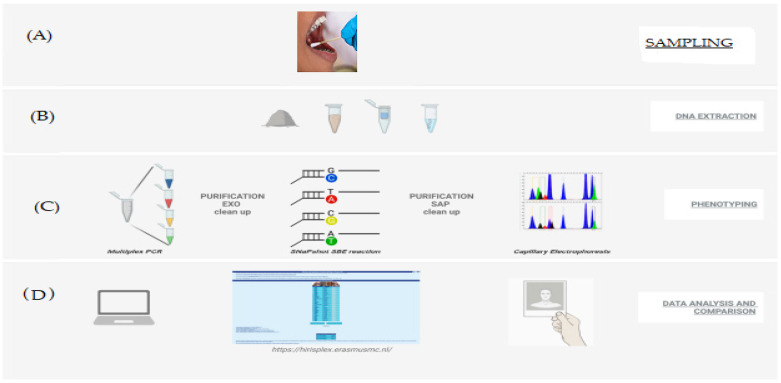
Eye colour digital photographs and buccal swab samples of 893 individuals of different age groups were collected. Multiplexed SNaPshot single base extension chemistry was used, and the genotypic results were analysed. Snapshot data were used for eye colour prediction through the IrisPlex and FROG-kb tool.
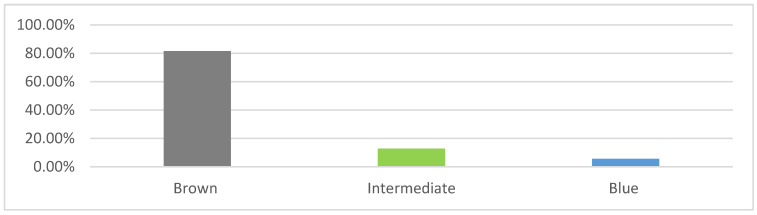
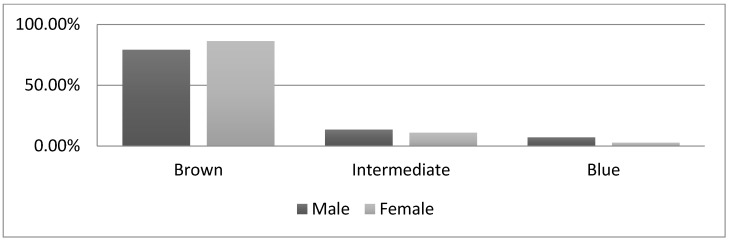
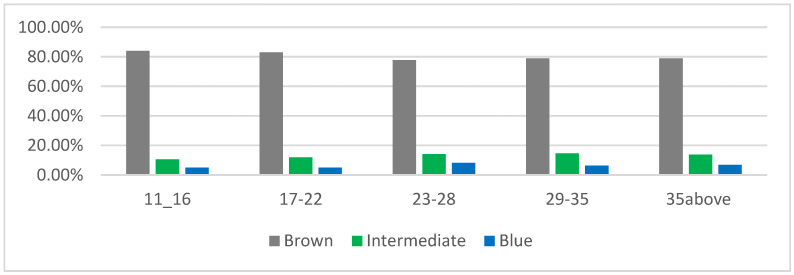
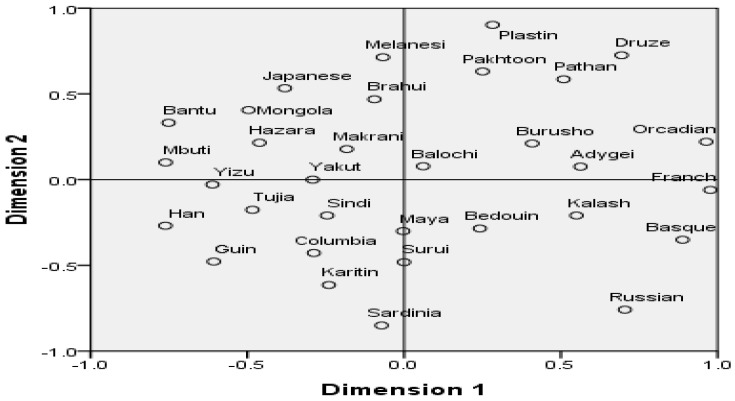
The results of the present study found brown eye colour to be the most prevalent eye colour in comparison to intermediate and blue coloured. Overall, individuals with brown-coloured eyes possess CT (46.84%) and TT (53.16%) genotypes. Blue eye-coloured individuals are solely of the CC genotype, while individuals of intermediate eye colour carry CT (45.15%) and CC (53.85%) genotypes in rs12913832 SNP in the gene. It was also revealed that brown-coloured eyes individuals were dominant among all age groups followed by intermediate and blue. Statistical analysis between particular variables and eye colour showed a significant -value (<0.05) for rs16891982 SNP in gene, rs12913832 SNP in gene, rs1393350 SNP in , districts and gender. The rest of the SNPs were non-significant with eye colour, respectively. The rs12896399 SNP and SNP rs1800407 were found significant with rs16891982 SNP. The result also demonstrated that the study group differs from the world population based on eye colour. The two eye colour prediction results were compared, and it was discovered that IrisPlex and FROG-Kb had similar higher prediction ratios for Brown and Blue eye colour.
The results of the current study revealed brown eye colour to be the most prevalent amongst members of the local population of Pakhtoon ethnicity in the Malakand Division of northern Pakistan. A set of contemporary human DNA samples with known phenotypes are used in this research to evaluate the custom panel's prediction accuracy. With the aid of this forensic test, DNA typing can be supplemented with details about the appearance of the person from whom the sample was taken in cases involving missing persons, ancient human remains, and trace samples. This study may be helpful for future population genetics and forensics studies.
法医DNA分型的核心目标是从生物证据中开发DNA图谱以进行个人识别。本研究旨在检验IrisPlex系统的有效性以及巴基斯坦马拉坎德专区普什图族人群的眼睛颜色分布情况。
收集了893名不同年龄组个体的眼睛颜色数码照片和口腔拭子样本。采用多重SNaPshot单碱基延伸化学方法,并对基因型结果进行分析。利用快照数据通过IrisPlex和FROG-kb工具进行眼睛颜色预测。
本研究结果发现,与中间色和蓝色眼睛相比,棕色眼睛是最常见的眼睛颜色。总体而言,棕色眼睛个体具有CT(46.84%)和TT(53.16%)基因型。蓝色眼睛个体仅为CC基因型,而中间色眼睛个体在该基因的rs12913832 SNP中携带CT(45.15%)和CC(53.85%)基因型。研究还发现,棕色眼睛个体在所有年龄组中占主导地位,其次是中间色和蓝色眼睛个体。特定变量与眼睛颜色之间的统计分析显示,该基因中的rs16891982 SNP、该基因中的rs12913832 SNP、该基因中的rs1393350 SNP、地区和性别具有显著的P值(<0.05)。其余SNP与眼睛颜色无显著相关性。发现rs12896399 SNP和SNP rs1800407与rs16891982 SNP具有显著相关性。结果还表明,基于眼睛颜色,该研究组与世界人群不同。对两种眼睛颜色预测结果进行比较,发现IrisPlex和FROG-Kb对棕色和蓝色眼睛颜色具有相似的较高预测率。
本研究结果显示,在巴基斯坦北部马拉坎德专区的普什图族当地人群中,棕色眼睛最为常见。本研究使用了一组具有已知表型的当代人类DNA样本,以评估定制检测板的预测准确性。借助这种法医检测,在涉及失踪人员、古代人类遗骸和微量样本的案件中,DNA分型可以补充关于样本提供者外貌的详细信息。本研究可能对未来的群体遗传学和法医研究有所帮助。