Institute of Physical Culture Sciences, University of Szczecin, 17C Narutowicza St., 70-240 Szczecin, Poland.
Department of Pathology, Pomeranian Medical University in Szczecin, 1 Unii Lubelskiej St., 71-242 Szczecin, Poland.
Cells. 2023 Apr 9;12(8):1119. doi: 10.3390/cells12081119.
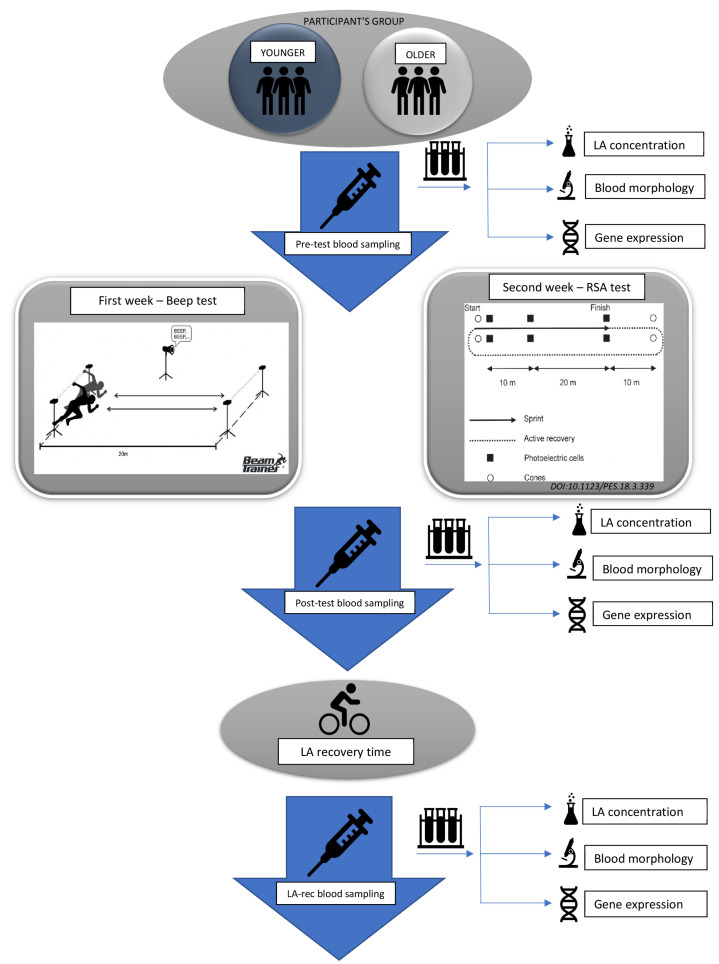
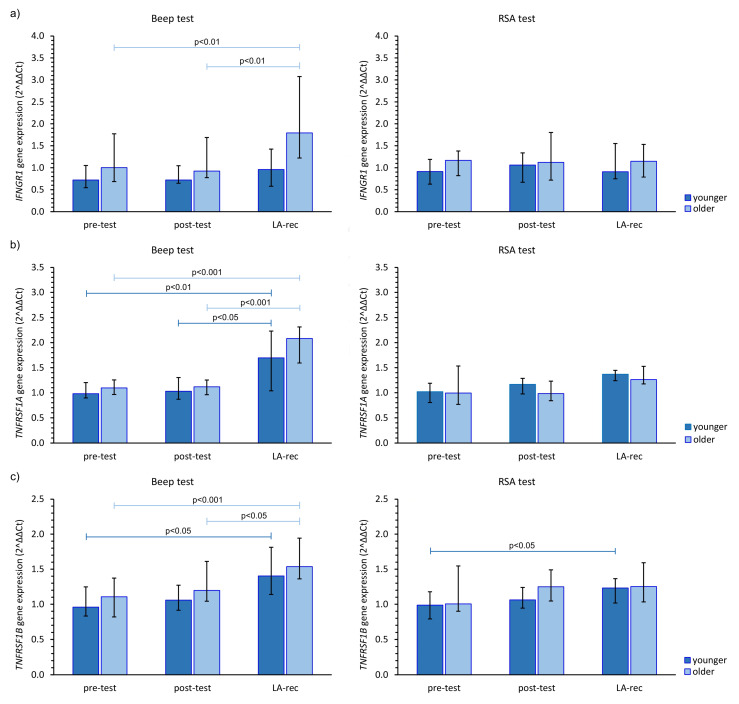
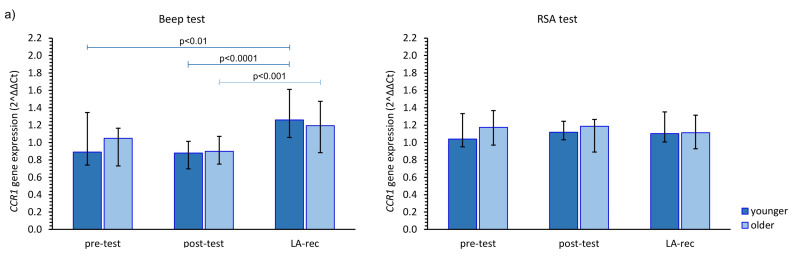
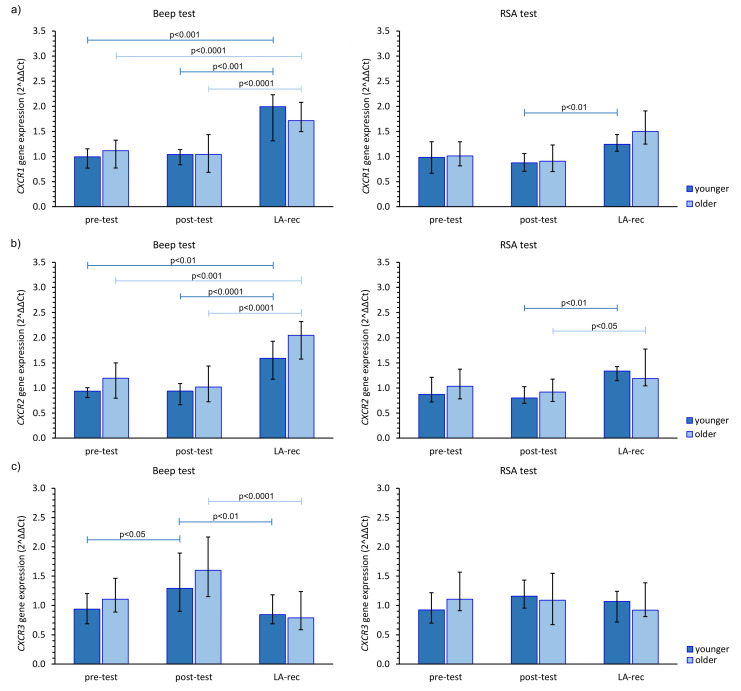
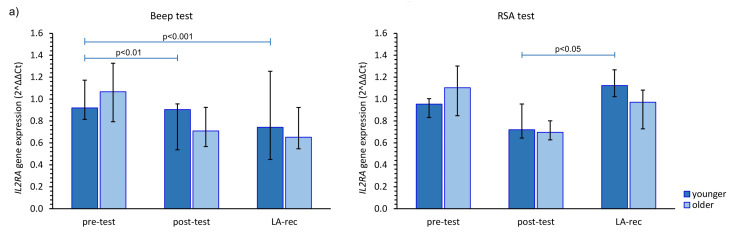
This study aimed to assess the post-effort transcriptional changes of selected genes encoding receptors for chemokines and interleukins in young, physically active men to better understand the immunomodulatory effect of physical activity. The participants, aged 16-21 years, performed physical exercise tasks of either a maximal multistage 20 m shuttle-run test (beep test) or a repeated speed ability test. The expression of selected genes encoding receptors for chemokines and interleukins in nucleated peripheral blood cells was determined using RT-qPCR. Aerobic endurance activity was a positive stimulant that induced increased expression of and genes following lactate recovery, while the maximum expression of was found immediately post-effort. The increase in the expression of inflammation-related genes encoding chemokine receptors triggered by aerobic effort strengthens the theory that physical effort induces sterile inflammation. Different profiles of studied chemokine receptor gene expression induced by short-term anaerobic effort suggest that not all types of physical effort activate the same immunological pathways. A significant increase in gene expression after the beep test confirmed the hypothesis that cells expressing this receptor, including Th17 lymphocyte subsets, can be involved in the creation of an immune response after endurance efforts.
本研究旨在评估年轻、活跃男性进行体力活动后,编码趋化因子和白细胞介素受体的选定基因的转录后变化,以更好地了解体力活动的免疫调节作用。参与者年龄在 16-21 岁之间,进行了最大多阶段 20 米穿梭跑测试(节拍器测试)或重复速度能力测试。使用 RT-qPCR 测定核外周血单个核细胞中编码趋化因子和白细胞介素受体的选定基因的表达。有氧耐力活动是一种正向刺激,可在乳酸恢复后诱导 和 基因表达增加,而最大 表达则在努力后立即出现。有氧努力引起的与炎症相关基因编码趋化因子受体的表达增加,加强了体力活动引起无菌性炎症的理论。由短期无氧努力引起的研究趋化因子受体基因表达的不同模式表明,并非所有类型的体力活动都能激活相同的免疫途径。在节拍器测试后, 基因表达的显著增加证实了这样一个假设,即表达这种受体的细胞,包括 Th17 淋巴细胞亚群,可在耐力运动后参与免疫反应的产生。