
线粒体质量控制与神经退行性疾病交叉路口的沉默调节蛋白:结构、调控、修饰及调节剂
Sirtuins at the Crossroads between Mitochondrial Quality Control and Neurodegenerative Diseases: Structure, Regulation, Modifications, and Modulators.
作者信息
Xu Hui, Liu Yi-Yang, Li Lin-Seng, Liu You-Shuo
机构信息
Department of Geriatrics, The Second Xiangya Hospital of Central South University, Changsha, Hunan, China.
Institute of Aging and Age-related Disease Research, Central South University, Changsha, Hunan, China.
出版信息
Aging Dis. 2023 Jun 1;14(3):794-824. doi: 10.14336/AD.2022.1123.
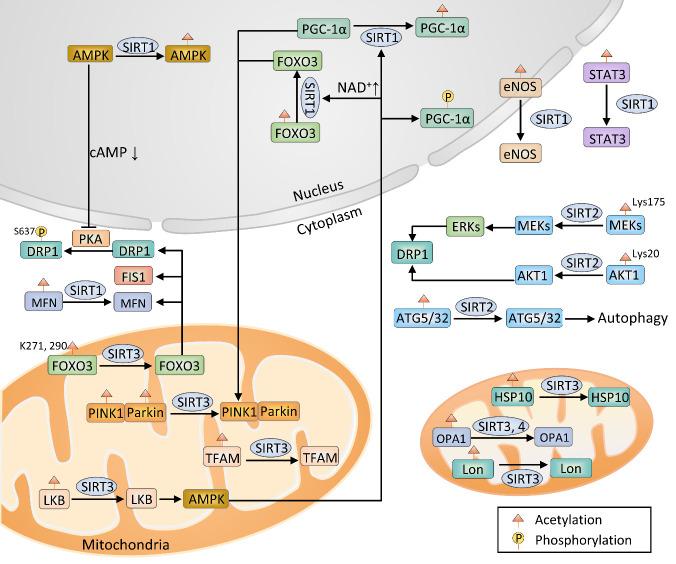
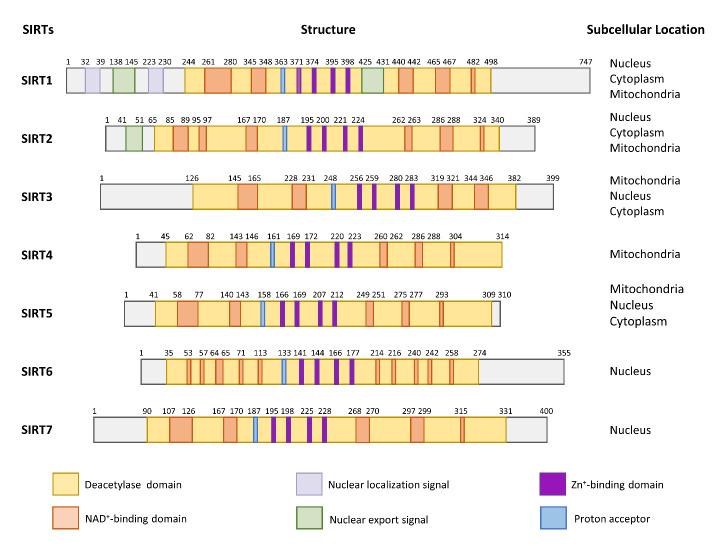
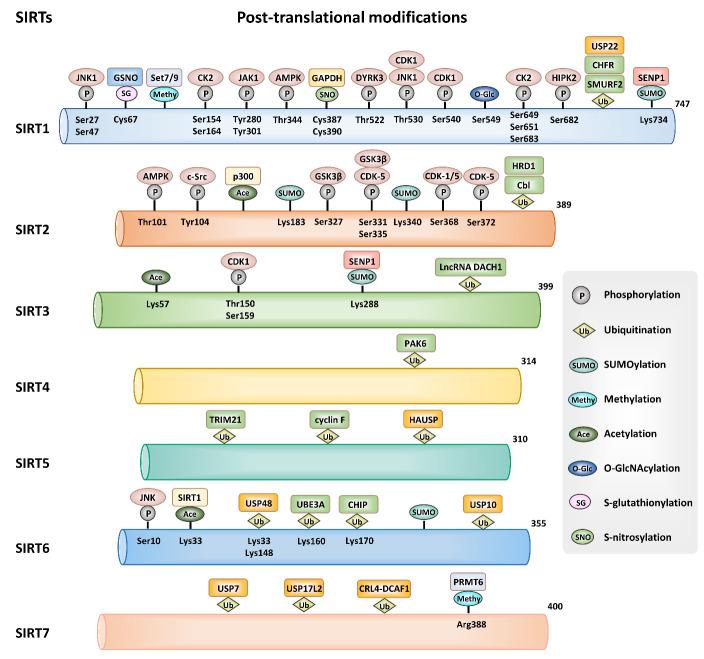
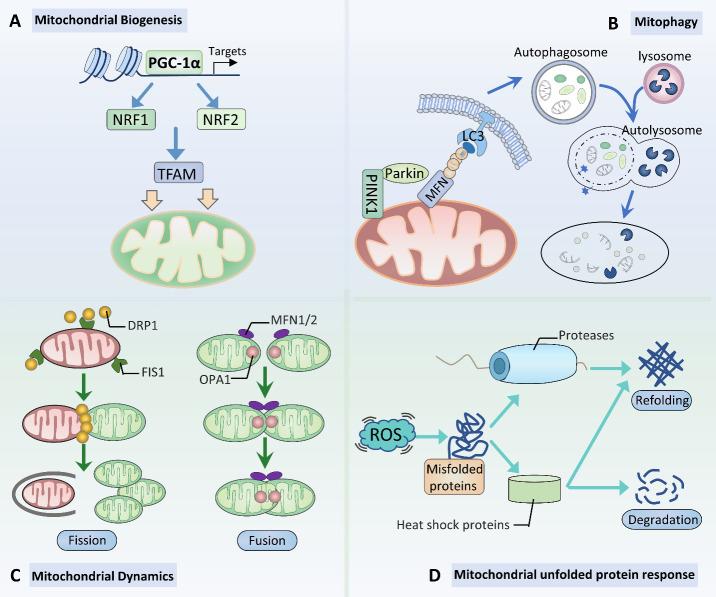
Sirtuins (SIRT1-SIRT7), a family of nicotinamide adenine dinucleotide (NAD)-dependent enzymes, are key regulators of life span and metabolism. In addition to acting as deacetylates, some sirtuins have the properties of deacylase, decrotonylase, adenosine diphosphate (ADP)-ribosyltransferase, lipoamidase, desuccinylase, demalonylase, deglutarylase, and demyristolyase. Mitochondrial dysfunction occurs early on and acts causally in the pathogenesis of neurodegenerative diseases, including Alzheimer's disease (AD), Parkinson's disease (PD), and Huntington's disease (HD). Sirtuins are implicated in the regulation of mitochondrial quality control, which is highly associated with the pathogenesis of neurodegenerative diseases. There is growing evidence indicating that sirtuins are promising and well-documented molecular targets for the treatment of mitochondrial dysfunction and neurodegenerative disorders by regulating mitochondrial quality control, including mitochondrial biogenesis, mitophagy, mitochondrial fission/fusion dynamics, and mitochondrial unfolded protein responses (mtUPR). Therefore, elucidation of the molecular etiology of sirtuin-mediated mitochondrial quality control points to new prospects for the treatment of neurodegenerative diseases. However, the mechanisms underlying sirtuin-mediated mitochondrial quality control remain obscure. In this review, we update and summarize the current understanding of the structure, function, and regulation of sirtuins with an emphasis on the cumulative and putative effects of sirtuins on mitochondrial biology and neurodegenerative diseases, particularly their roles in mitochondrial quality control. In addition, we outline the potential therapeutic applications for neurodegenerative diseases of targeting sirtuin-mediated mitochondrial quality control through exercise training, calorie restriction, and sirtuin modulators in neurodegenerative diseases.
沉默调节蛋白(SIRT1 - SIRT7)是一类烟酰胺腺嘌呤二核苷酸(NAD)依赖的酶,是寿命和代谢的关键调节因子。除了作为去乙酰化酶起作用外,一些沉默调节蛋白还具有脱酰基酶、脱巴豆酰酶、二磷酸腺苷(ADP)核糖基转移酶、硫辛酰胺酶、去琥珀酰酶、去丙二酰酶、去戊二酰酶和去肉豆蔻酰酶的特性。线粒体功能障碍在神经退行性疾病(包括阿尔茨海默病(AD)、帕金森病(PD)和亨廷顿病(HD))的发病机制中早期就会出现并起因果作用。沉默调节蛋白参与线粒体质量控制的调节,这与神经退行性疾病的发病机制高度相关。越来越多的证据表明,沉默调节蛋白是通过调节线粒体质量控制(包括线粒体生物发生、线粒体自噬、线粒体分裂/融合动力学和线粒体未折叠蛋白反应(mtUPR))来治疗线粒体功能障碍和神经退行性疾病的有前景且有充分文献记载的分子靶点。因此,阐明沉默调节蛋白介导的线粒体质量控制的分子病因指向了神经退行性疾病治疗的新前景。然而,沉默调节蛋白介导的线粒体质量控制的潜在机制仍然不清楚。在本综述中,我们更新并总结了目前对沉默调节蛋白的结构、功能和调节的理解,重点是沉默调节蛋白对线粒体生物学和神经退行性疾病的累积和假定影响,特别是它们在线粒体质量控制中的作用。此外,我们概述了通过运动训练、热量限制和神经退行性疾病中的沉默调节蛋白调节剂靶向沉默调节蛋白介导的线粒体质量控制在神经退行性疾病中的潜在治疗应用。


 Zotero 插件