Stockdale Stephen R, Blanchard Adam M, Nayak Amit, Husain Aliabbas, Nashine Rupam, Dudani Hemanshi, McClure C Patrick, Tarr Alexander W, Nag Aditi, Meena Ekta, Sinha Vikky, Shrivastava Sandeep K, Hill Colin, Singer Andrew C, Gomes Rachel L, Acheampong Edward, Chidambaram Saravana B, Bhatnagar Tarun, Vetrivel Umashankar, Arora Sudipti, Kashyap Rajpal Singh, Monaghan Tanya M
APC Microbiome Ireland, University College Cork, Co. Cork, Ireland.
School of Veterinary Medicine and Science, University of Nottingham, Nottingham, United Kingdom.
Lancet Reg Health Southeast Asia. 2023 May 1;14:100205. doi: 10.1016/j.lansea.2023.100205. eCollection 2023 Jul.
The COVID-19 pandemic showcased the power of genomic sequencing to tackle the emergence and spread of infectious diseases. However, metagenomic sequencing of total microbial RNAs in wastewater has the potential to assess multiple infectious diseases simultaneously and has yet to be explored.
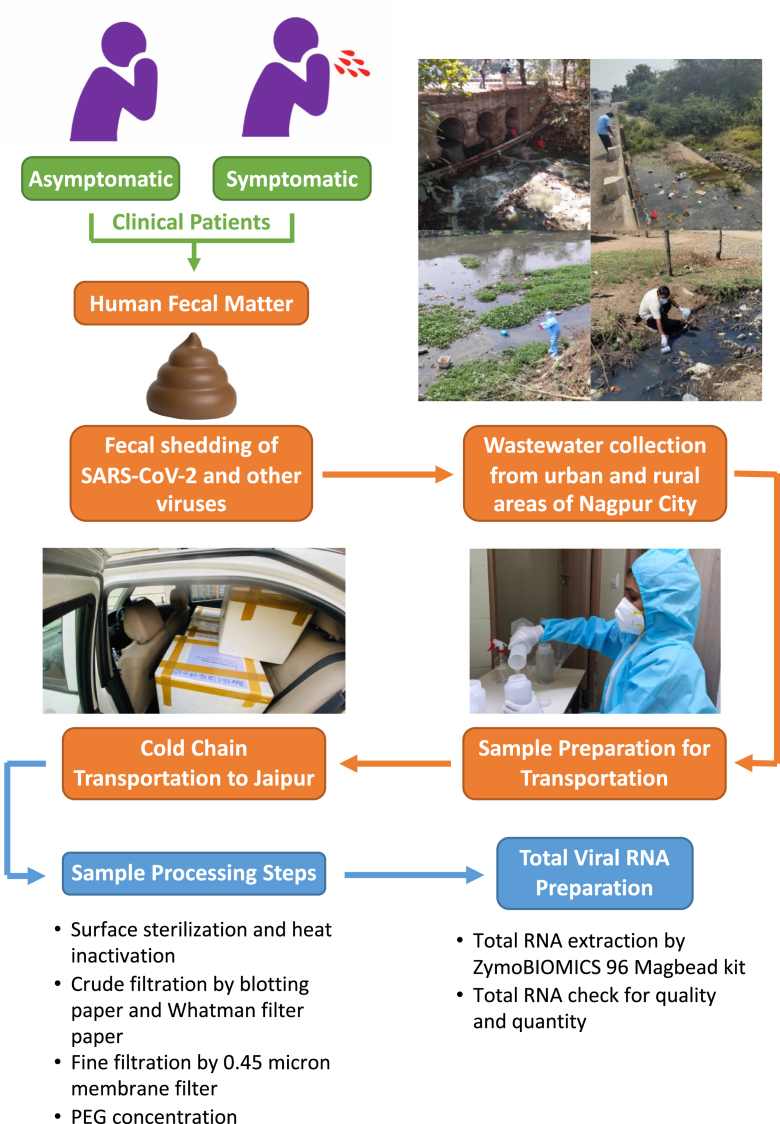
A retrospective RNA-Seq epidemiological survey of 140 untreated composite wastewater samples was performed across urban (n = 112) and rural (n = 28) areas of Nagpur, Central India. Composite wastewater samples were prepared by pooling 422 individual grab samples collected prospectively from sewer lines of urban municipality zones and open drains of rural areas from 3rd February to 3rd April 2021, during the second COVID-19 wave in India. Samples were pre-processed and total RNA was extracted prior to genomic sequencing.
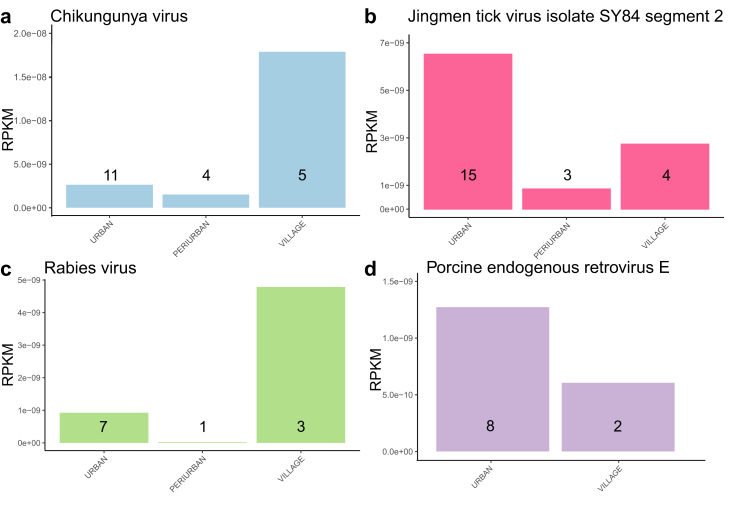
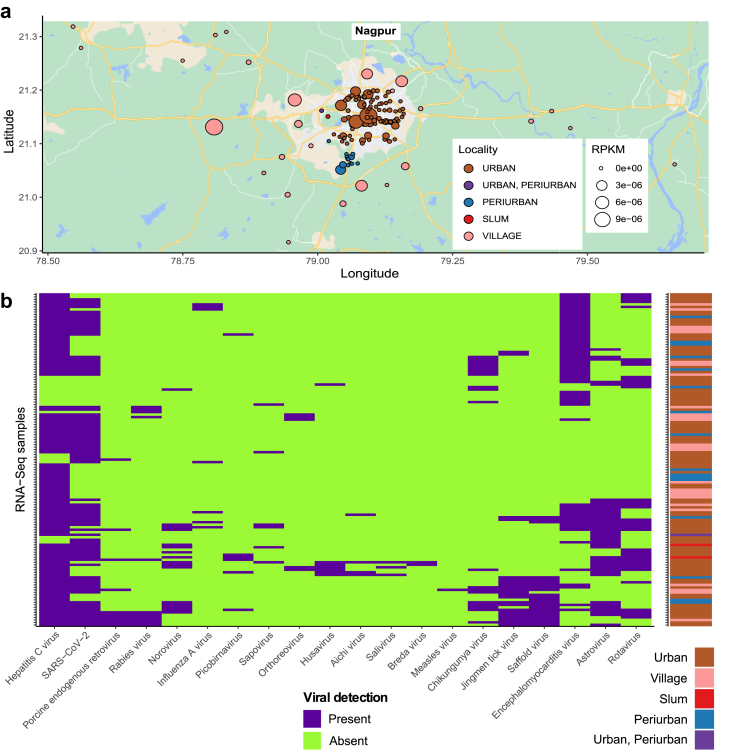
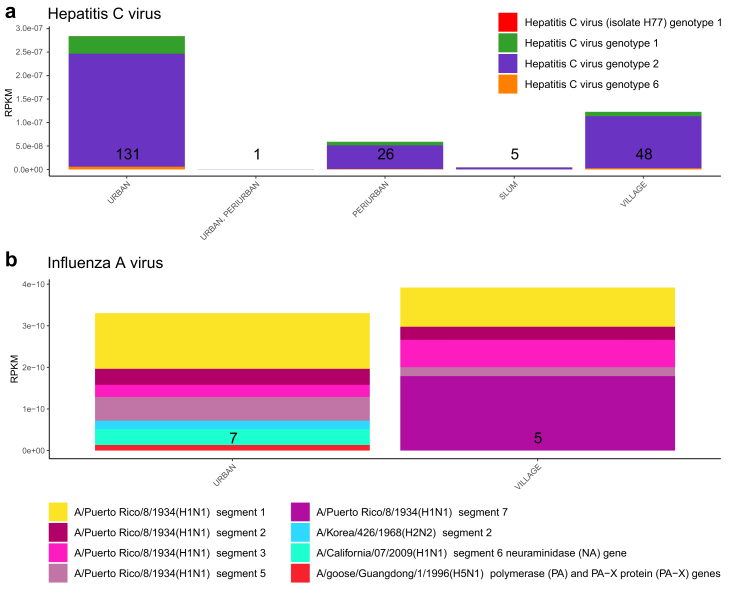
This is the first study that has utilised culture and/or probe-independent unbiased RNA-Seq to examine Indian wastewater samples. Our findings reveal the detection of zoonotic viruses including chikungunya, Jingmen tick and rabies viruses, which have not previously been reported in wastewater. SARS-CoV-2 was detectable in 83 locations (59%), with stark abundance variations observed between sampling sites. Hepatitis C virus was the most frequently detected infectious virus, identified in 113 locations and co-occurring 77 times with SARS-CoV-2; and both were more abundantly detected in rural areas than urban zones. Concurrent identification of segmented virus genomic fragments of influenza A virus, norovirus, and rotavirus was observed. Geographical differences were also observed for astrovirus, saffold virus, husavirus, and aichi virus that were more prevalent in urban samples, while the zoonotic viruses chikungunya and rabies, were more abundant in rural environments.
RNA-Seq can effectively detect multiple infectious diseases simultaneously, facilitating geographical and epidemiological surveys of endemic viruses that could help direct healthcare interventions against emergent and pre-existent infectious diseases as well as cost-effectively and qualitatively characterising the health status of the population over time.
UK Research and Innovation (UKRI) Global Challenges Research Fund (GCRF) grant number H54810, as supported by Research England.
2019冠状病毒病(COVID-19)大流行展示了基因组测序在应对传染病出现和传播方面的力量。然而,对污水中总微生物RNA进行宏基因组测序有潜力同时评估多种传染病,这一点尚未得到探索。
对印度中部那格浦尔市的城市地区(n = 112)和农村地区(n = 28)的140份未经处理的混合污水样本进行了一项回顾性RNA测序流行病学调查。混合污水样本是通过汇集2021年2月3日至4月3日期间在印度第二次COVID-19浪潮期间从城市市政区下水道和农村露天排水沟前瞻性采集的422份单独抓取样本制备而成。样本经过预处理后,在进行基因组测序之前提取总RNA。
这是第一项利用不依赖培养和/或探针的无偏差RNA测序来检测印度污水样本的研究。我们的研究结果显示检测到了包括基孔肯雅病毒、荆门蜱传病毒和狂犬病病毒在内的人畜共患病毒,这些病毒此前尚未在污水中被报道过。在83个地点(59%)检测到了严重急性呼吸综合征冠状病毒2(SARS-CoV-2),不同采样地点之间观察到了明显的丰度差异。丙型肝炎病毒是最常检测到的传染性病毒,在113个地点被识别,与SARS-CoV-2共现77次;且在农村地区的检测丰度均高于城市地区。同时观察到甲型流感病毒、诺如病毒和轮状病毒的分段病毒基因组片段的鉴定。对于星状病毒、萨福尔德病毒、胡萨病毒和爱知病毒也观察到了地理差异,这些病毒在城市样本中更为普遍,而人畜共患病毒基孔肯雅病毒和狂犬病病毒在农村环境中更为丰富。
RNA测序可以有效地同时检测多种传染病,有助于对地方性病毒进行地理和流行病学调查,这有助于指导针对新出现和既往存在的传染病的医疗干预措施,以及随着时间的推移以具有成本效益和定性的方式描述人群的健康状况。
由英国研究与创新署(UKRI)全球挑战研究基金(GCRF)资助,资助编号H54810,由英格兰研究署支持。