Albalawi Eman D, Alswayed Sarah K, Aldharman Sarah S, Alshangiti Asmaa Y, Alhussein Ghadah A, Alamawi Halah O
Department of Ophthalmology, Princess Nourah bint Abdulrahman University, Riyadh, SAU.
College of Medicine, King Saud Bin Abdulaziz University for Health Sciences, Riyadh, SAU.
Cureus. 2023 Apr 13;15(4):e37533. doi: 10.7759/cureus.37533. eCollection 2023 Apr.
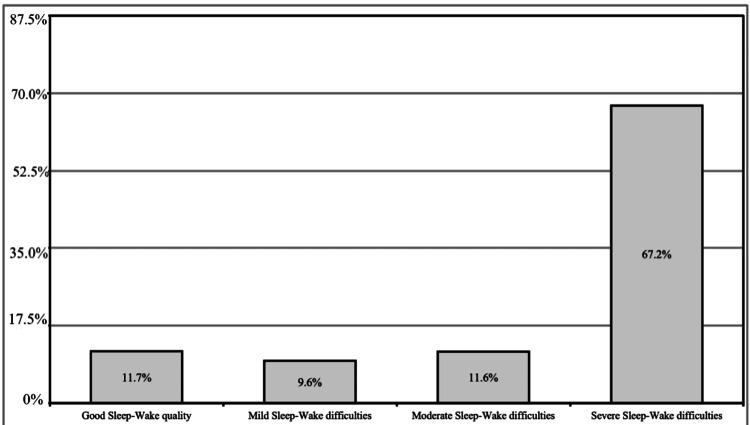
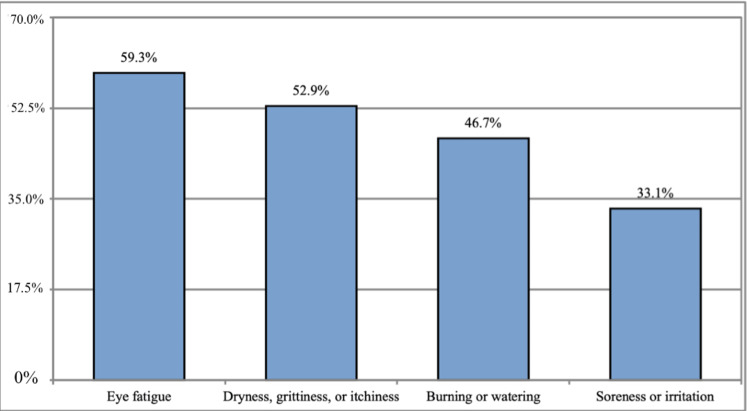
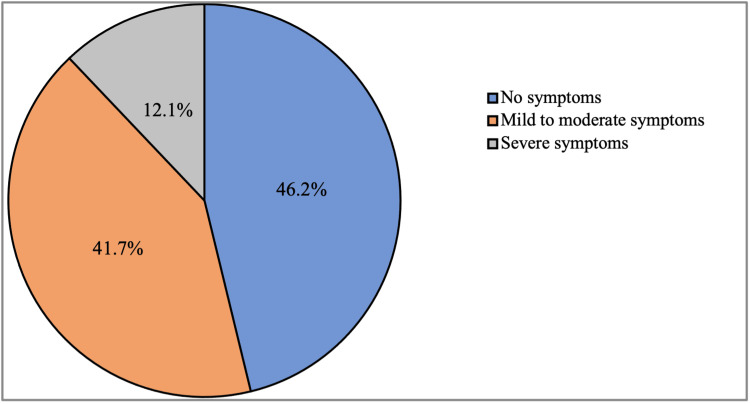
Background Dry eye is a serious public health issue that causes ocular discomfort, weariness, and visual disturbances that can disrupt everyday activities. Dry eye disease is one of the most common reasons people seek eye care. Therefore, this study aimed to assess the association between screen time, sleep quality, and dry eye among college students in Saudi Arabia. Methods This cross-sectional study was conducted among college students in Saudi Arabia. Data were collected through a validated questionnaire distributed via social media. Results A total of 1,593 participants were included. Many of them were aged between 18-25 years (80.7%) and females were (65.0%). Females and residents of the middle region had significantly more severe sleep-wake difficulties than other people (p<0.001). Participants with a master's degree had lower severe sleep-wake difficulties than other participants (p<0.001). Participants who spent between 4-6 hours on the screen showed high severe sleep-wake difficulties (p<0.001). Regarding eye dryness, females, participants with a bachelor's degree, and participants who spent more than six hours on screen had more severe symptoms of eye dryness. Nearly half of the participants with severe sleep-wake difficulties reported mild to moderate symptoms of dry eye (p<0.001). Conclusions Our study concluded that university students in Saudi Arabia had significant sleep-cycle difficulties and mild to moderate eye dryness symptoms. Age, female gender, sleep duration, educational level, monthly income, and excessive screen time were found to be associated with sleep-cycle problems and eye dryness symptoms.
干眼症是一个严重的公共卫生问题,会导致眼部不适、疲劳以及视觉干扰,进而影响日常活动。干眼症是人们寻求眼部护理的最常见原因之一。因此,本研究旨在评估沙特阿拉伯大学生的屏幕使用时间、睡眠质量与干眼症之间的关联。
本横断面研究在沙特阿拉伯的大学生中开展。通过社交媒体分发的一份经过验证的问卷收集数据。
共纳入1593名参与者。其中许多人年龄在18至25岁之间(80.7%),女性占(65.0%)。女性和中部地区的居民在睡眠-觉醒困难方面比其他人明显更严重(p<0.001)。拥有硕士学位的参与者比其他参与者的严重睡眠-觉醒困难程度更低(p<0.001)。屏幕使用时间在4至6小时的参与者表现出较高的严重睡眠-觉醒困难(p<0.001)。关于眼睛干涩,女性、拥有学士学位的参与者以及屏幕使用时间超过6小时的参与者有更严重的眼睛干涩症状。近一半有严重睡眠-觉醒困难的参与者报告有轻度至中度的干眼症症状(p<0.001)。
我们的研究得出结论,沙特阿拉伯的大学生存在明显的睡眠周期困难以及轻度至中度的眼睛干涩症状。发现年龄、女性性别、睡眠时间、教育水平、月收入和过度的屏幕使用时间与睡眠周期问题和眼睛干涩症状有关。