Institute of Preventive Veterinary Medicine, Zhejiang Provincial Key Laboratory of Preventive Veterinary Medicine, College of Animal Sciences, Zhejiang University, Hangzhou, Zhejiang Province, China.
Hainan Institute, Zhejiang University, Yazhou Bay Sci-Tech City, Sanya, China.
Microbiol Spectr. 2023 Jun 15;11(3):e0010423. doi: 10.1128/spectrum.00104-23. Epub 2023 May 18.
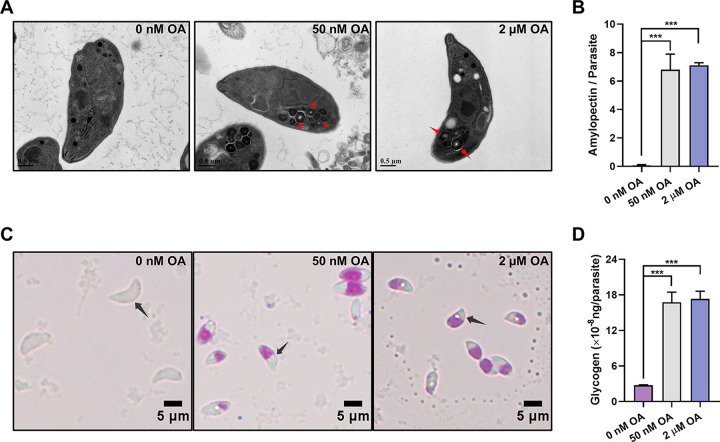
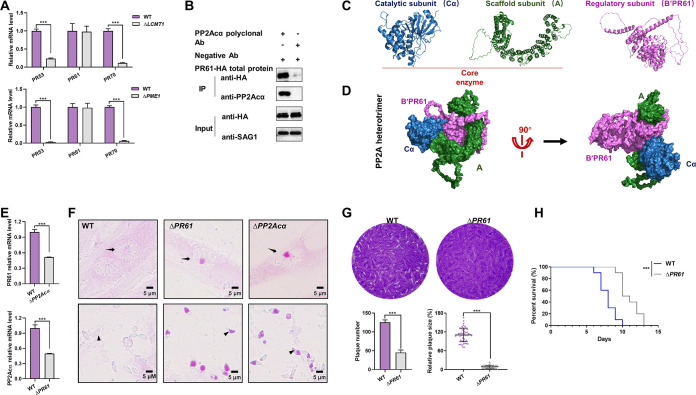
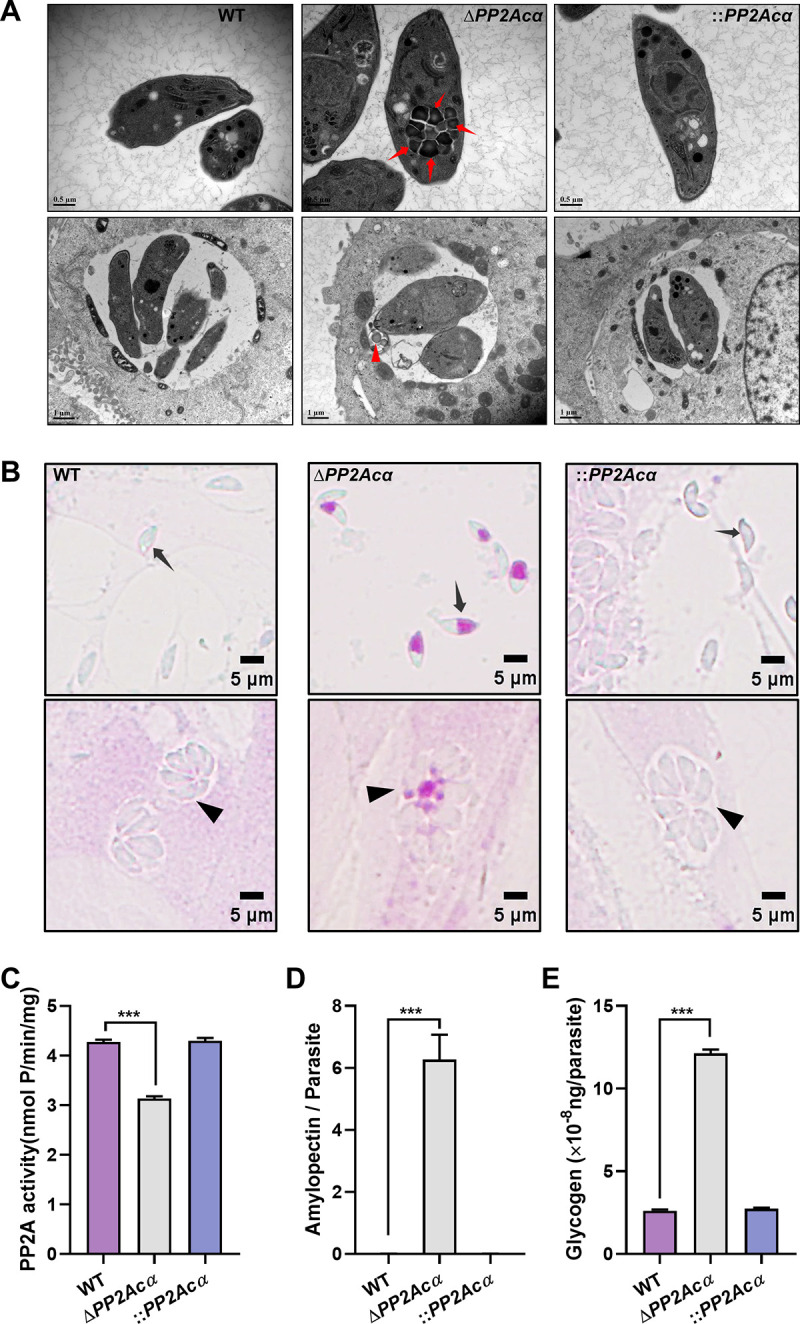
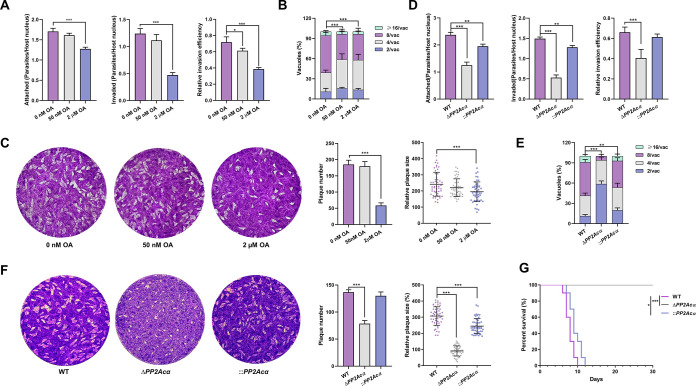
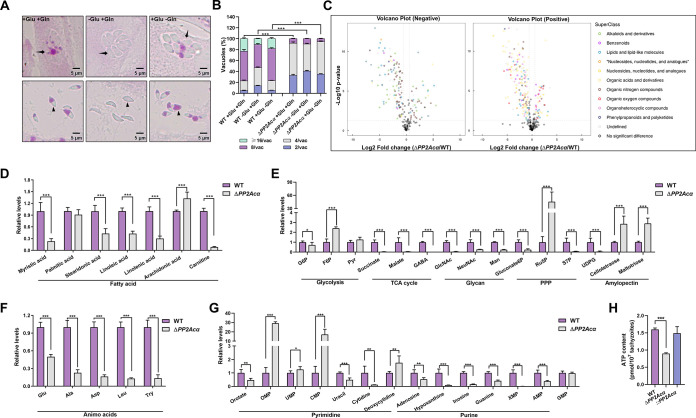
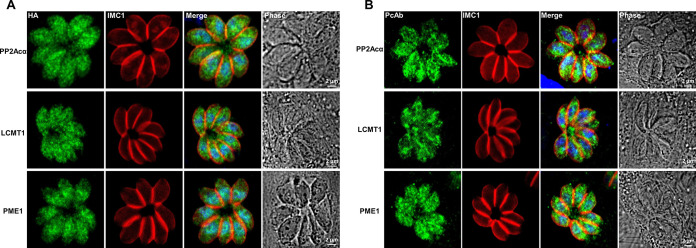
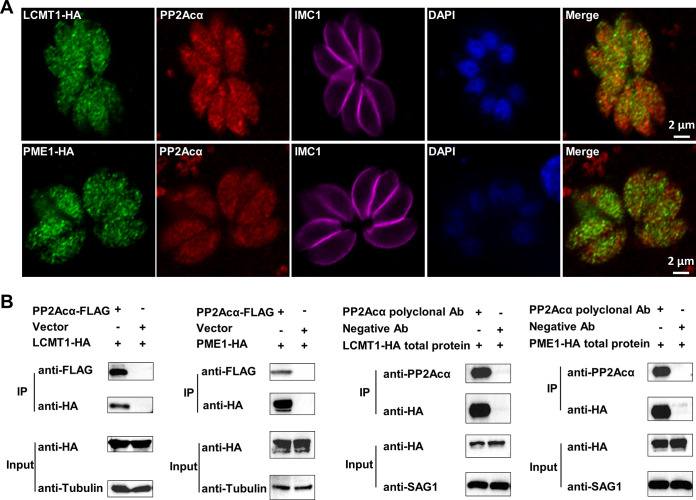
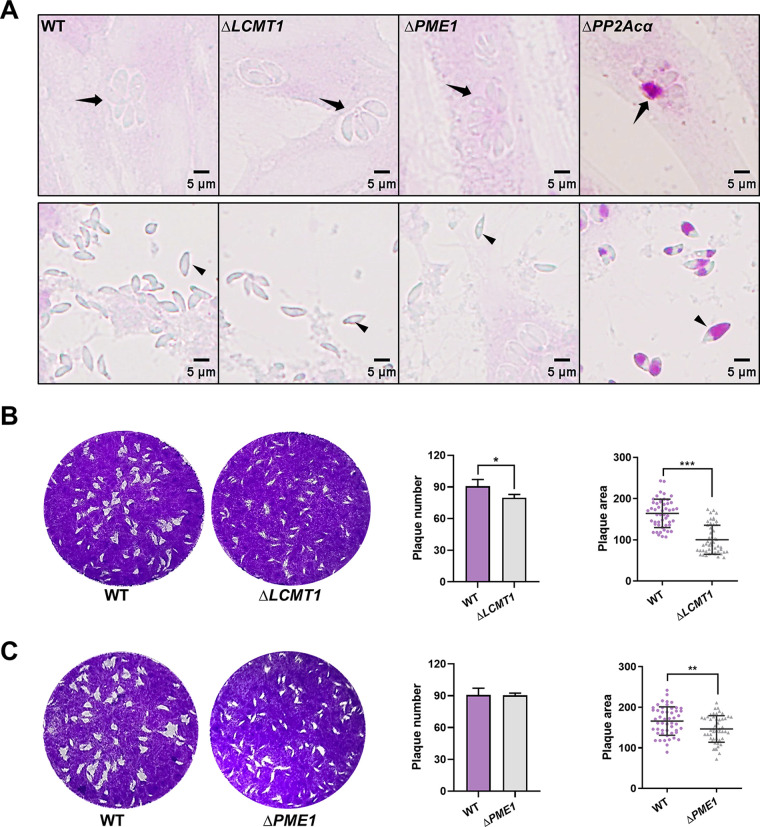
Here, we report that the inhibition of the PP2A subfamily by okadaic acid results in an accumulation of polysaccharides in the acute infection stage (tachyzoites) of Toxoplasma gondii, which is a protozoan of global zoonotic importance and a model for the apicomplexan parasites. The loss of the catalytic subunit α of PP2A (Δ) in RHΔ leads to the polysaccharide accumulation phenotype in the base of tachyzoites as well as residual bodies and significantly compromises the intracellular growth and the virulence . A metabolomic analysis revealed that the accumulated polysaccharides in Δ are derived from interrupted glucose metabolism, which affects the production of ATP and energy homeostasis in the T. gondii knockout. The assembly of the PP2Acα holoenzyme complex involved in the amylopectin metabolism in tachyzoites is possibly not regulated by LCMT1 or PME1, and this finding contributes to the identification of the regulatory B subunit (B'/PR61). The loss of B'/PR61 results in the accumulation of polysaccharide granules in the tachyzoites as well as reduced plaque formation ability, exactly the same as Δ. Taken together, we have identified a PP2Acα-B'/PR61 holoenzyme complex that plays a crucial role in the carbohydrate metabolism and viability in T. gondii, and its deficiency in function remarkably suppresses the growth and virulence of this important zoonotic parasite both and . Hence, rendering the PP2Acα-B'/PR61 holoenzyme functionless should be a promising strategy for the intervention of acute infection and toxoplasmosis. Toxoplasma gondii switches back and forth between acute and chronic infections, mainly in response to host immunologic status, which is characterized by flexible but specific energy metabolism. Polysaccharide granules are accumulated in the acute infection stage of T. gondii that have been exposed to a chemical inhibitor of the PP2A subfamily. The genetic depletion of the catalytic subunit α of PP2A leads to this phenotype and significantly affects the cell metabolism, energy production, and viability. Further, a regulatory B subunit PR61 is necessary for the PP2A holoenzyme to function in glucose metabolism and in the intracellular growth of T. gondii tachyzoites. A deficiency of this PP2A holoenzyme complex (PP2Acα-B'/PR61) in T. gondii knockouts results in the abnormal accumulation of polysaccharides and the disruption of energy metabolism, suppressing their growth and virulence. These findings provide novel insights into cell metabolism and identify a potential target for an intervention against a T. gondii acute infection.
在这里,我们报告说,蛋白磷酸酶 2A(PP2A)亚家族被岗田酸抑制会导致刚地弓形虫急性感染期(速殖子)多糖的积累,刚地弓形虫是一种具有全球动物源性重要性的原生动物,也是一种顶端复合物寄生虫的模型。RHΔ 中 PP2A 催化亚基 α 的缺失导致速殖子基部、残余体多糖的积累表型,并显著损害细胞内生长和毒力。代谢组学分析表明,Δ 中积累的多糖来自中断的葡萄糖代谢,这影响了 T. gondii 敲除物中 ATP 的产生和能量稳态。涉及速殖子中支链淀粉代谢的 PP2Acα 全酶复合物的组装可能不受 LCMT1 或 PME1 的调节,这一发现有助于鉴定调节 B 亚基(B'/PR61)。B'/PR61 的缺失导致速殖子中多糖颗粒的积累和斑块形成能力的降低,与 Δ 完全相同。总之,我们已经确定了一个 PP2Acα-B'/PR61 全酶复合物,它在刚地弓形虫的碳水化合物代谢和活力中起着至关重要的作用,其功能缺失显著抑制了这种重要的动物源性寄生虫的生长和毒力。因此,使 PP2Acα-B'/PR61 全酶失去功能应该是干预急性感染和弓形体病的一种有前途的策略。刚地弓形虫在急性和慢性感染之间来回切换,主要是响应宿主的免疫状态,其特征是灵活但特异的能量代谢。多糖颗粒在刚地弓形虫的急性感染期积累,该感染期暴露于蛋白磷酸酶 2A 亚家族的化学抑制剂。PP2A 催化亚基 α 的遗传缺失导致了这种表型,并显著影响细胞代谢、能量产生和活力。此外,调节 B 亚基 PR61 是 PP2A 全酶在葡萄糖代谢和刚地弓形虫速殖子细胞内生长中发挥作用所必需的。刚地弓形虫敲除物中这种 PP2A 全酶复合物(PP2Acα-B'/PR61)的缺乏导致多糖的异常积累和能量代谢的破坏,抑制其生长和毒力。这些发现为细胞代谢提供了新的见解,并确定了一种针对刚地弓形虫急性感染的潜在干预靶点。