State Key Laboratory of Agricultural Microbiology, College of Veterinary Medicine, Huazhong Agricultural Universitygrid.35155.37, Wuhan, Hubei, China.
College of Veterinary Medicine, Yunnan Agricultural University, Kunming, Yunnan, China.
Microbiol Spectr. 2022 Jun 29;10(3):e0189121. doi: 10.1128/spectrum.01891-21. Epub 2022 Apr 21.
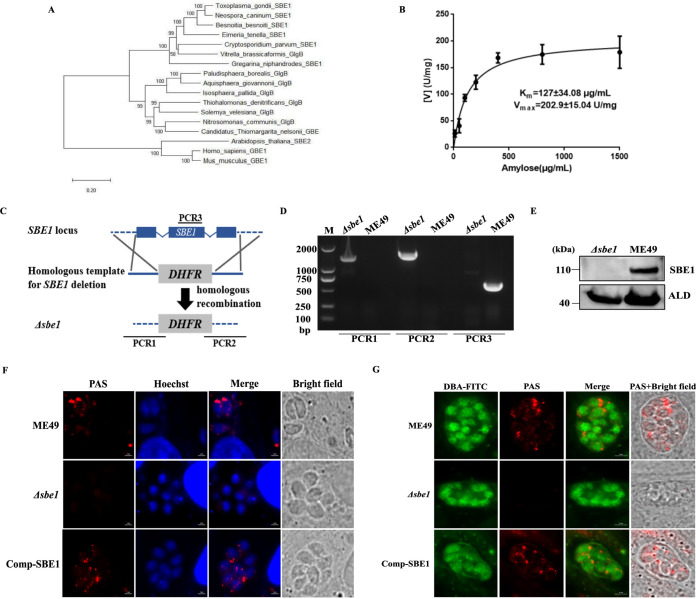
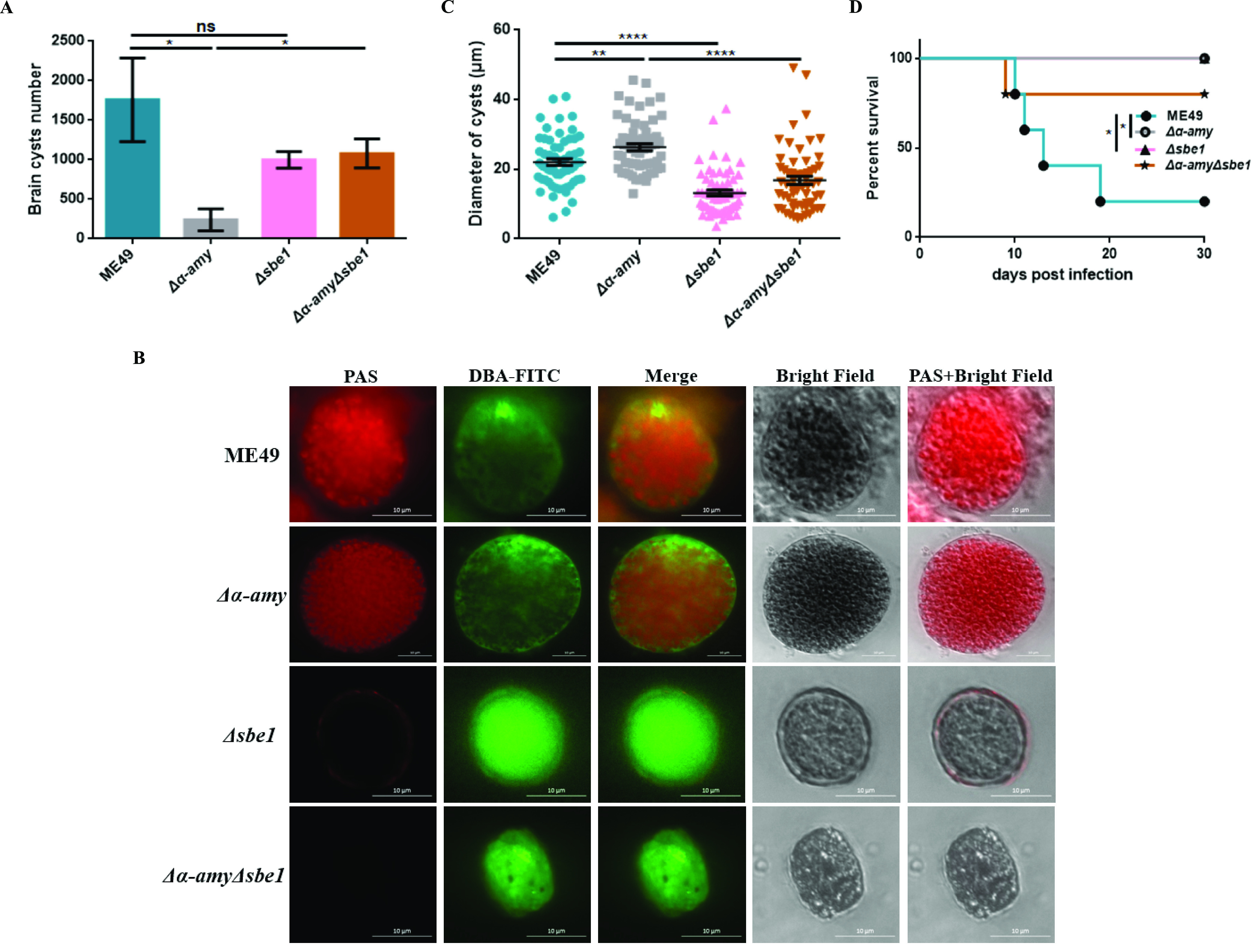
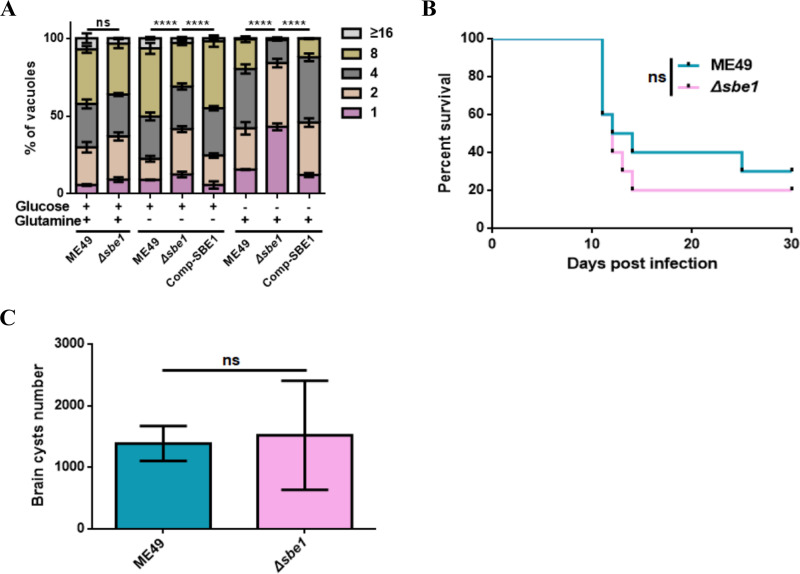
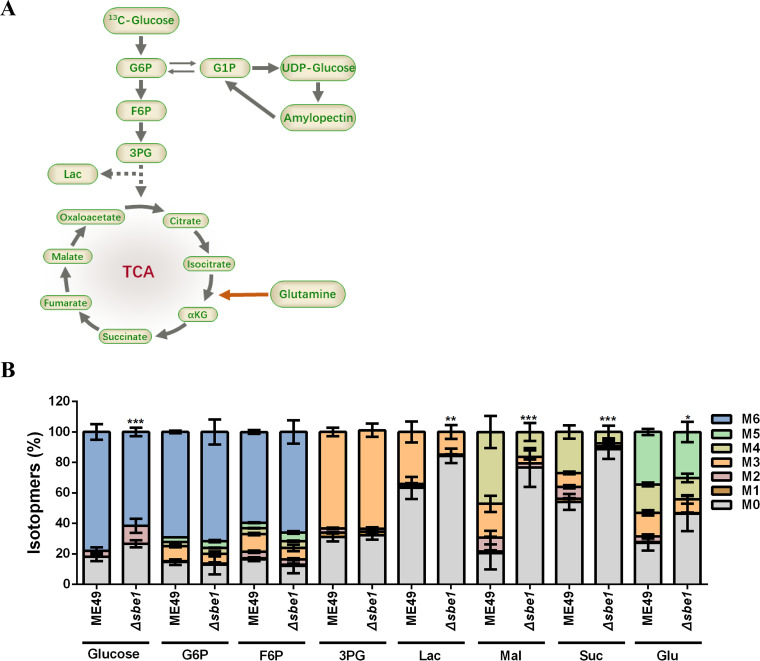
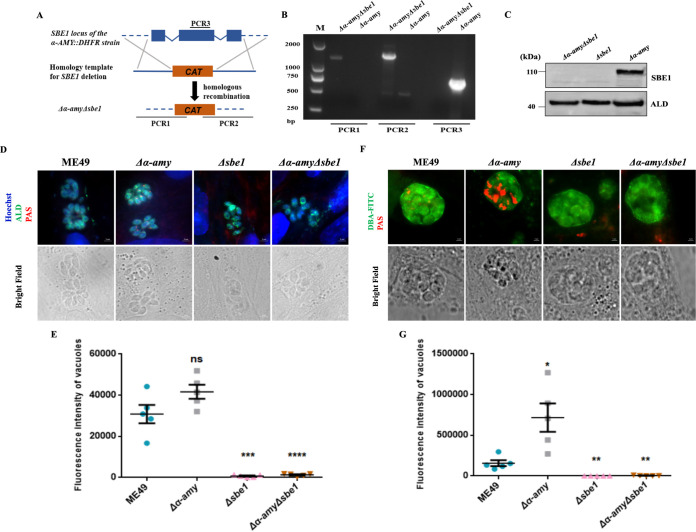
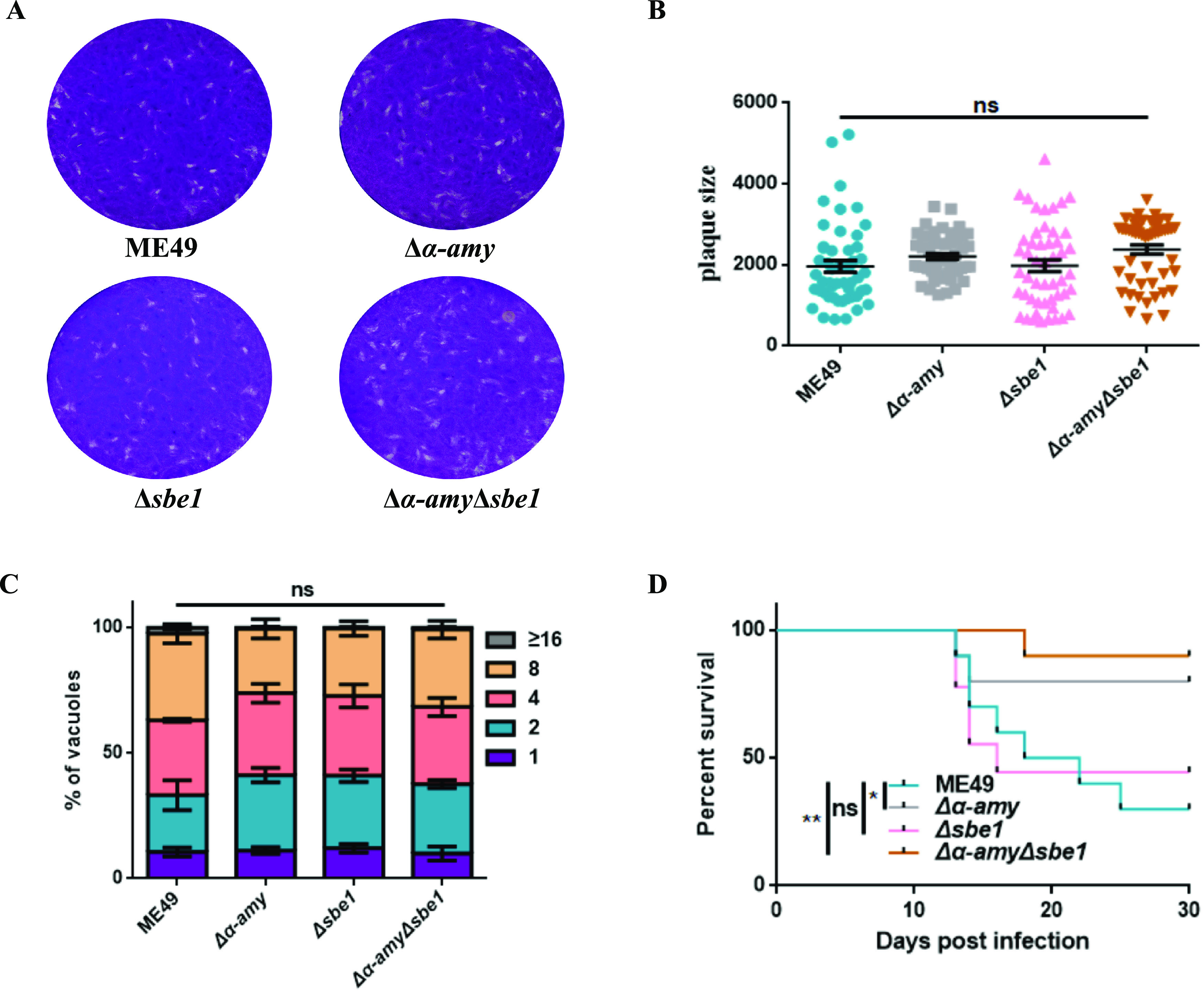
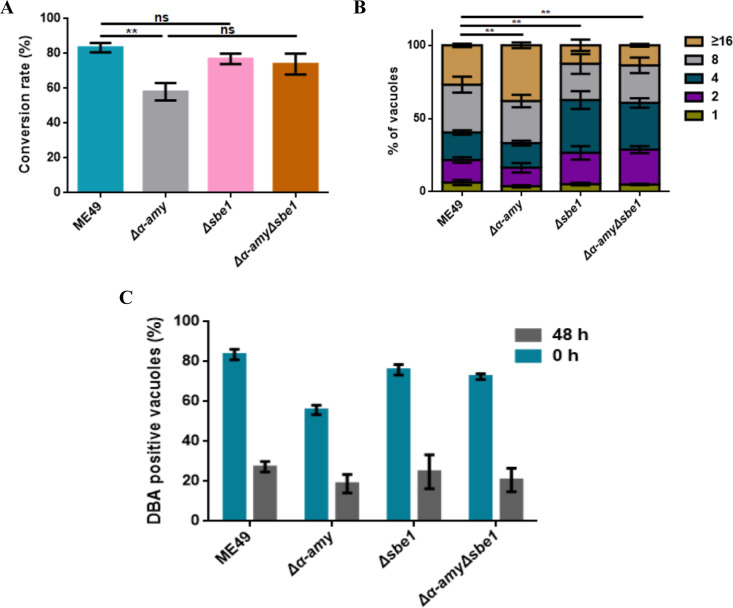
Toxoplasma gondii (T. gondii) bradyzoites facilitate chronic infections that evade host immune response. Furthermore, reactivation in immunocompromised individuals causes severe toxoplasmosis. The presence of abundant granules containing the branched starch amylopectin is major characteristic of bradyzoites that is nearly absent from tachyzoites that drive acute disease. T. gondii genome encodes to potential Starch branching enzyme 1 (SBE1) that creates branching during amylopectin biosynthesis. However, the physiological function of the amylopectin in T. gondii remains unclear. In this study, we generated a knockout parasites and revealed that deletion of caused amylopectin synthesis defects while having no significant impact on the growth of tachyzoites under normal culture conditions as well as virulence and brain cyst formation. Nevertheless, knockout decreased the influx of exogenous glucose and reduced tachyzoites proliferation in nutrition-deficient conditions. Deletion of together with the α-amylase (α-AMY), responsible for starch digestion, abolished amylopectin production and attenuated virulence while restoring brain cyst formation. In addition, cysts with defective amylopectin metabolism showed abnormal morphology and were avirulent to mice. In conclusion, SBE1 is essential for the synthesis of amylopectin, which serves as energy storage during the development and reactivation of bradyzoites. Toxoplasmosis has become a global, serious public health problem due to the extensiveness of the host. There are great differences in the energy metabolism in the different stages of infection. The most typical difference is the abundant accumulation of amylopectin granules in bradyzoites, which is almost absent in tachyzoites. Until now, the physiological functions of amylopectin have not been clearly elucidated. We focused on starch branching enzyme 1 (SBE1) in the synthesis pathway to reveal the exact physiological significance of amylopectin. Our study clarified the role of SBE1 in the synthesis pathway and amylopectin in tachyzoites and bradyzoites, and demonstrated that amylopectin, as an important carbon source, was critical to parasites growth under an unfavorable environment and the reactivation of bradyzoites to tachyzoites. The findings obtained from our study provides a new avenue for the development of vaccines and anti-chronic toxoplasmosis drugs.
刚地弓形虫(T. gondii)缓殖子有助于逃避宿主免疫反应的慢性感染。此外,免疫功能低下者的再激活会导致严重的弓形体病。缓殖子中含有丰富的颗粒,其中含有分支淀粉支链淀粉,这是其主要特征,而在驱动急性疾病的速殖子中几乎不存在。T. gondii 基因组编码潜在的淀粉分支酶 1(SBE1),该酶在支链淀粉生物合成过程中产生分支。然而,支链淀粉在 T. gondii 中的生理功能尚不清楚。在这项研究中,我们生成了一个 缺失寄生虫,并揭示了 缺失导致支链淀粉合成缺陷,而在正常培养条件下以及毒力和脑囊形成中,对速殖子的生长没有显著影响。然而, 缺失减少了外源性葡萄糖的流入,并在营养缺乏条件下降低了速殖子的增殖。与负责淀粉消化的α-淀粉酶(α-AMY)一起缺失 ,消除了支链淀粉的产生并减弱了毒力,同时恢复了脑囊的形成。此外,支链淀粉代谢缺陷的囊泡显示出异常的形态,并且对小鼠无致病性。总之,SBE1 对于支链淀粉的合成是必不可少的,支链淀粉在缓殖子的发育和再激活过程中用作能量储存。 由于宿主的广泛存在,弓形体病已成为一个全球性的严重公共卫生问题。在感染的不同阶段,能量代谢存在很大差异。最典型的区别是在缓殖子中大量积累支链淀粉颗粒,而在速殖子中几乎不存在。到目前为止,支链淀粉的生理功能还没有得到明确的阐明。我们专注于淀粉分支酶 1(SBE1)在合成途径中的作用,以揭示支链淀粉的确切生理意义。我们的研究阐明了 SBE1 在合成途径和速殖子和缓殖子中的作用,并证明了支链淀粉作为一种重要的碳源,对于寄生虫在不利环境下的生长和缓殖子向速殖子的再激活至关重要。我们的研究结果为疫苗和抗慢性弓形体病药物的开发提供了新的途径。