Division of Anatomy and Neurobiology, Faculty of Medicine, Medical University of Gdańsk, Dębinki 1, 80-211, Gdańsk, Poland.
Department of Animal Anatomy, Faculty of Veterinary Medicine, University of Warmia and Mazury, Oczapowskiego 13, 10-719, Olsztyn, Poland.
Mol Neurobiol. 2023 Sep;60(9):4935-4951. doi: 10.1007/s12035-023-03371-2. Epub 2023 May 19.
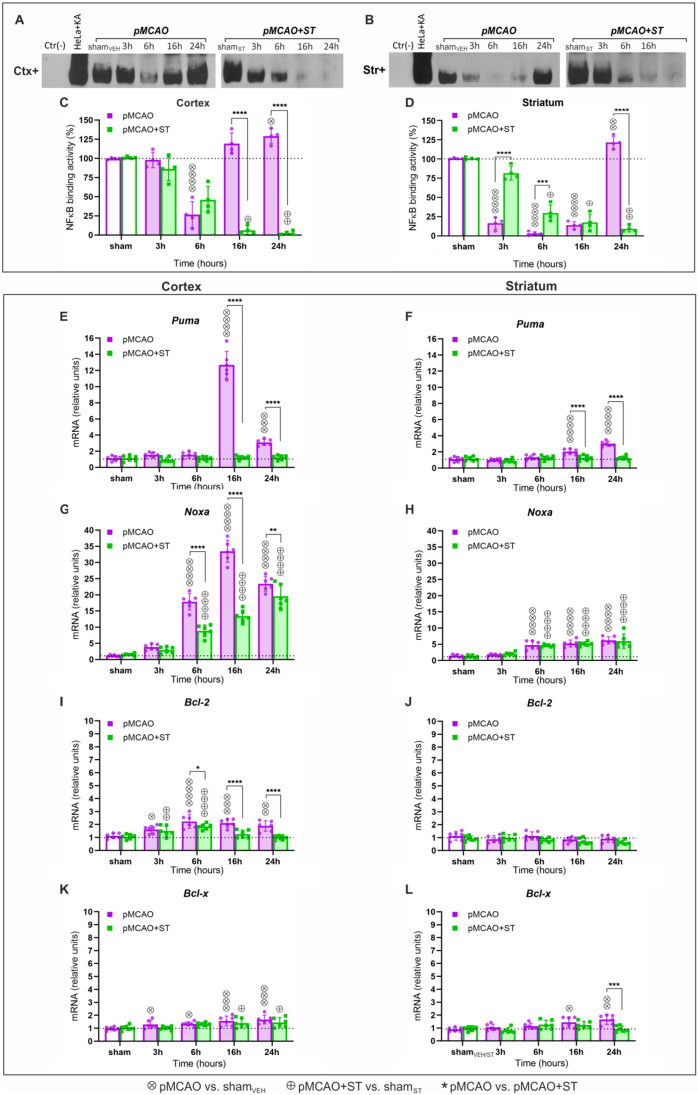
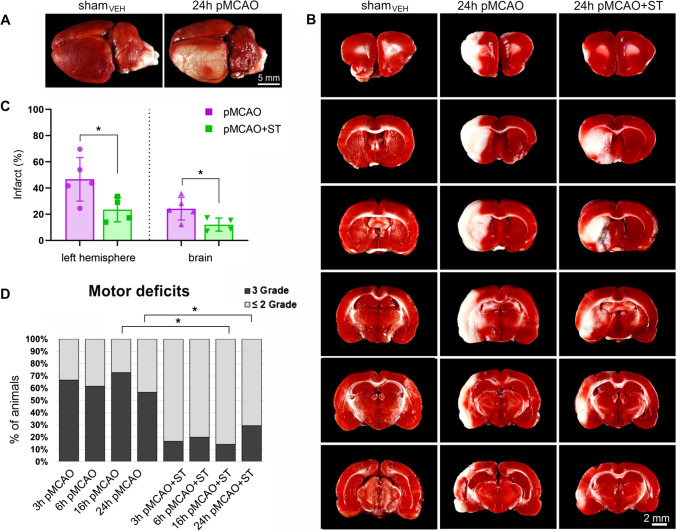
Statins are lipid-lowering drugs that act by inhibiting 3-hydroxy-3-methylglutaryl coenzyme A reductase, a rate-limiting enzyme in cholesterol biosynthesis. Animal studies have shown neuroprotective effects of statins in cerebral stroke. However, the underlying mechanisms are not fully understood. The nuclear factor-kappa B (NF-κB) transcription factor is involved in the regulation of apoptosis in stroke. Different dimers of NF-κB regulate the gene expression of proteins involved in both neurodegeneration and neuroprotection. We aimed to determine whether simvastatin improves stroke outcome via inhibition of the RelA/p65-containing subunit and downregulation of stroke-induced pro-apoptotic genes or via activation of NF-κB dimers containing the c-Rel subunit and upregulation of anti-apoptotic genes during the acute stroke phase. Eighteen-month-old Wistar rats, subjected to permanent MCAO or sham surgery, were administered simvastatin (20 mg/kg b.w.) or saline for 5 days before the procedure. Stroke outcome was determined by measuring cerebral infarct and assessing motor functions. The expression of NF-κB subunits in various cell populations was investigated using immunofluorescence/confocal microscopy. RelA and c-Rel were detected by WB. The NF-κB-DNA binding activity was investigated using EMSA, and expression of Noxa, Puma, Bcl-2, and Bcl-x genes was analyzed by qRT-PCR. Results showed a 50% infarct size reduction and significant motor function improvement in the simvastatin-treated animals which correlated with a decrease in RelA and a transient increase in the c-Rel level in the nucleus, normalization of the NF-κB-DNA binding activity, and downregulation of the NF-κB-regulated genes. Our results provide new insights into the statin-mediated neuroprotective action against stroke based on NF-κB pathway inhibition.
他汀类药物是降低血脂的药物,通过抑制 3-羟基-3-甲基戊二酰基辅酶 A 还原酶(胆固醇生物合成的限速酶)起作用。动物研究表明他汀类药物在脑卒中有神经保护作用。然而,其潜在机制尚未完全阐明。核因子-κB(NF-κB)转录因子参与调节卒中中的细胞凋亡。不同的 NF-κB 二聚体调节参与神经变性和神经保护的蛋白质的基因表达。我们旨在确定辛伐他汀是否通过抑制含有 RelA/p65 的亚基和下调诱导的凋亡基因来改善卒中结果,或者通过激活含有 c-Rel 亚基的 NF-κB 二聚体和上调抗凋亡基因来改善卒中结果在急性卒中阶段。将 18 个月大的 Wistar 大鼠进行永久性 MCAO 或假手术,在手术前 5 天给予辛伐他汀(20mg/kg b.w.)或生理盐水。通过测量脑梗死和评估运动功能来确定卒中结果。使用免疫荧光/共聚焦显微镜研究不同细胞群中 NF-κB 亚基的表达。通过 WB 检测 RelA 和 c-Rel。使用 EMSA 研究 NF-κB-DNA 结合活性,并通过 qRT-PCR 分析 Noxa、Puma、Bcl-2 和 Bcl-x 基因的表达。结果显示,辛伐他汀治疗的动物梗死面积减少 50%,运动功能显著改善,这与 RelA 减少和细胞核中 c-Rel 水平短暂增加、NF-κB-DNA 结合活性正常化以及 NF-κB 调节基因下调相关。我们的结果为基于 NF-κB 途径抑制的他汀类药物对卒中的神经保护作用提供了新的见解。