Krupp S, Tam O, Hammell M Gale, Dubnau J
Program in Neuroscience, Department of Neurobiology and Behavior, Stony Brook University, NY 11794, USA.
Cold Spring Harbor Laboratory, 1 Bungtown road, Cold Spring Harbor, NY.,11794.
bioRxiv. 2023 May 5:2023.05.04.539439. doi: 10.1101/2023.05.04.539439.
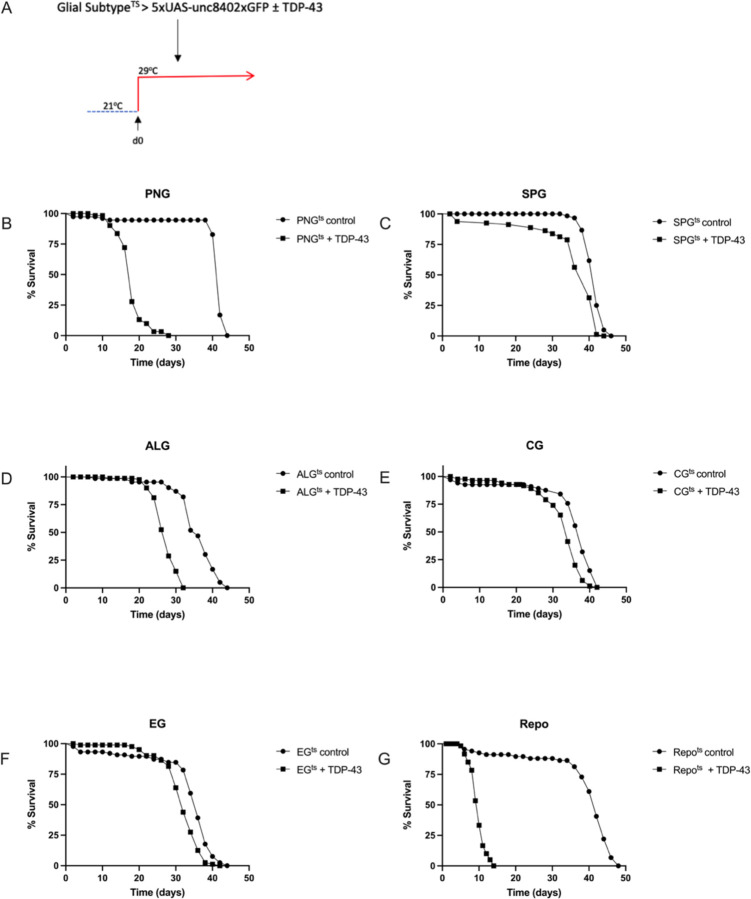
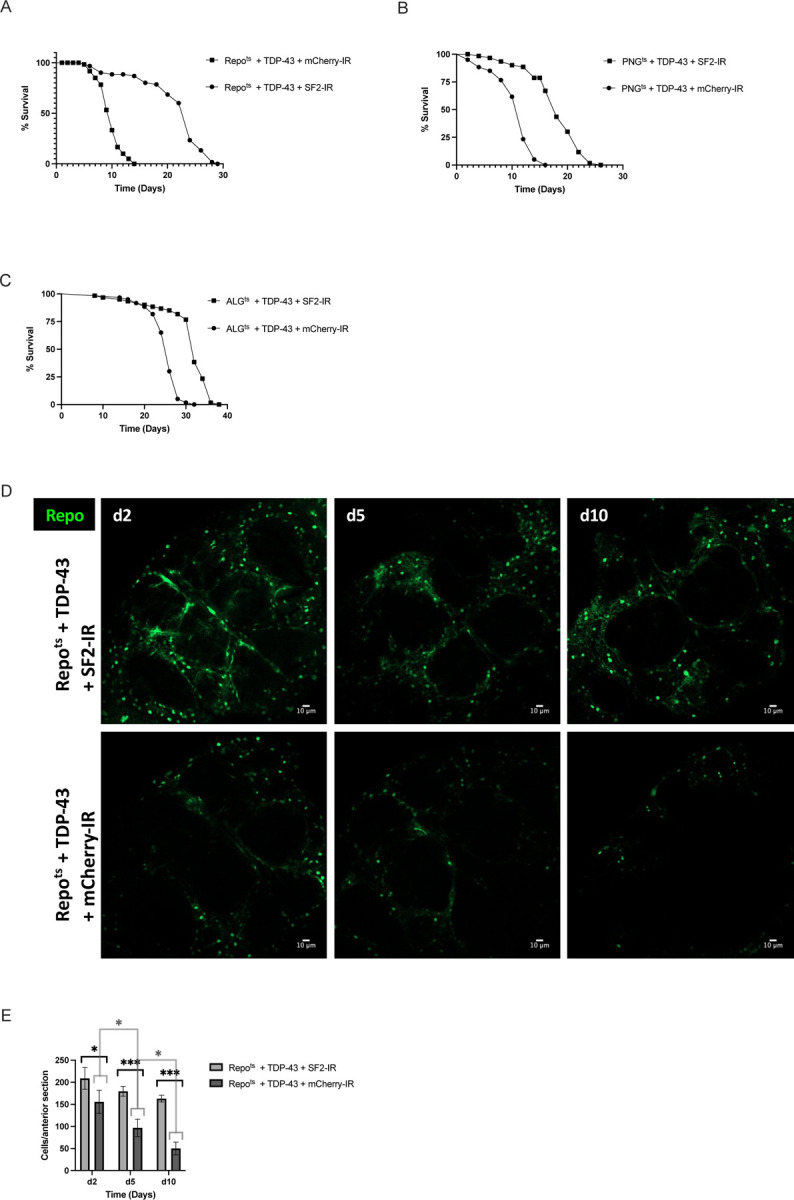
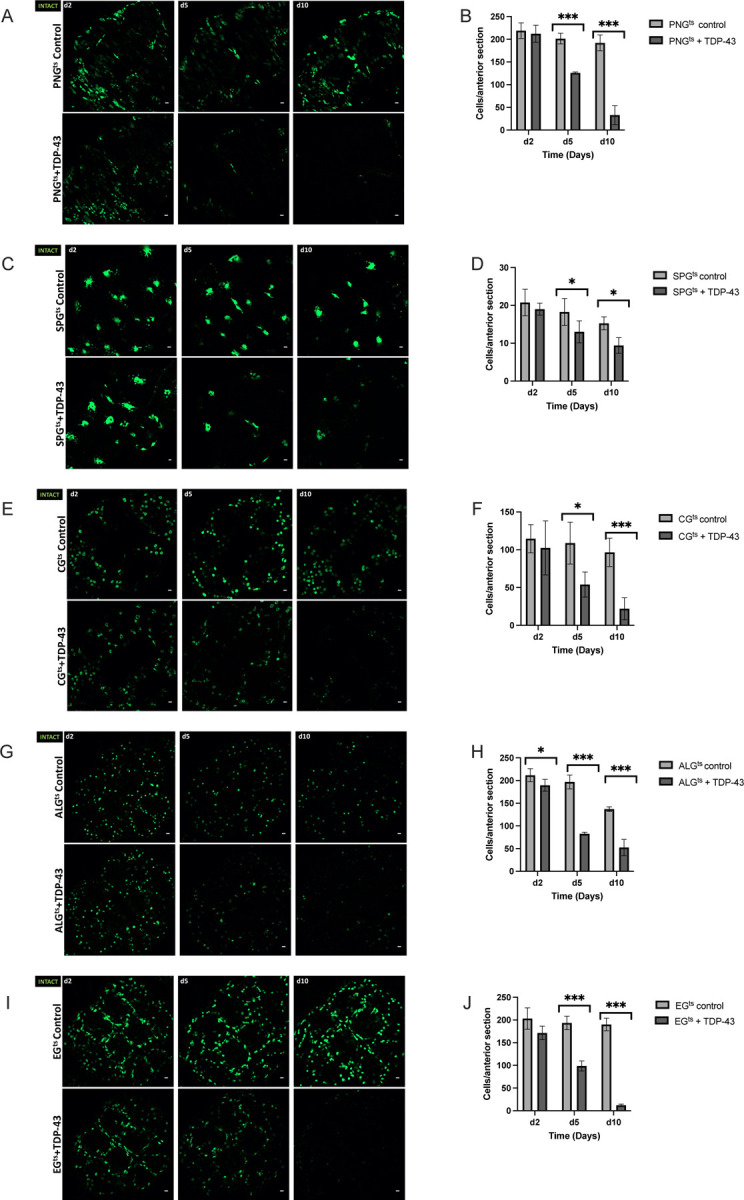
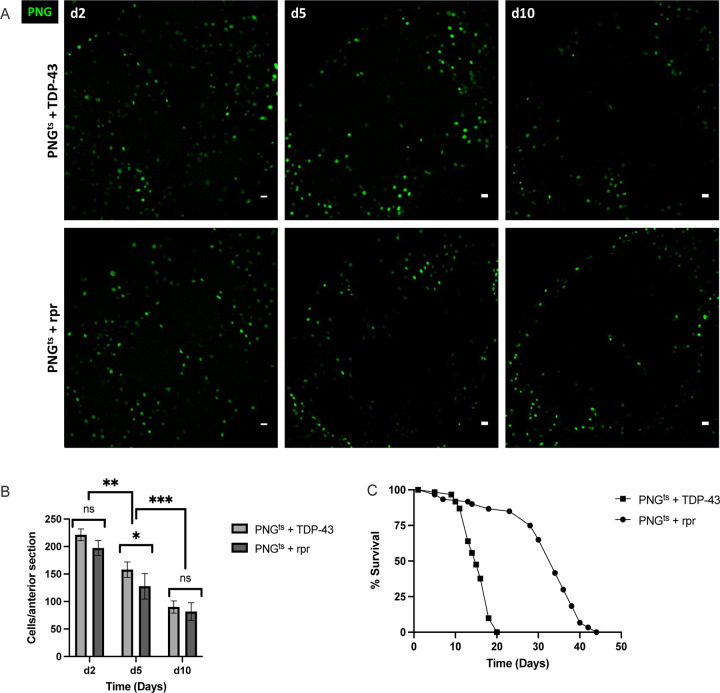
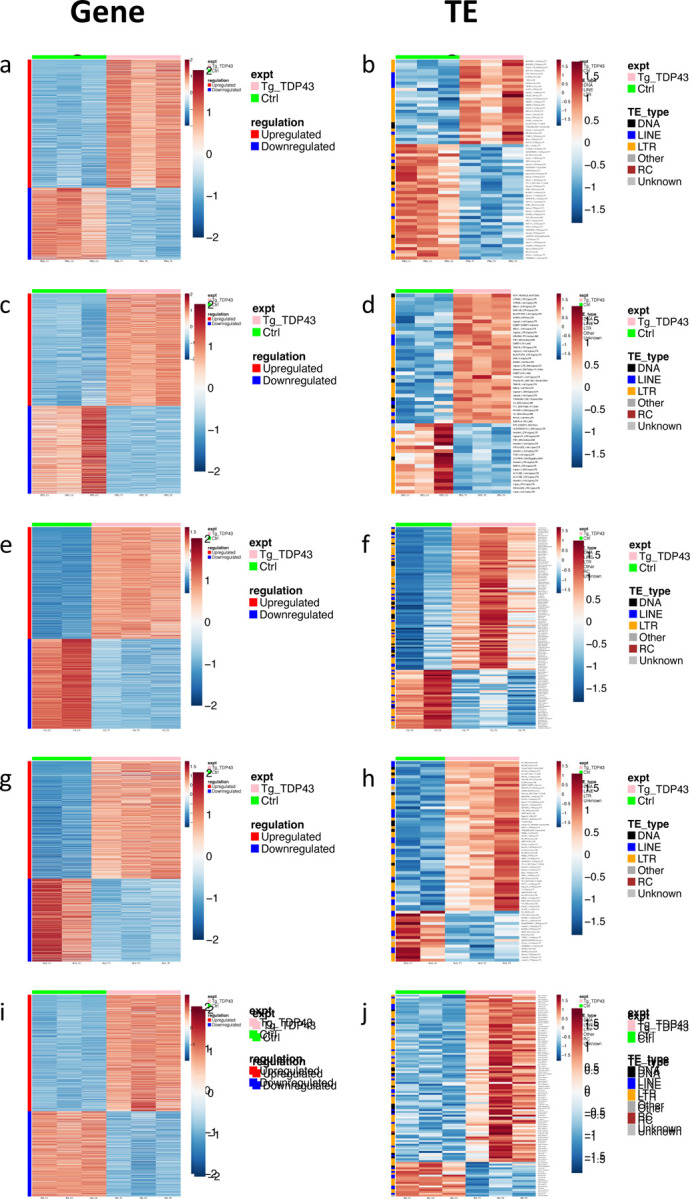
Accumulation of cytoplasmic inclusions of TAR-DNA binding protein 43 (TDP-43) is seen in both neurons and glia in a range of neurodegenerative disorders, including amyotrophic lateral sclerosis (ALS), frontotemporal dementia (FTD) and Alzheimer's disease (AD). Disease progression involves non-cell autonomous interactions among multiple cell types, including neurons, microglia and astrocytes. We investigated the effects in of inducible, glial cell type-specific TDP-43 overexpression, a model that causes TDP-43 protein pathology including loss of nuclear TDP-43 and accumulation of cytoplasmic inclusions. We report that TDP-43 pathology in is sufficient to cause progressive loss of each of the 5 glial sub-types. But the effects on organismal survival were most pronounced when TDP-43 pathology was induced in the perineural glia (PNG) or astrocytes. In the case of PNG, this effect is not attributable to loss of the glial population, because ablation of these glia by expression of pro-apoptotic reaper expression has relatively little impact on survival. To uncover underlying mechanisms, we used cell-type-specific nuclear RNA sequencing to characterize the transcriptional changes induced by pathological TDP-43 expression. We identified numerous glial cell-type specific transcriptional changes. Notably, SF2/SRSF1 levels were found to be decreased in both PNG and in astrocytes. We found that further knockdown of in either PNG or astrocytes lessens the detrimental effects of TDP-43 pathology on lifespan, but extends survival of the glial cells. Thus TDP-43 pathology in astrocytes or PNG causes systemic effects that shorten lifespan and knockdown rescues the loss of these glia, and also reduces their systemic toxicity to the organism.
在一系列神经退行性疾病中,包括肌萎缩侧索硬化症(ALS)、额颞叶痴呆(FTD)和阿尔茨海默病(AD),均可在神经元和胶质细胞中观察到TAR-DNA结合蛋白43(TDP-43)的细胞质包涵体积累。疾病进展涉及多种细胞类型之间的非细胞自主相互作用,包括神经元、小胶质细胞和星形胶质细胞。我们研究了诱导性胶质细胞类型特异性TDP-43过表达的影响,该模型会导致TDP-43蛋白病变,包括核TDP-43的丧失和细胞质包涵体的积累。我们报告说,胶质细胞中的TDP-43病变足以导致5种胶质细胞亚型中的每一种逐渐丧失。但是,当在神经周胶质细胞(PNG)或星形胶质细胞中诱导TDP-43病变时,对机体存活的影响最为明显。就PNG而言,这种影响并非归因于胶质细胞群体的丧失,因为通过促凋亡收割者表达的表达来消融这些胶质细胞对存活的影响相对较小。为了揭示潜在机制,我们使用细胞类型特异性核RNA测序来表征由病理性TDP-43表达诱导的转录变化。我们鉴定了许多胶质细胞类型特异性转录变化。值得注意的是,在PNG和星形胶质细胞中均发现SF2/SRSF1水平降低。我们发现,在PNG或星形胶质细胞中进一步敲低该蛋白可减轻TDP-43病变对寿命的有害影响,但可延长胶质细胞的存活时间。因此,星形胶质细胞或PNG中的TDP-43病变会导致缩短寿命的全身效应,而敲低可挽救这些胶质细胞的丧失,并降低它们对机体的全身毒性。