Department of Medicine, General Medicine C, University of Verona, Azienda Ospedaliera Universitaria Integrata Verona, Verona, Italy.
Clinical Biochemistry, University of Verona, Verona, Italy.
Intern Emerg Med. 2023 Aug;18(5):1397-1404. doi: 10.1007/s11739-023-03303-x. Epub 2023 May 22.
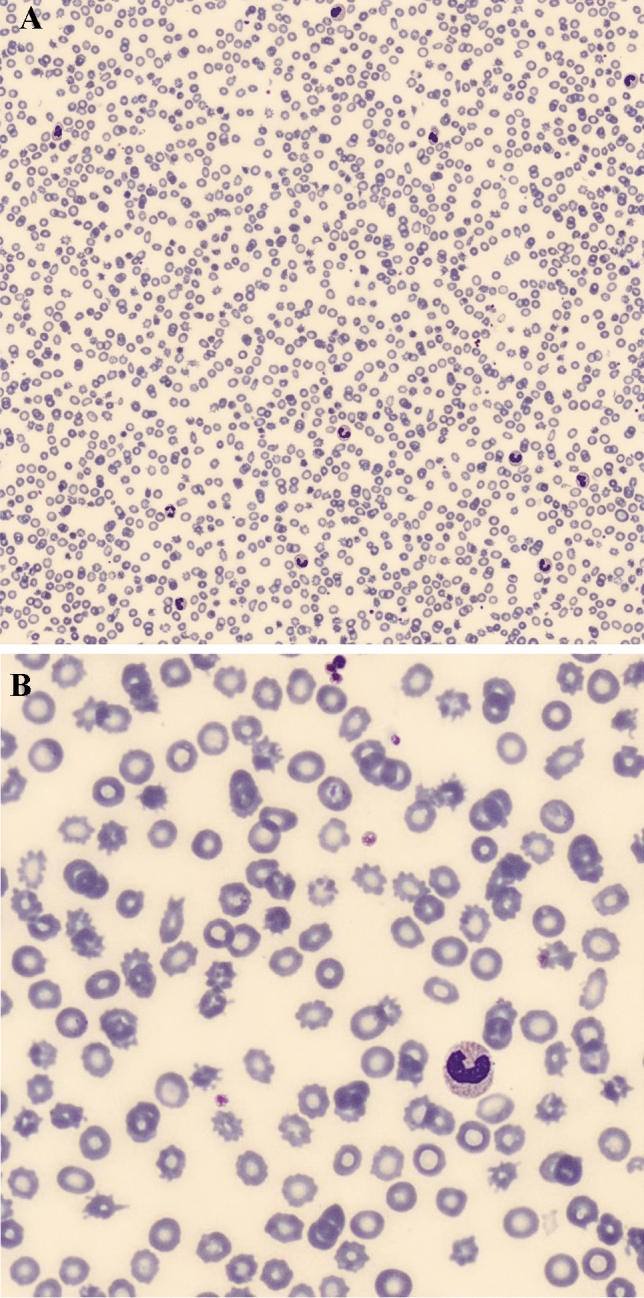
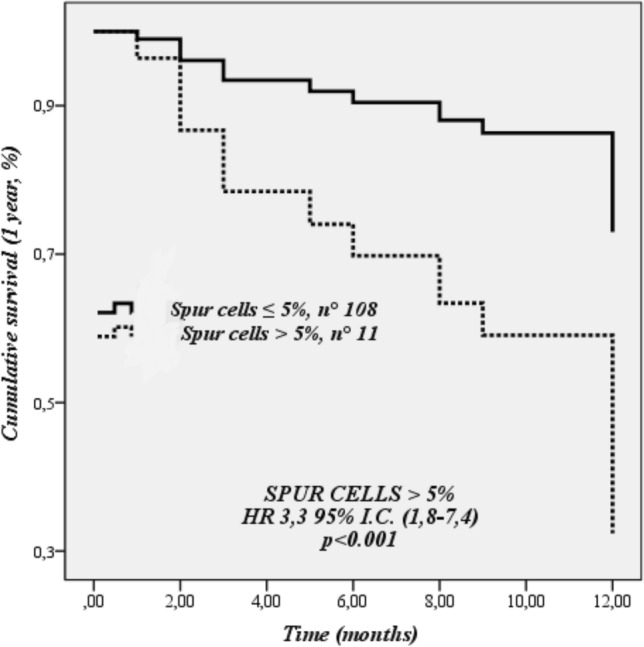
Chronic anaemia in advanced liver disease is a frequent finding. The aim was to explore the clinical impact of spur cell anaemia, a rare entity typically associated with end-stage of the disease. One-hundred and nineteen patients (73.9% males) with liver cirrhosis of any etiology were included. Patients with bone marrow diseases, nutrients deficiencies and hepatocellular carcinoma were excluded. In all patients, a blood sample was collected to check for the presence of spur cells on blood smear. A complete blood biochemical panel was recorded together with Child-Pugh (CP) score and Model for End-Stage Liver Disease (MELD) score. For each patients, clinically relevant events, such as acute-on-chronic liver failure (ACLF) and 1 year liver-related mortality, were registered. Patients were then grouped according to the percentage of spur cells at smear (> 5%, 1-5%, < 1%). Severe anaemia was defined as haemoglobin levels lower than 8 g/dL. 9.2% of subjects had > 5% spur cells, only 2 had evidence of haemolysis. In patients with > 5% spur cells, haemoglobin and albumin were lower compared with the other sub-group, while MELD score, CP score, International Normalized Ratio, ferritin, creatinine and unconjugated bilirubin were higher. Patients with more spur cells were more decompensated and developed more frequently ACLF. ACLF and liver-related mortality were significantly and independently associated with the presence of > 5% spur cells but not with baseline severe anaemia. Cirrhotic patients have a fairly high prevalence of spur cells, not always associated with severe haemolytic anaemia. The presence of spur red cells is per se associated with a worse prognosis and, therefore, should be always evaluated to prioritize patients for intensive management and eventually liver transplantation.
慢性贫血在晚期肝病中很常见。本研究旨在探讨刺状红细胞贫血的临床影响,这是一种罕见的实体,通常与疾病的终末期相关。研究纳入了 119 名(73.9%为男性)任何病因引起的肝硬化患者。排除了骨髓疾病、营养缺乏和肝细胞癌的患者。所有患者均采集血样检查血涂片上是否存在刺状细胞。记录了完整的全血细胞生化谱,以及 Child-Pugh(CP)评分和终末期肝病模型(MELD)评分。对于每位患者,都记录了临床相关事件,如慢加急性肝衰竭(ACLF)和 1 年肝脏相关死亡率。然后根据血涂片上刺状细胞的百分比(> 5%、1-5%、< 1%)对患者进行分组。严重贫血定义为血红蛋白水平低于 8 g/dL。9.2%的患者有> 5%的刺状细胞,只有 2 例有溶血证据。在有> 5%刺状细胞的患者中,血红蛋白和白蛋白水平低于其他亚组,而 MELD 评分、CP 评分、国际标准化比值、铁蛋白、肌酐和未结合胆红素较高。刺状细胞较多的患者代偿功能较差,更常发生 ACLF。ACLF 和肝脏相关死亡率与> 5%的刺状细胞存在显著相关,与基线严重贫血无关。肝硬化患者存在相当高的刺状细胞发生率,并不总是与严重溶血性贫血相关。刺状红细胞的存在本身与预后较差相关,因此应始终进行评估,以便优先对患者进行强化管理,并最终进行肝移植。