Cell Physiology Lab. Department of Physiology, Seoul National University College of Medicine, Seoul, Republic of Korea.
Clinical Research Institute, Seoul National University Hospital, Seoul, Republic of Korea.
Mol Brain. 2023 May 22;16(1):45. doi: 10.1186/s13041-023-01034-w.
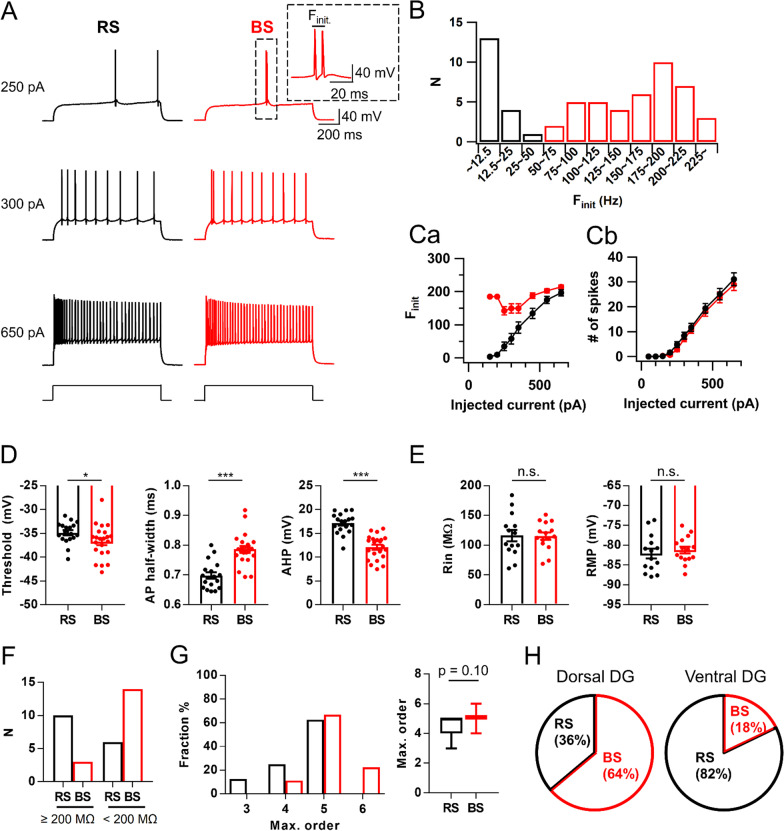
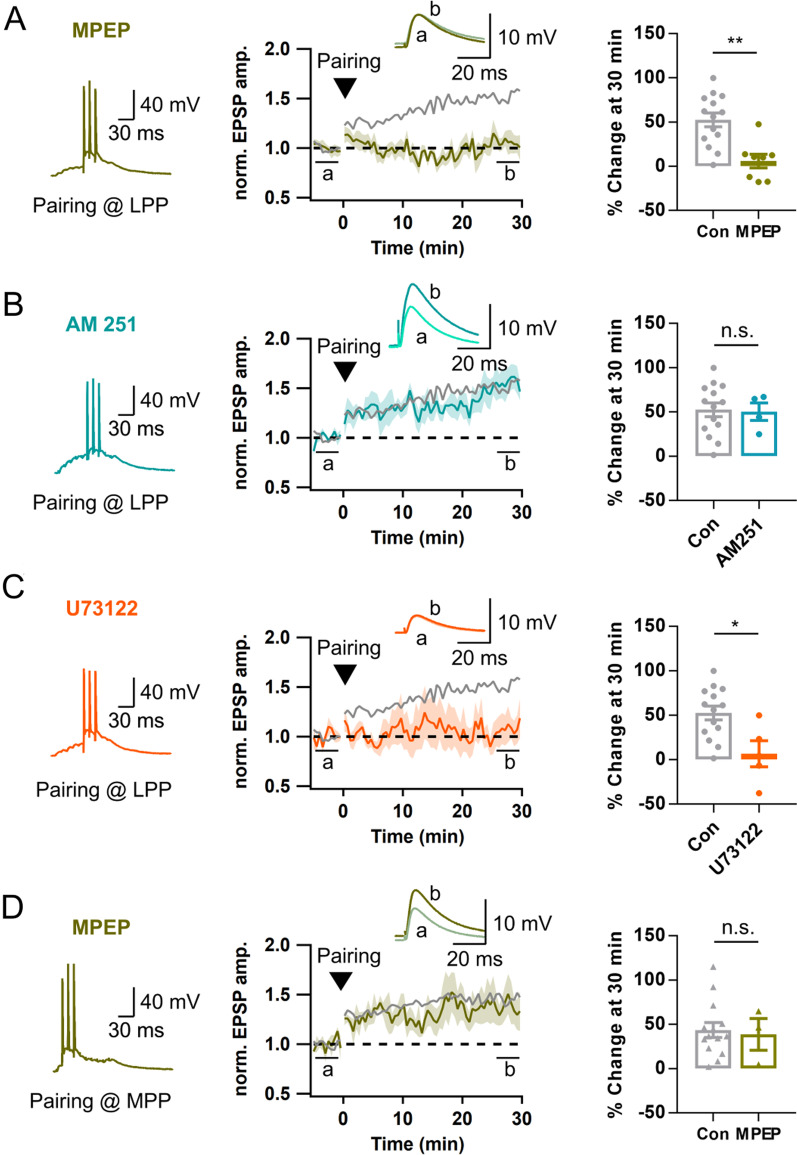
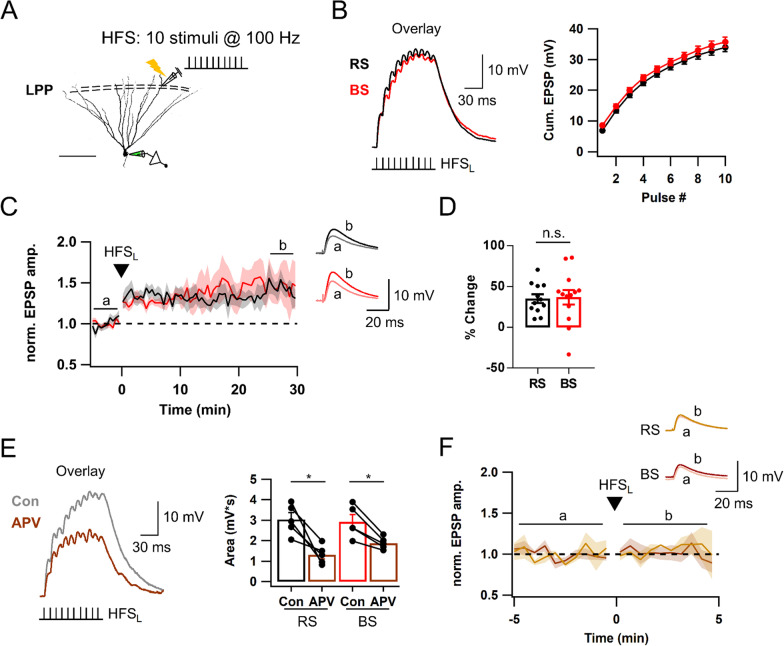
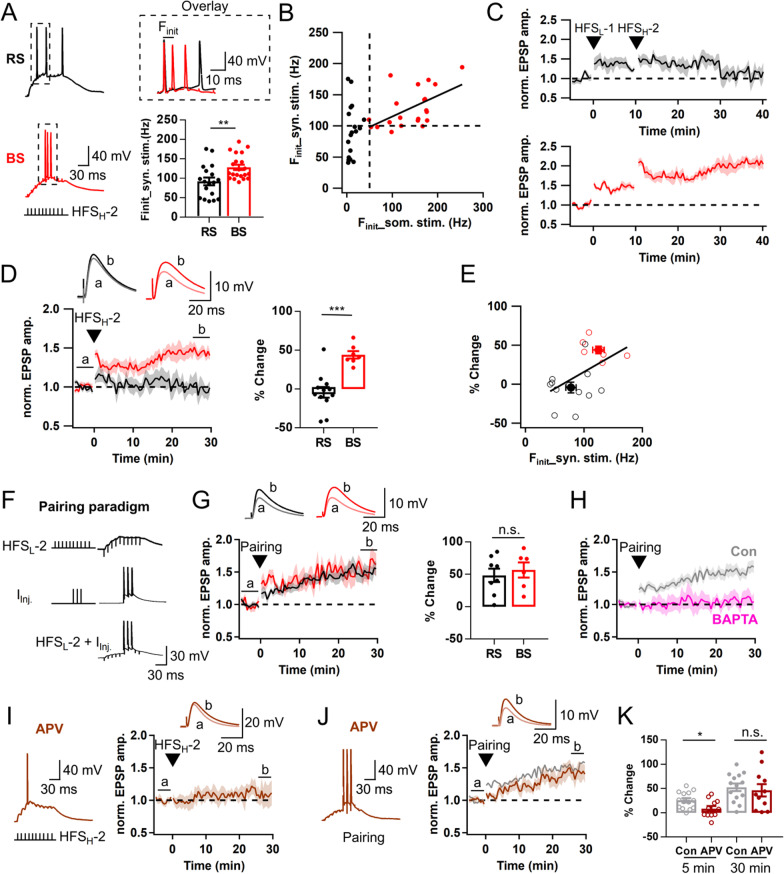
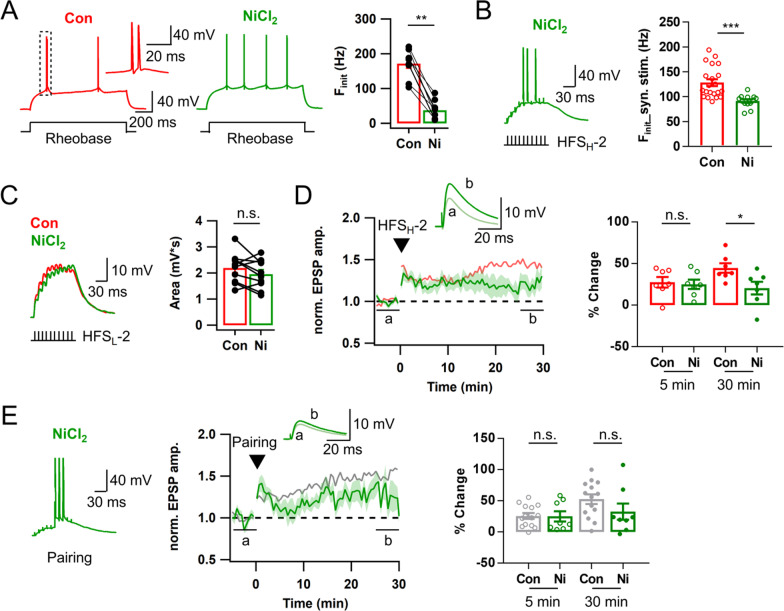
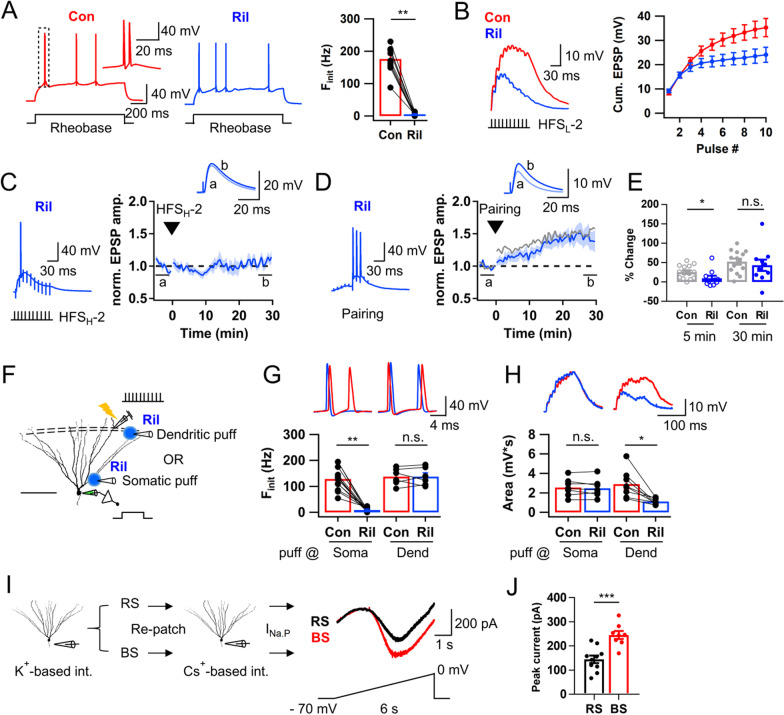
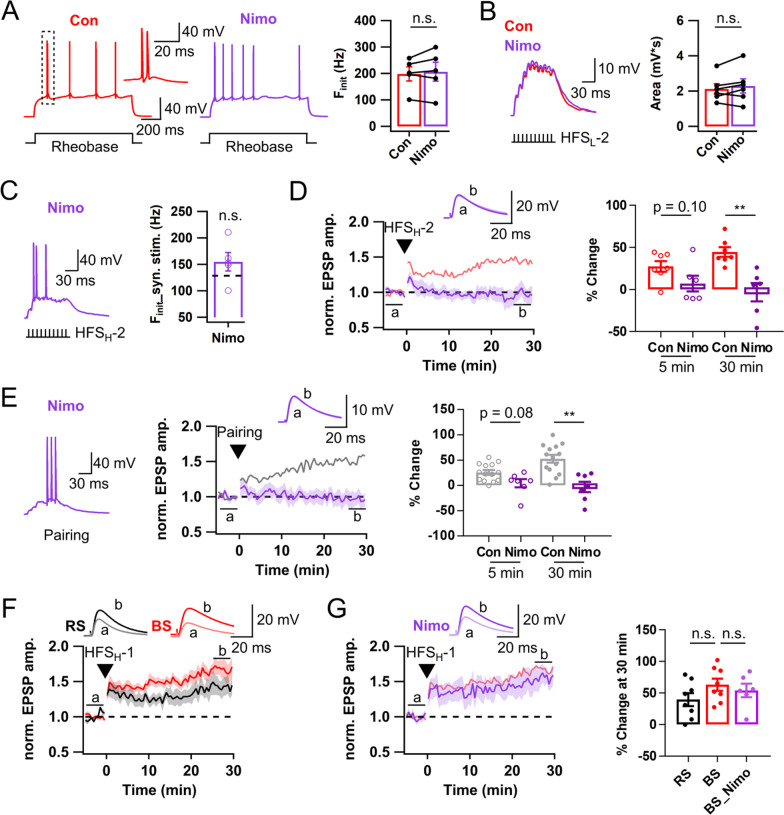
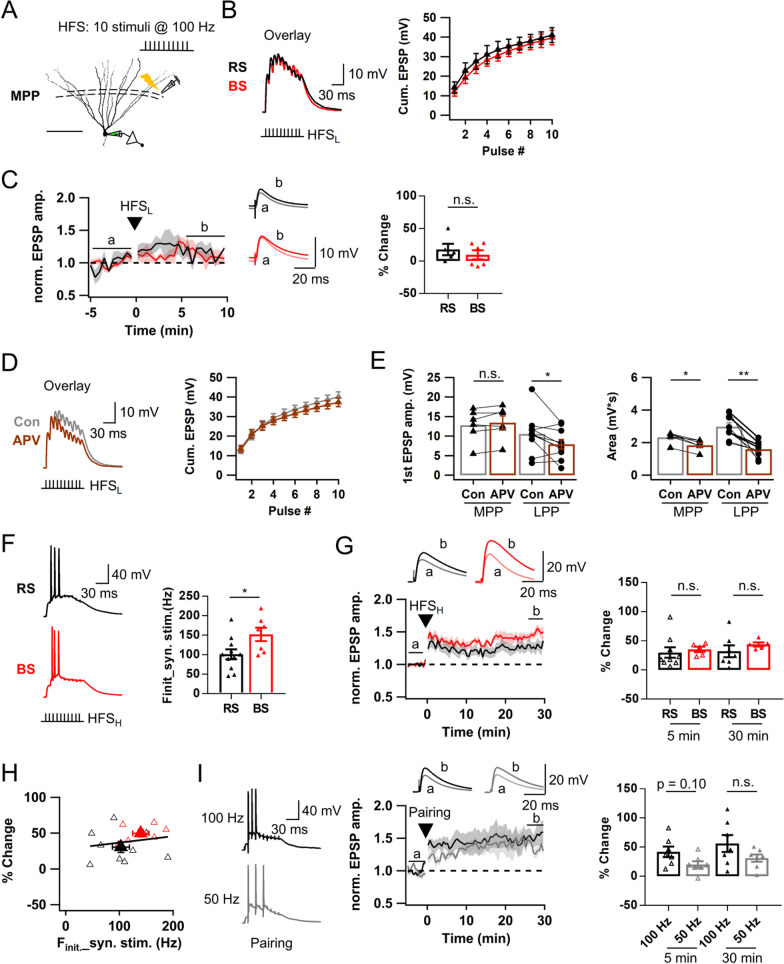
High frequency burst firing is critical in summation of back-propagating action potentials (APs) in dendrites, which may greatly depolarize dendritic membrane potential. The physiological significance of burst firings of hippocampal dentate GCs in synaptic plasticity remains unknown. We found that GCs with low input resistance could be categorized into regular-spiking (RS) and burst-spiking (BS) cells based on their initial firing frequency (F) upon somatic rheobase current injection, and investigated how two types of GCs differ in long-term potentiation (LTP) induced by high-frequency lateral perforant pathway (LPP) inputs. Induction of Hebbian LTP at LPP synapses required at least three postsynaptic APs at F higher than 100 Hz, which was met in BS but not in RS cells. The synaptically evoked burst firing was critically dependent on persistent Na current, which was larger in BS than RS cells. The Ca source for Hebbian LTP at LPP synapses was primarily provided by L-type calcium channels. In contrast, Hebbian LTP at medial PP synapses was mediated by T-type calcium channels, and could be induced regardless of cell types or F of postsynaptic APs. These results suggest that intrinsic firing properties affect synaptically driven firing patterns, and that bursting behavior differentially affects Hebbian LTP mechanisms depending on the synaptic input pathway.
高频爆发式放电在树突中反向传播动作电位 (AP) 的总和中至关重要,这可能使树突膜电位大大去极化。海马齿状回 GC 爆发式放电在突触可塑性中的生理意义尚不清楚。我们发现,根据体细胞基础电流注入时的初始放电频率 (F),输入电阻低的 GC 可分为规则放电 (RS) 和爆发放电 (BS) 细胞,并研究了两种类型的 GC 在高频侧穿通径 (LPP) 输入诱导的长时程增强 (LTP) 方面有何不同。在 LPP 突触处诱导 Hebbian LTP 需要 F 高于 100 Hz 的至少三个突触后 AP,BS 细胞可以满足,但 RS 细胞不能满足。突触诱发的爆发式放电严重依赖于持续的 Na 电流,BS 细胞中的电流大于 RS 细胞。LPP 突触处 Hebbian LTP 的 Ca 源主要由 L 型钙通道提供。相比之下,内侧 PP 突触处的 Hebbian LTP 由 T 型钙通道介导,无论突触后 AP 的类型或 F 如何,均可诱导产生。这些结果表明,内在放电特性影响突触驱动的放电模式,而爆发行为根据突触输入途径的不同,对 Hebbian LTP 机制产生不同的影响。