Center for Functional Connectomics, Korea Institute of Science and Technology, Seoul, 02792, Republic of Korea.
Center for Neuroscience Imaging Research, Institute for Basic Science (IBS), Suwon, 16419, Republic of Korea.
Nat Commun. 2020 Sep 11;11(1):4550. doi: 10.1038/s41467-020-18351-6.
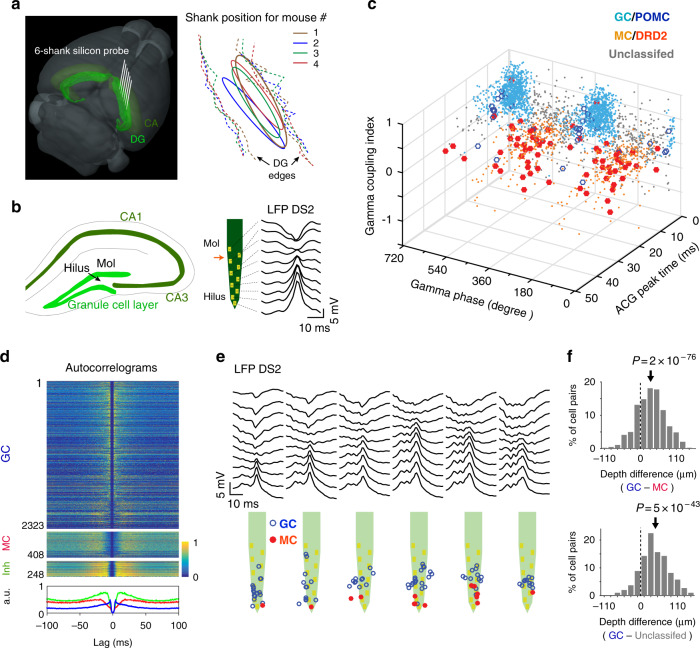
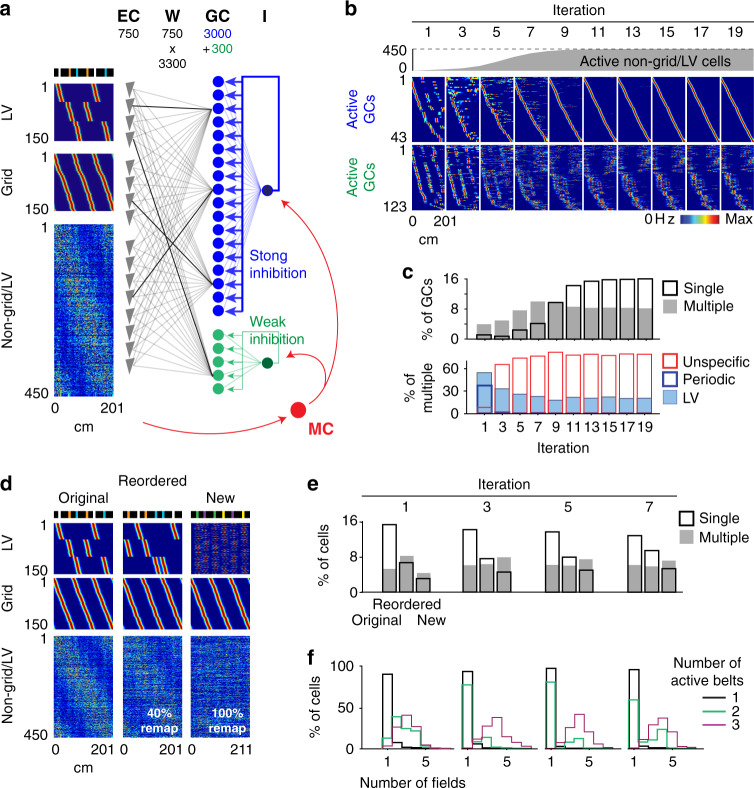
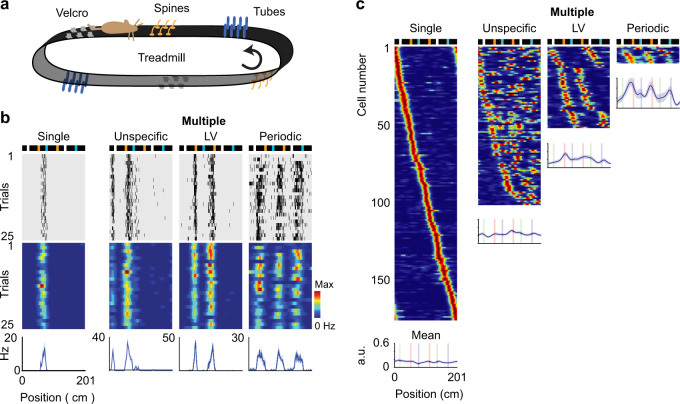
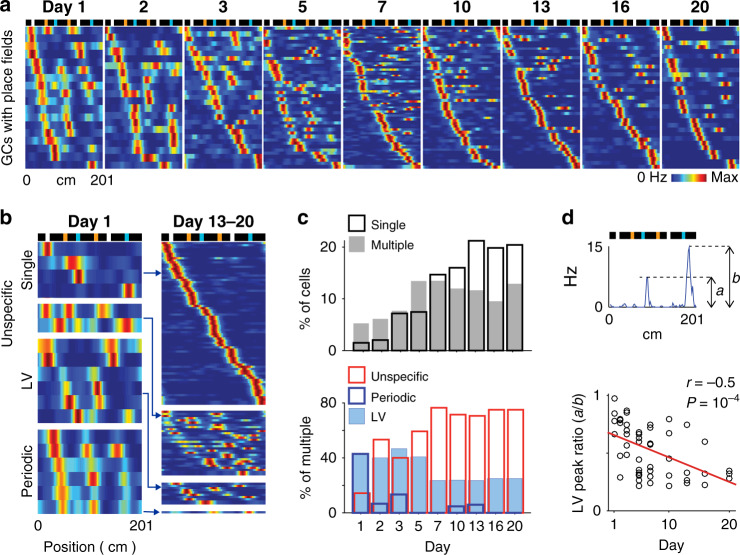
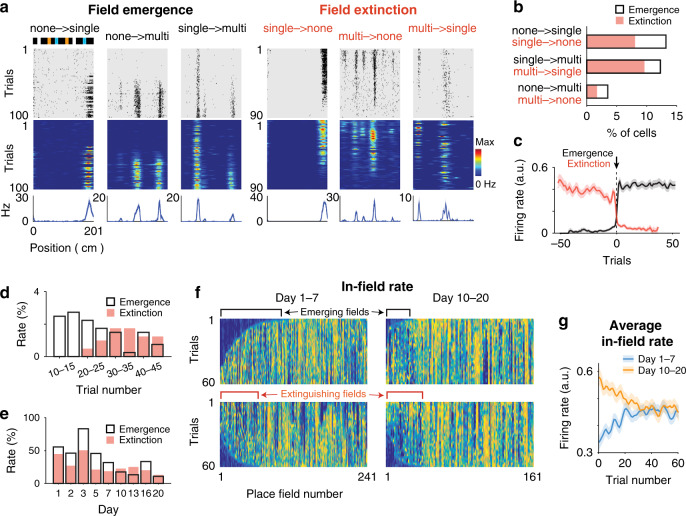
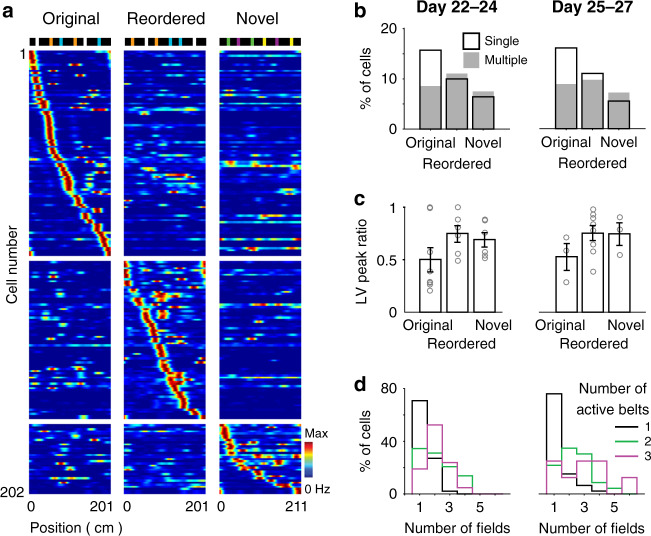
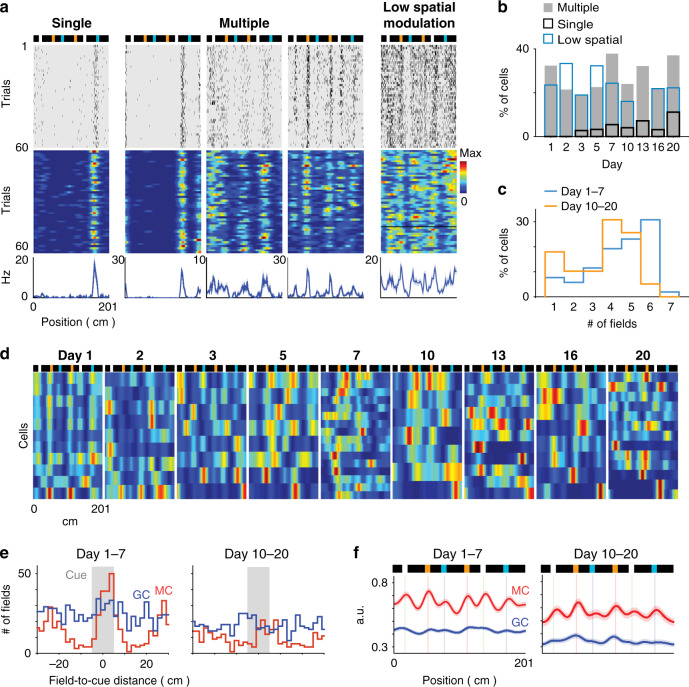
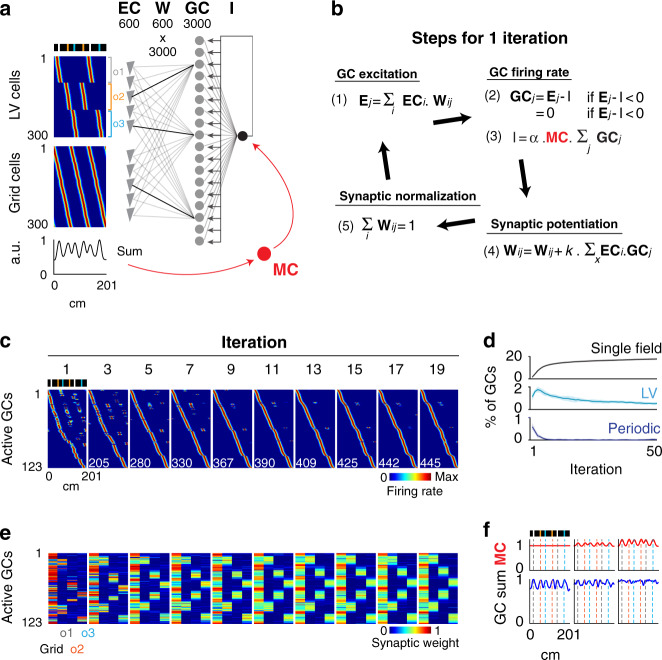
Place cells exhibit spatially selective firing fields that collectively map the continuum of positions in environments; how such activity pattern develops with experience is largely unknown. Here, we record putative granule cells (GCs) and mossy cells (MCs) from the dentate gyrus (DG) over 27 days as mice repetitively run through a sequence of objects fixed onto a treadmill belt. We observe a progressive transformation of GC spatial representations, from a sparse encoding of object locations and spatial patterns to increasingly more single, evenly dispersed place fields, while MCs show little transformation and preferentially encode object locations. A competitive learning model of the DG reproduces GC transformations via the progressive integration of landmark-vector cells and spatial inputs and requires MC-mediated feedforward inhibition to evenly distribute GC representations, suggesting that GCs slowly encode conjunctions of objects and spatial information via competitive learning, while MCs help homogenize GC spatial representations.
位置细胞表现出空间选择的发射场,共同映射环境中位置的连续体;这种活动模式是如何随着经验而发展的,在很大程度上是未知的。在这里,我们在老鼠反复在跑步机皮带上跑动通过一系列固定的物体时,记录了来自齿状回(DG)的假定颗粒细胞(GCs)和苔藓状细胞(MCs)。我们观察到 GC 空间表示的逐渐转变,从物体位置和空间模式的稀疏编码到越来越多的单个、均匀分散的位置场,而 MCs 则几乎没有变化,并且优先编码物体位置。DG 的竞争学习模型通过地标向量细胞和空间输入的逐步整合来再现 GC 的转变,并需要 MC 介导的前馈抑制来均匀分布 GC 的表示,这表明 GC 缓慢地通过竞争学习来编码物体和空间信息的结合,而 MC 有助于均匀化 GC 的空间表示。