The Laboratory of Archaeobotany and Ancient Environments, Institute of Archaeology, and the Steinhardt Museum of Natural History, Tel Aviv University, Tel Aviv, Israel.
School of Archaeology and Maritime Cultures, University of Haifa, Haifa, Israel.
PLoS One. 2023 May 24;18(5):e0285358. doi: 10.1371/journal.pone.0285358. eCollection 2023.
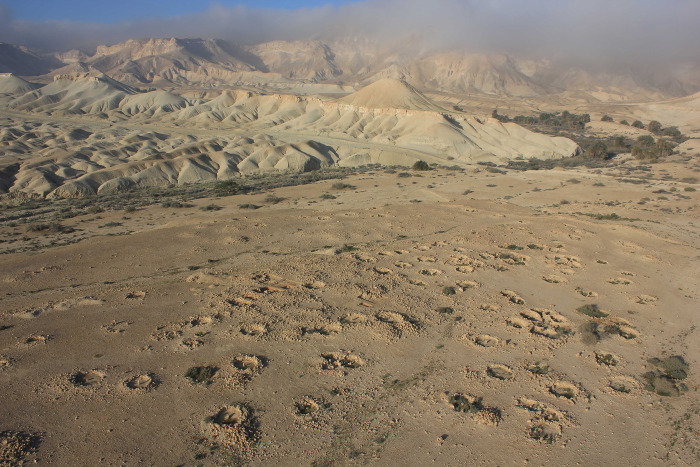
The Negev Highlands arid region (southern Levant) shows evidence of sharp settlement fluctuations, with several periods of strong human activity separated by centuries with no evidence of sedentary life. In this study, we used the palynological method in order to shed light on the region's demographic history in the Bronze and Iron Ages. Fifty-four samples of pollen were collected and analyzed from secure archaeological contexts in four Negev Highlands sites: Nahal Boqer 66, dated to the Early Bronze Age and Early Intermediate Bronze Age (ca. 3200-2200 BCE); Ein Ziq, dated to the Early Intermediate Bronze Age (ca. 2500-2200 BCE); Mashabe Sade, dated to the Intermediate Bronze Age (ca. 2500-2000 BCE); and Haroa, dated to the Iron Age IIA (ca. late 10th through 9th centuries BCE). Our study revealed no evidence of cereal cultivation, with some hints that the inhabitants' diets may have included plants gathered from the wild. Only one of the sites, Nahal Boqer 66, showed micro-indicators of animal dung remains, suggesting that the inhabitants herded animals. The palynological evidence did, however, emphasize that the livestock there were not fed or supplemented with agricultural by-products but rather grazed freely on wild vegetation. The pollen data also suggest that all four sites were occupied only during late winter and spring. The activity in the Negev Highlands during the third millennium BCE was probably related to the copper industry in the Arabah and to copper transportation to settled neighboring lands, especially Egypt. A relatively humid climate supported the trade through the Negev Highlands. Deterioration in both climate conditions and settlement activity was documented in the second half of the Intermediate Bronze Age.
内盖夫高地干旱地区(南黎凡特)显示出定居点波动剧烈的证据,有几个时期人类活动非常活跃,而之后几个世纪则没有定居生活的迹象。在这项研究中,我们使用孢粉学方法来阐明该地区在青铜时代和铁器时代的人口历史。我们从内盖夫高地四个地点的可靠考古背景中采集并分析了 54 个花粉样本:Nahal Boqer 66,可追溯到青铜时代早期和早中期(约公元前 3200-2200 年);Ein Ziq,可追溯到早中期(约公元前 2500-2200 年);Mashabe Sade,可追溯到中期(约公元前 2500-2000 年);以及 Haroa,可追溯到铁器时代 IIA 期(约公元前 10 世纪末至 9 世纪)。我们的研究没有发现谷物种植的证据,有一些迹象表明,居民的饮食可能包括从野外采集的植物。只有一个地点,Nahal Boqer 66,显示出动物粪便残留物的微观指标,表明居民放牧动物。然而,孢粉学证据强调,那里的牲畜不是用农业副产品喂养或补充的,而是自由地以野生植物为食。花粉数据还表明,四个地点仅在冬末和春季有人居住。公元前三千年,内盖夫高地的活动可能与阿拉伯地区的铜工业有关,以及铜向定居的邻国(尤其是埃及)的运输有关。相对湿润的气候支持了通过内盖夫高地的贸易。在中期青铜时代的后半段,气候条件和定居点活动的恶化都有记录。