The First Hospital of Ningbo University, Ningbo, 315020, China.
Department of Biotherapy, Cancer Center and State Key Laboratory of Biotherapy, West China Hospital, Sichuan University, Chengdu, 610041, China.
Redox Biol. 2023 Jul;63:102754. doi: 10.1016/j.redox.2023.102754. Epub 2023 May 18.
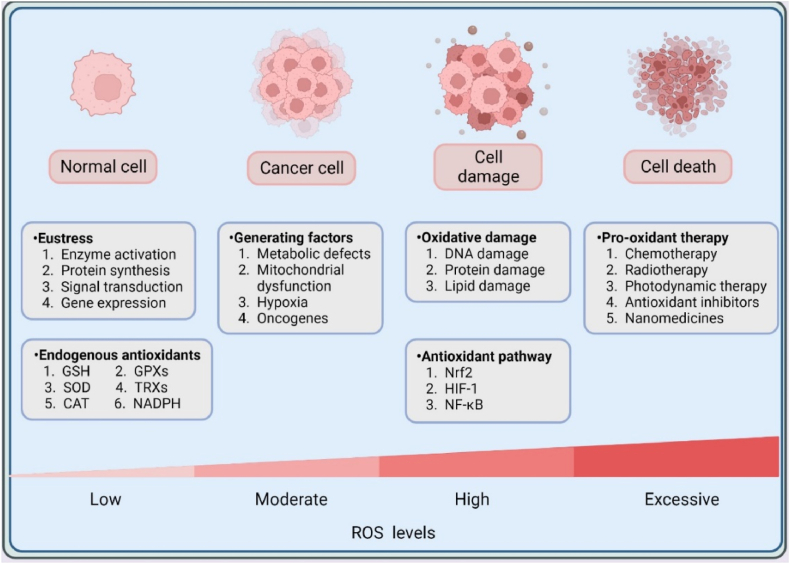
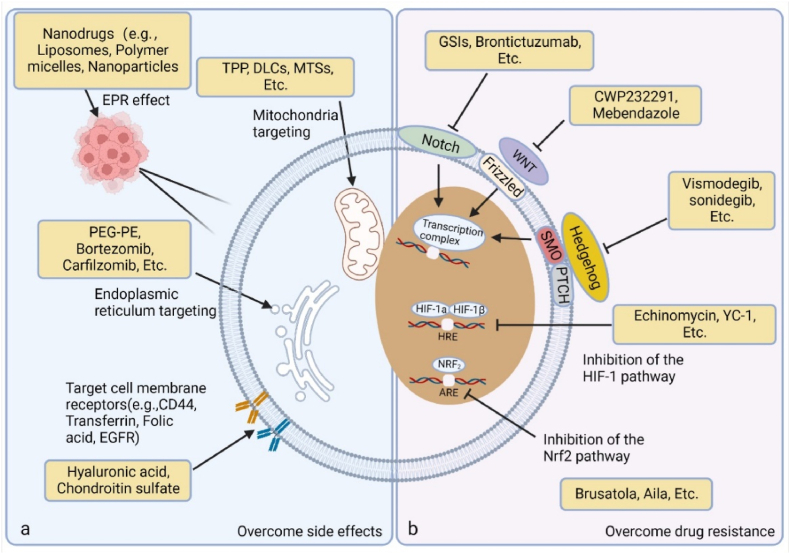
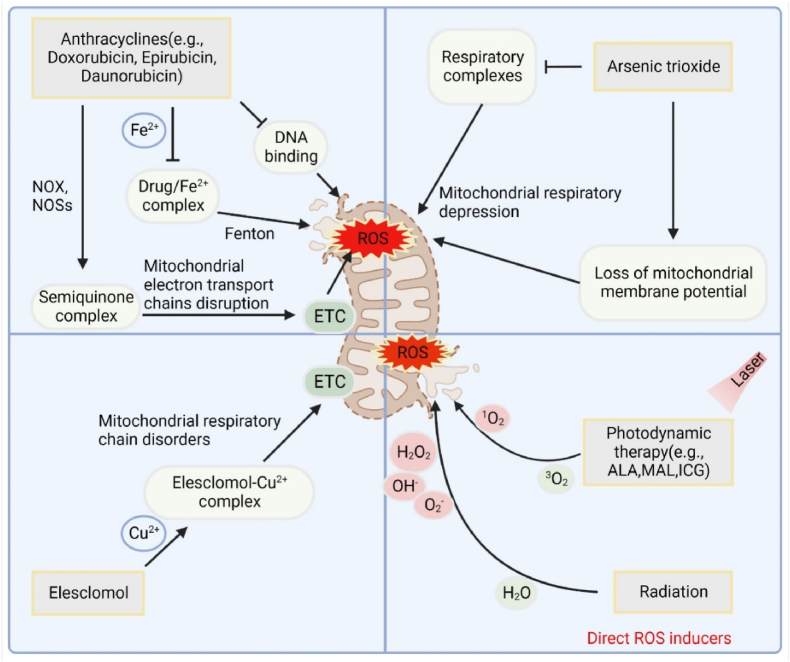
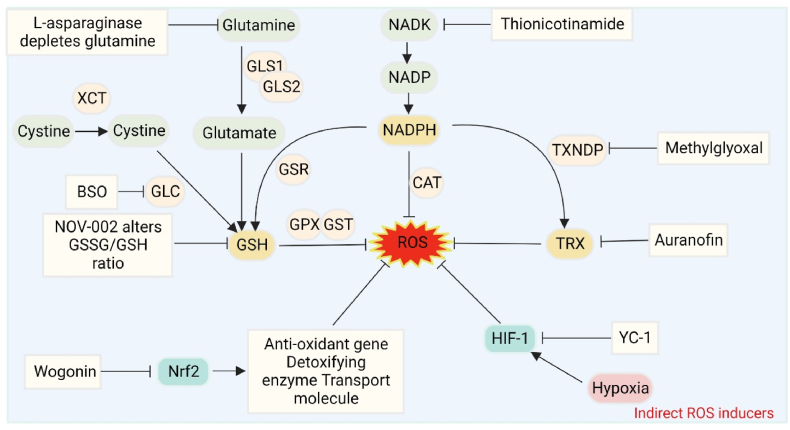
Oxidative stress (OS), defined as redox imbalance in favor of oxidant burden, is one of the most significant biological events in cancer progression. Cancer cells generally represent a higher oxidant level, which suggests a dual therapeutic strategy by regulating redox status (i.e., pro-oxidant therapy and/or antioxidant therapy). Indeed, pro-oxidant therapy exhibits a great anti-cancer capability, attributing to a higher oxidant accumulation within cancer cells, whereas antioxidant therapy to restore redox homeostasis has been claimed to fail in several clinical practices. Targeting the redox vulnerability of cancer cells by pro-oxidants capable of generating excessive reactive oxygen species (ROS) has surfaced as an important anti-cancer strategy. However, multiple adverse effects caused by the indiscriminate attacks of uncontrolled drug-induced OS on normal tissues and the drug-tolerant capacity of some certain cancer cells greatly limit their further applications. Herein, we review several representative oxidative anti-cancer drugs and summarize their side effects on normal tissues and organs, emphasizing that seeking a balance between pro-oxidant therapy and oxidative damage is of great value in exploiting next-generation OS-based anti-cancer chemotherapeutics.
氧化应激(OS)定义为氧化还原平衡偏向氧化剂负担,是癌症进展中最重要的生物学事件之一。癌细胞通常表现出更高的氧化剂水平,这表明通过调节氧化还原状态(即促氧化剂治疗和/或抗氧化剂治疗)可以采用双重治疗策略。事实上,促氧化剂治疗表现出很强的抗癌能力,这归因于癌细胞内更高的氧化剂积累,而抗氧化剂治疗恢复氧化还原平衡在几种临床实践中已被证明失败。通过能够产生过量活性氧(ROS)的促氧化剂靶向癌细胞的氧化还原脆弱性已成为一种重要的抗癌策略。然而,由于不受控制的药物诱导的 OS 对正常组织的无差别攻击以及某些癌细胞的耐药能力所导致的多种不良反应,极大地限制了它们的进一步应用。在此,我们综述了几种有代表性的氧化抗癌药物,并总结了它们对正常组织和器官的副作用,强调在促氧化剂治疗和氧化损伤之间寻求平衡对于开发下一代基于 OS 的抗癌化疗药物具有重要价值。