Department of Quantitative Health Sciences, Mayo Clinic, Rochester, MN, USA.
Department of Surgery, Mayo Clinic, Jacksonville, FL, USA.
Breast Cancer Res. 2023 May 24;25(1):57. doi: 10.1186/s13058-023-01656-x.
Triple-negative breast cancer (TNBC) is the most aggressive breast cancer subtype. Patients with TNBC are primarily treated with neoadjuvant chemotherapy (NAC). The response to NAC is prognostic, with reductions in overall survival and disease-free survival rates in those patients who do not achieve a pathological complete response (pCR). Based on this premise, we hypothesized that paired analysis of primary and residual TNBC tumors following NAC could identify unique biomarkers associated with post-NAC recurrence.
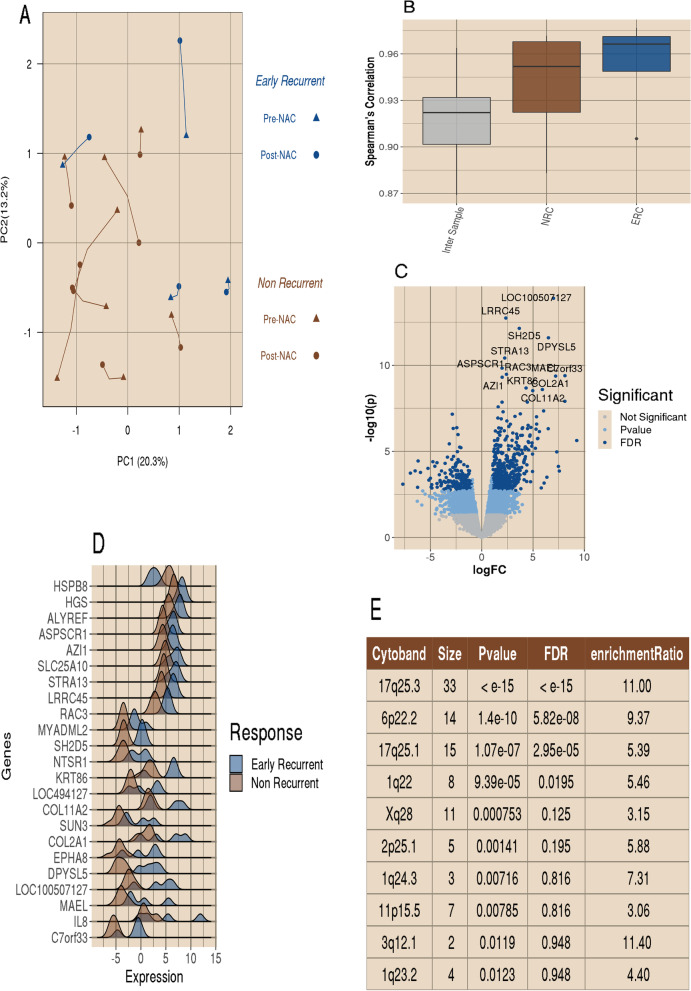
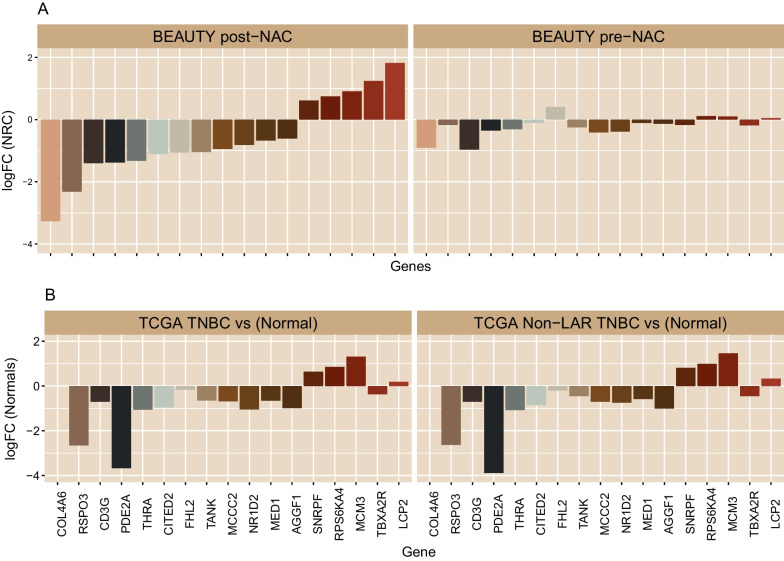
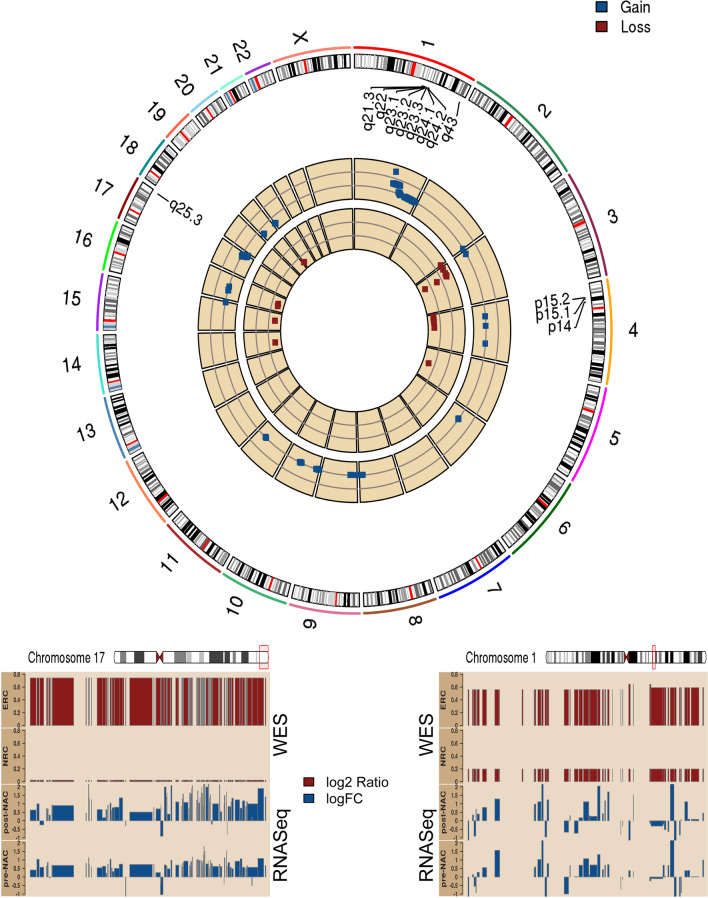
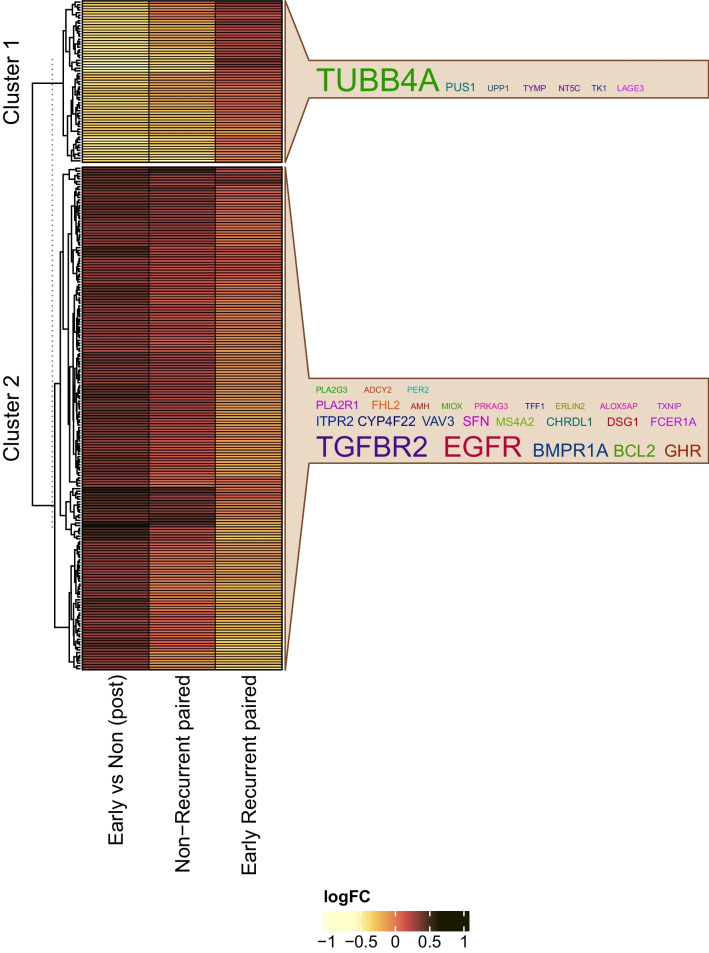
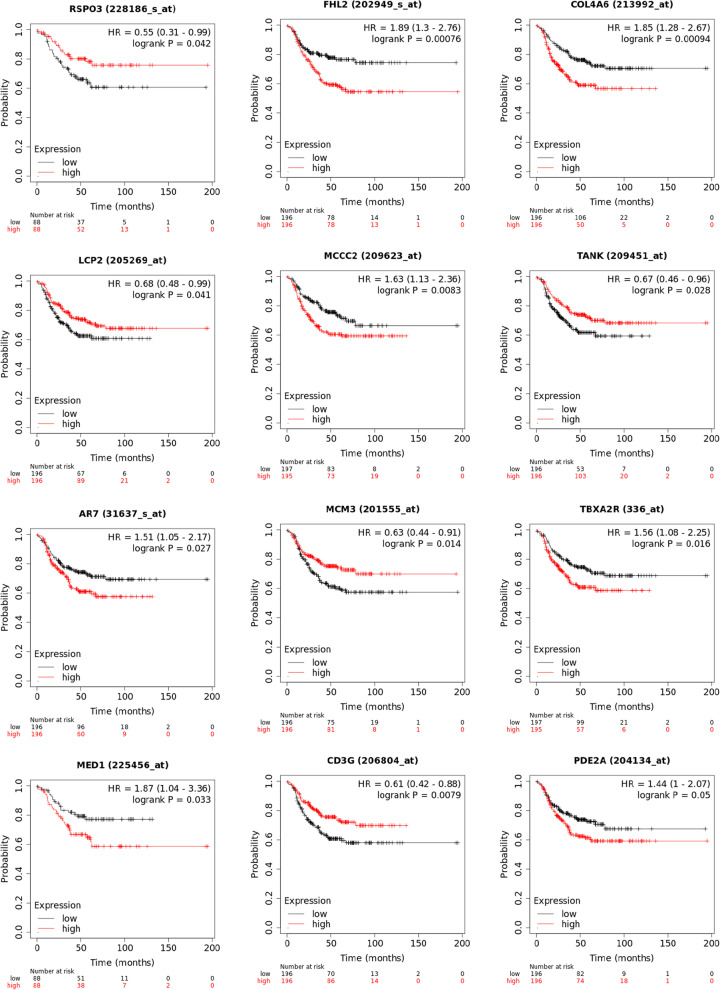
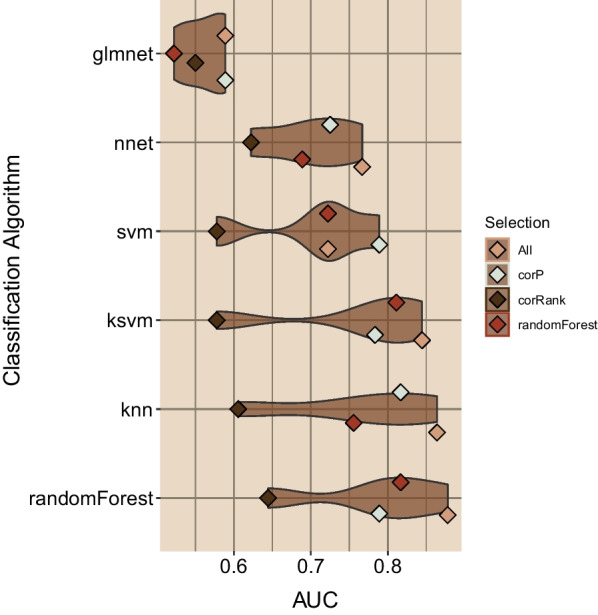
We investigated 24 samples from 12 non-LAR TNBC patients with paired pre- and post-NAC data, including four patients with recurrence shortly after surgery (< 24 months) and eight who remained recurrence-free (> 48 months). These tumors were collected from a prospective NAC breast cancer study (BEAUTY) conducted at the Mayo Clinic. Differential expression analysis of pre-NAC biopsies showed minimal gene expression differences between early recurrent and nonrecurrent TNBC tumors; however, post-NAC samples demonstrated significant alterations in expression patterns in response to intervention. Topological-level differences associated with early recurrence were implicated in 251 gene sets, and an independent assessment of microarray gene expression data from the 9 paired non-LAR samples available in the NAC I-SPY1 trial confirmed 56 gene sets. Within these 56 gene sets, 113 genes were observed to be differentially expressed in the I-SPY1 and BEAUTY post-NAC studies. An independent (n = 392) breast cancer dataset with relapse-free survival (RFS) data was used to refine our gene list to a 17-gene signature. A threefold cross-validation analysis of the gene signature with the combined BEAUTY and I-SPY1 data yielded an average AUC of 0.88 for six machine-learning models. Due to the limited number of studies with pre- and post-NAC TNBC tumor data, further validation of the signature is needed.
Analysis of multiomics data from post-NAC TNBC chemoresistant tumors showed down regulation of mismatch repair and tubulin pathways. Additionally, we identified a 17-gene signature in TNBC associated with post-NAC recurrence enriched with down-regulated immune genes.
三阴性乳腺癌(TNBC)是最具侵袭性的乳腺癌亚型。TNBC 患者主要接受新辅助化疗(NAC)。NAC 的反应具有预后意义,对于那些未达到病理完全缓解(pCR)的患者,其总生存率和无病生存率降低。基于这一前提,我们假设对 NAC 后原发性和残余 TNBC 肿瘤进行配对分析,可以识别与 NAC 后复发相关的独特生物标志物。
我们对 12 名非 LAR TNBC 患者的 24 个样本进行了研究,这些患者均有 NAC 前后配对数据,包括 4 名手术后(<24 个月)很快复发的患者和 8 名无复发的患者(>48 个月)。这些肿瘤是从梅奥诊所进行的一项前瞻性 NAC 乳腺癌研究(BEAUTY)中收集的。对 NAC 前活检进行差异表达分析显示,早期复发和非复发 TNBC 肿瘤之间的基因表达差异很小;然而,NAC 后样本显示出对干预反应的表达模式的显著改变。与早期复发相关的拓扑差异涉及 251 个基因集,对 NAC I-SPY1 试验中可用的 9 对非 LAR 样本的独立微阵列基因表达数据的评估证实了 56 个基因集。在这 56 个基因集中,在 NAC I-SPY1 和 BEAUTY 研究中观察到 113 个基因在 NAC 后表达差异。使用独立的(n=392)具有无复发生存(RFS)数据的乳腺癌数据集,对我们的基因列表进行了细化,得到了一个 17 基因特征。使用合并的 BEAUTY 和 I-SPY1 数据的三折交叉验证分析,对于 6 个机器学习模型,基因特征的平均 AUC 为 0.88。由于具有 NAC 前后 TNBC 肿瘤数据的研究数量有限,因此需要进一步验证该特征。
对 NAC 后 TNBC 耐药性肿瘤的多组学数据分析显示,错配修复和微管途径下调。此外,我们在与 NAC 后复发相关的 TNBC 中鉴定了一个包含下调免疫基因的 17 基因特征。