Key Laboratory of Breast Cancer in Shanghai, Department of Breast Surgery, Fudan University Shanghai Cancer Center; Department of Oncology, Shanghai Medical College, Fudan University, Shanghai 200032, China.
University of Chinese Academy of Sciences, Beijing 100049, China.
Theranostics. 2020 Aug 29;10(24):10940-10956. doi: 10.7150/thno.45207. eCollection 2020.
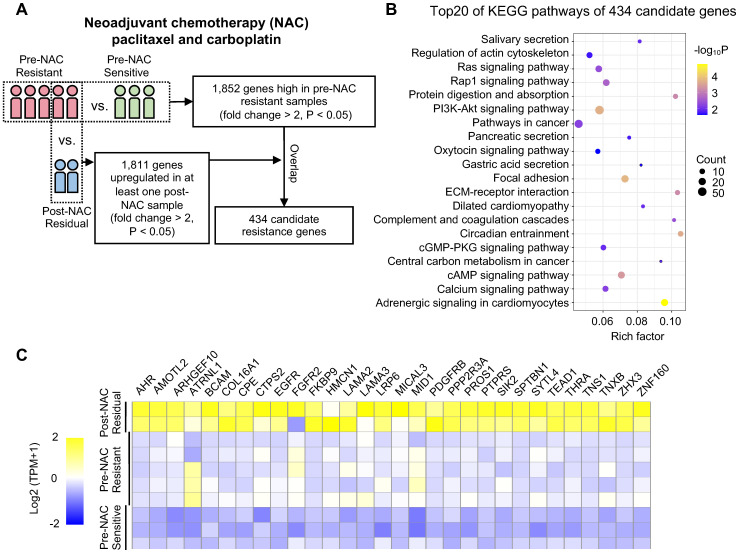
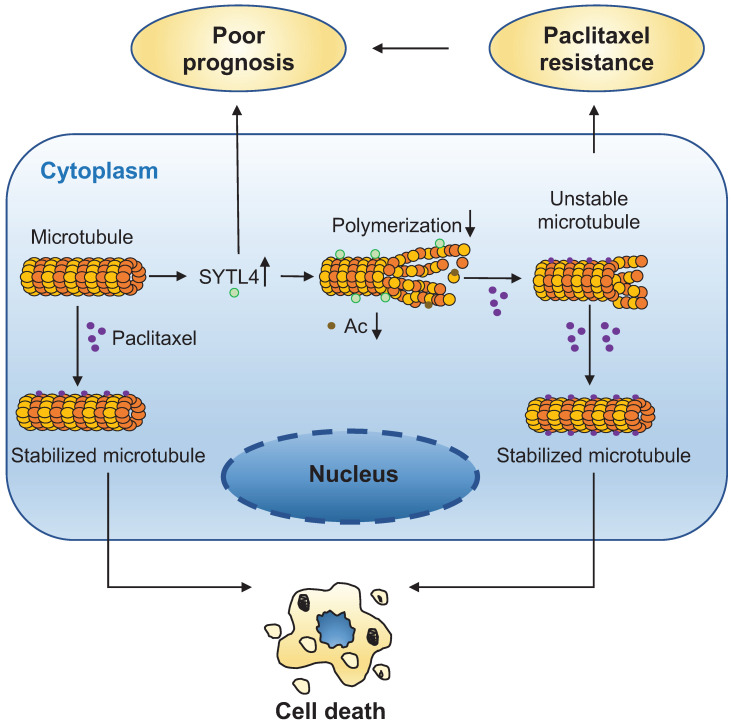
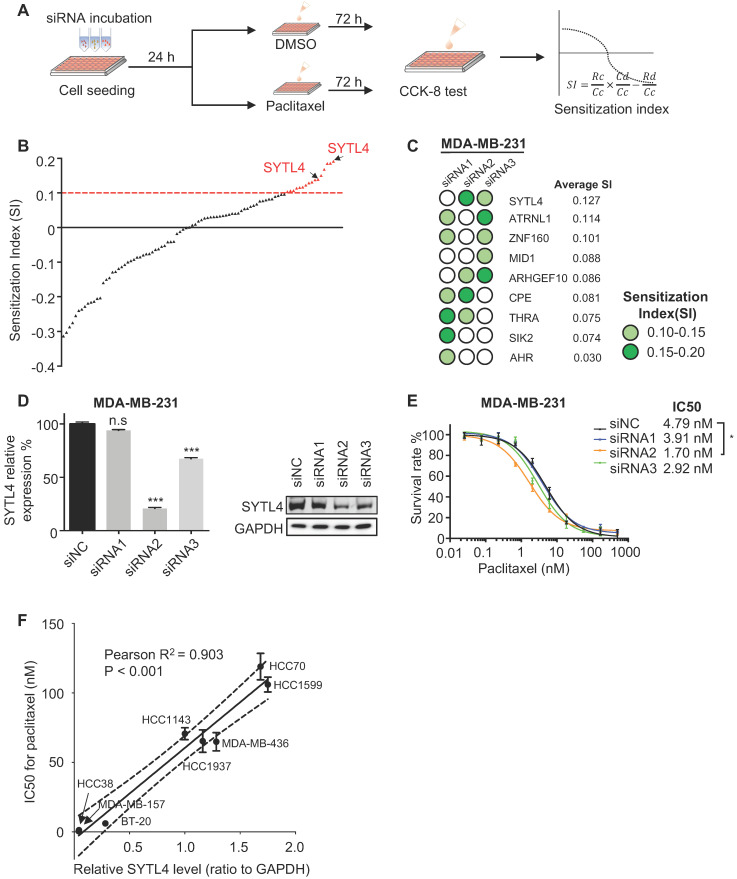
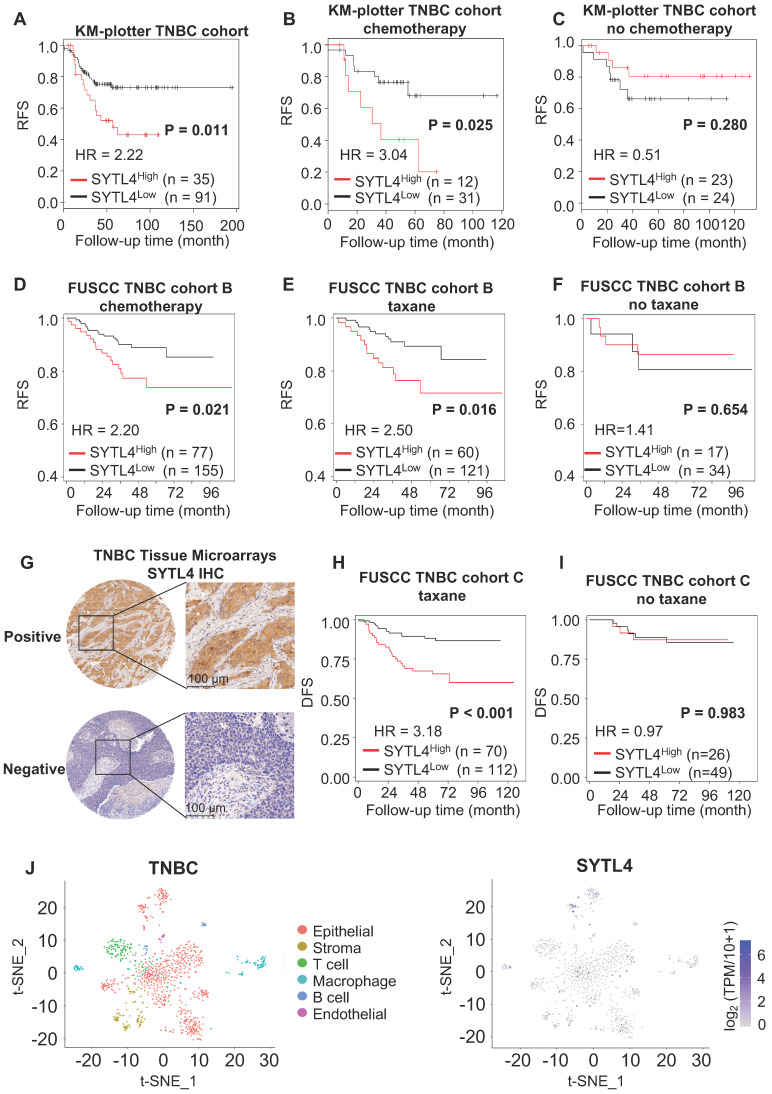
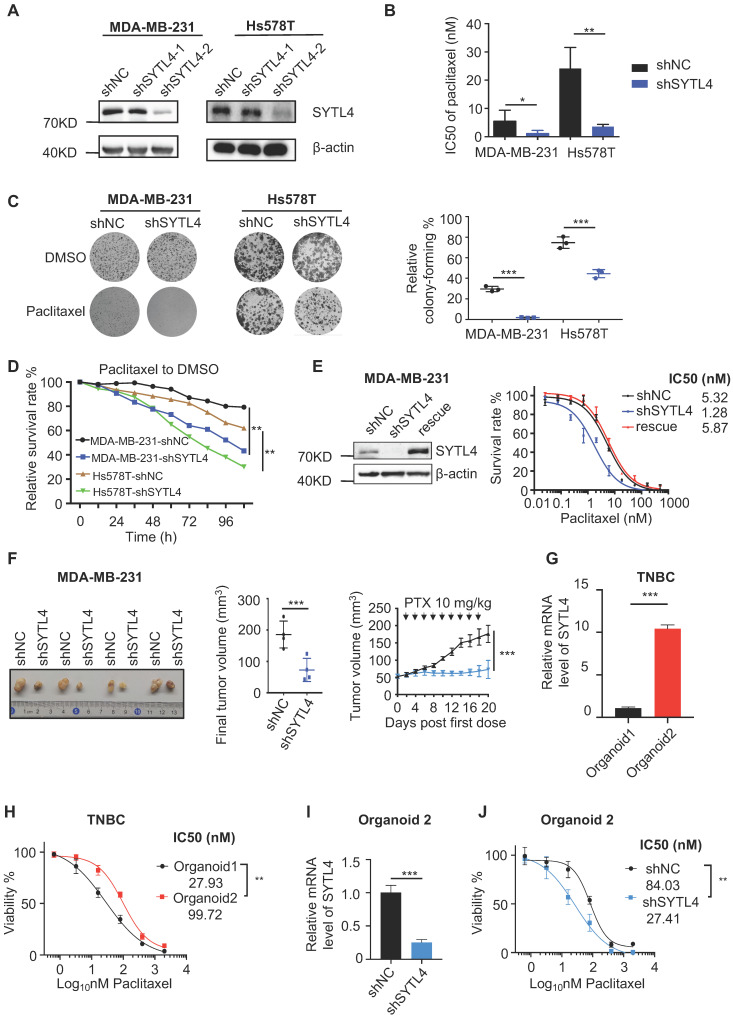
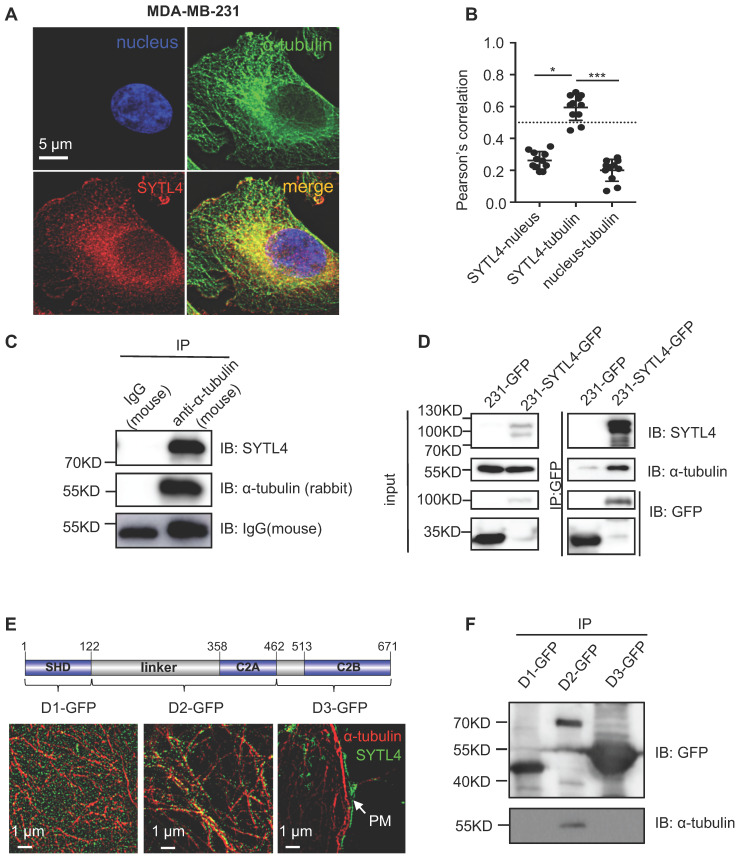
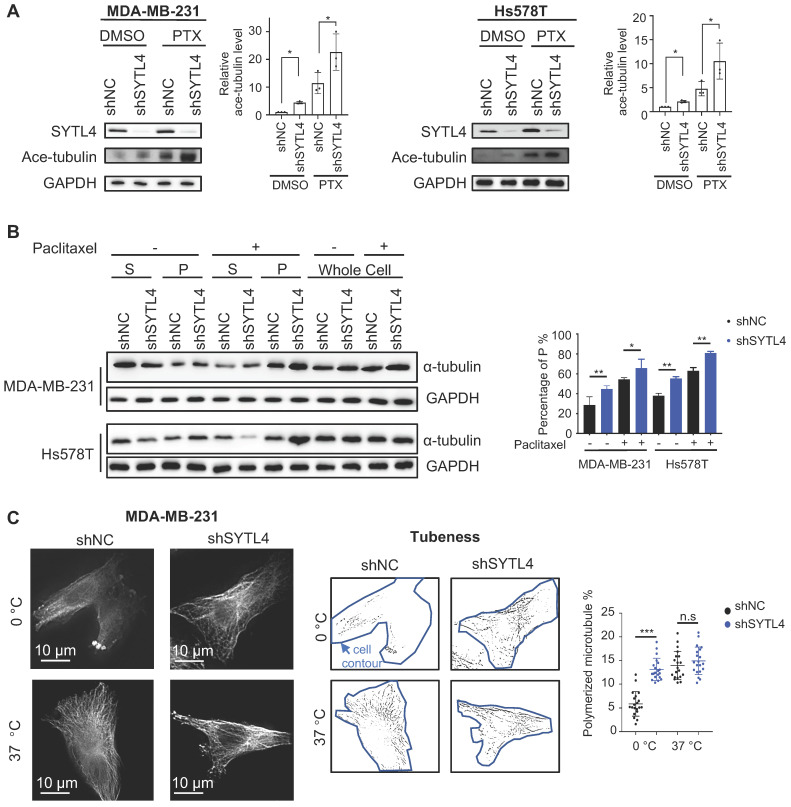
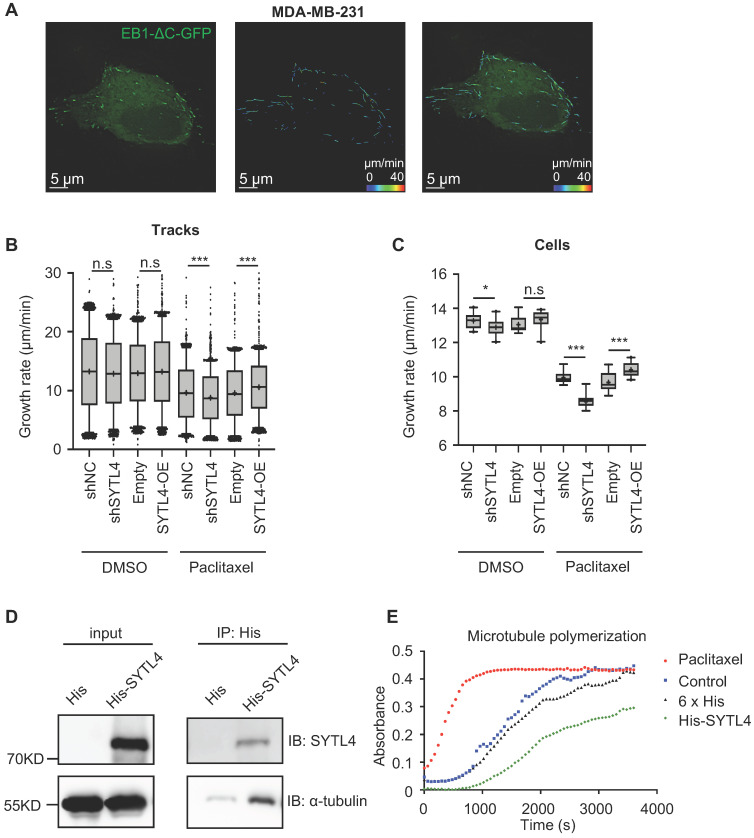
Taxanes are frontline chemotherapeutic drugs for patients with triple-negative breast cancer (TNBC); however, chemoresistance reduces their effectiveness. We hypothesized that the molecular profiling of tumor samples before and after neoadjuvant chemotherapy (NAC) would help identify genes associated with drug resistance. We sequenced 10 samples by RNA-seq from 8 NAC patients with TNBC: 3 patients with a pathologic complete response (pCR) and the other 5 with non-pCR. Differentially expressed genes that predicted chemotherapy response were selected for functional screening via a small-scale siRNAs pool. The clinical and functional significance of the gene of interest in TNBC was further investigated and , and biochemical assays and imaging analysis were applied to study the mechanisms. Synaptotagmin-like 4 (SYTL4), a Rab effector in vesicle transport, was identified as a leading functional candidate. High SYTL4 expression indicated a poor prognosis in multiple TNBC cohorts, specifically in taxane-treated TNBCs. SYTL4 was identified as a novel chemoresistant gene as validated in TNBC cells, a mouse model and patient-derived organoids. Mechanistically, downregulating SYTL4 stabilized the microtubule network and slowed down microtubule growth rate. Furthermore, SYTL4 colocalized with microtubules and interacted with microtubules through its middle region containing the linker and C2A domain. Finally, we found that SYTL4 was able to bind microtubules and inhibit the microtubule polymerization. SYTL4 is a novel chemoresistant gene in TNBC and its upregulation indicates poor prognosis in taxane-treated TNBC. Further, SYTL4 directly binds microtubules and decreases microtubule stability.
紫杉烷类药物是三阴性乳腺癌(TNBC)患者的一线化疗药物;然而,化疗耐药性降低了它们的疗效。我们假设在新辅助化疗(NAC)前后对肿瘤样本进行分子分析有助于鉴定与耐药性相关的基因。我们对 8 名接受 NAC 的 TNBC 患者的 10 个样本进行了 RNA-seq 测序:3 名患者病理完全缓解(pCR),另外 5 名患者未达到 pCR。选择预测化疗反应的差异表达基因,通过小范围 siRNA 池进行功能筛选。进一步研究了该基因在 TNBC 中的临床和功能意义,并应用生化测定和成像分析来研究其机制。突触结合蛋白样 4(SYTL4)是囊泡运输中的 Rab 效应物,被鉴定为主要的功能候选物。高 SYTL4 表达表明在多个 TNBC 队列中预后不良,特别是在接受紫杉醇治疗的 TNBC 中。SYTL4 被鉴定为一种新的化疗耐药基因,在 TNBC 细胞、小鼠模型和患者来源的类器官中得到验证。从机制上讲,下调 SYTL4 稳定微管网络并降低微管生长速度。此外,SYTL4 与微管共定位,并通过其包含接头和 C2A 结构域的中间区域与微管相互作用。最后,我们发现 SYTL4 能够结合微管并抑制微管聚合。SYTL4 是 TNBC 中的一种新的化疗耐药基因,其上调表明紫杉醇治疗的 TNBC 预后不良。此外,SYTL4 直接结合微管并降低微管稳定性。