Tongji University School of Medicine, Tongji University, Shanghai, China.
Department of Epidemiology, Shanghai Key Laboratory of Medical Bioprotection, Key Laboratory of Biological Defense, Ministry of Education, Second Military Medical University, Shanghai, China.
Front Immunol. 2023 May 9;14:1159326. doi: 10.3389/fimmu.2023.1159326. eCollection 2023.
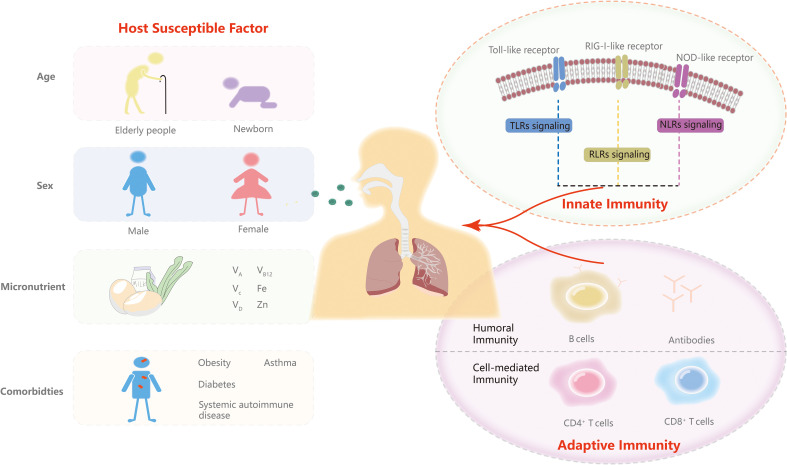
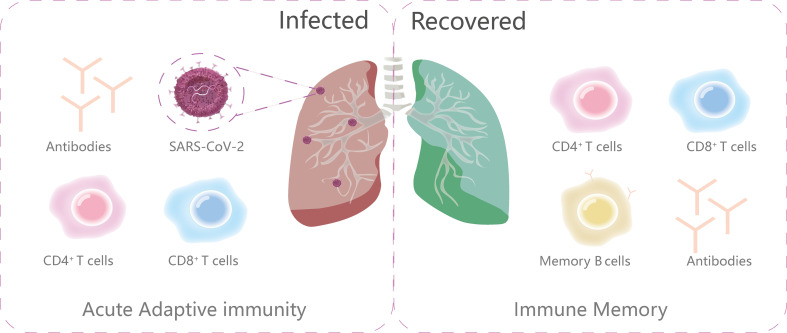
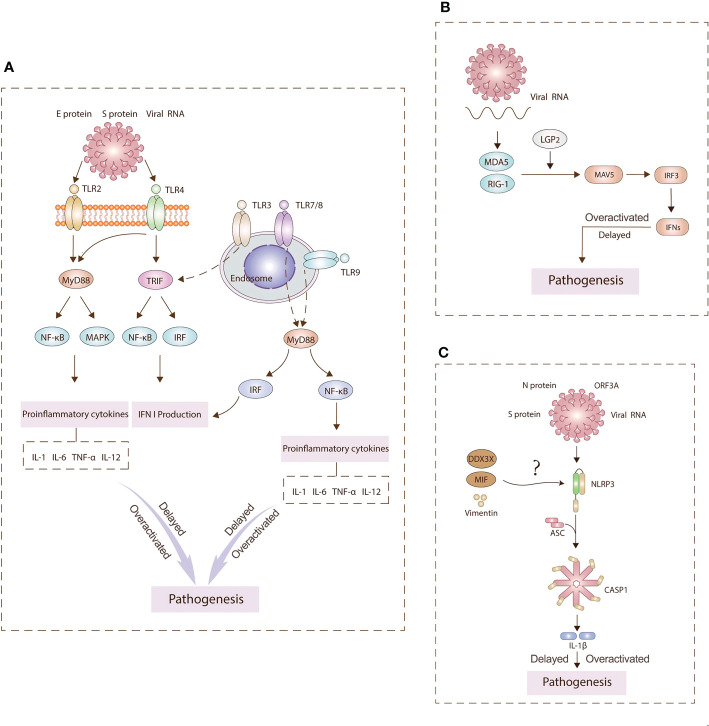
The coronavirus disease 2019 (COVID-19) pandemic, caused by severe acute respiratory syndrome coronavirus (SARS-CoV-2), has affected all countries worldwide. Although some symptoms are relatively mild, others are still associated with severe and even fatal clinical outcomes. Innate and adaptive immunity are important for the control of SARS-CoV-2 infections, whereas a comprehensive characterization of the innate and adaptive immune response to COVID-19 is still lacking and the mechanisms underlying immune pathogenesis and host predisposing factors are still a matter of scientific debate. Here, the specific functions and kinetics of innate and adaptive immunity involved in SARS-CoV-2 recognition and resultant pathogenesis are discussed, as well as their immune memory for vaccinations, viral-mediated immune evasion, and the current and future immunotherapeutic agents. We also highlight host factors that contribute to infection, which may deepen the understanding of viral pathogenesis and help identify targeted therapies that attenuate severe disease and infection.
新型冠状病毒病(COVID-19)疫情由严重急性呼吸综合征冠状病毒(SARS-CoV-2)引起,已影响到全球所有国家。虽然一些症状相对较轻,但其他症状仍与严重甚至致命的临床结果相关。先天和适应性免疫对于控制 SARS-CoV-2 感染很重要,而对 COVID-19 的先天和适应性免疫反应的全面描述仍然缺乏,免疫发病机制和宿主易感性因素的机制仍然是科学争论的问题。在这里,讨论了先天免疫和适应性免疫在 SARS-CoV-2 识别和由此产生的发病机制中的特定功能和动力学,以及它们对疫苗接种的免疫记忆、病毒介导的免疫逃逸,以及当前和未来的免疫治疗药物。我们还强调了导致感染的宿主因素,这可能加深对病毒发病机制的理解,并有助于确定靶向治疗方法,以减轻严重疾病和感染。