Weiss Alexander R, Korzeniewska Anna, Chrabaszcz Anna, Bush Alan, Fiez Julie A, Crone Nathan E, Richardson Robert M
JHU Cognitive Neurophysiology and BMI Lab, Department of Neurology, Johns Hopkins University School of Medicine, Baltimore, MD, USA.
Department of Psychology, University of Pittsburgh, Pittsburgh, PA, USA.
Neurobiol Lang (Camb). 2023 Jan 18;4(1):53-80. doi: 10.1162/nol_a_00086. eCollection 2023.
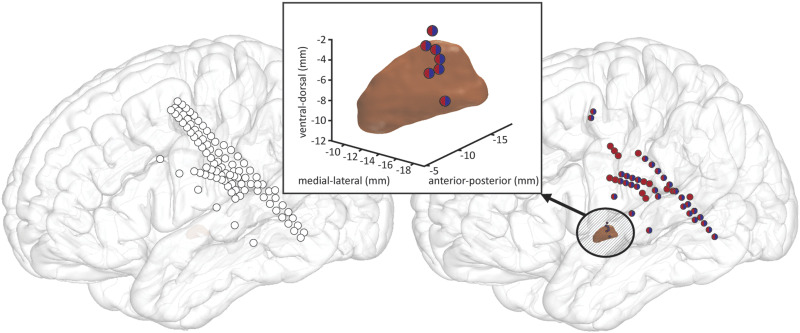
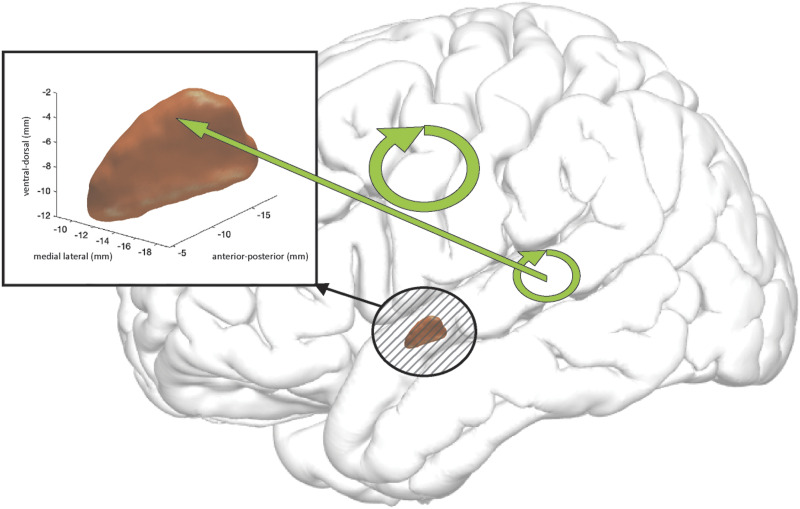
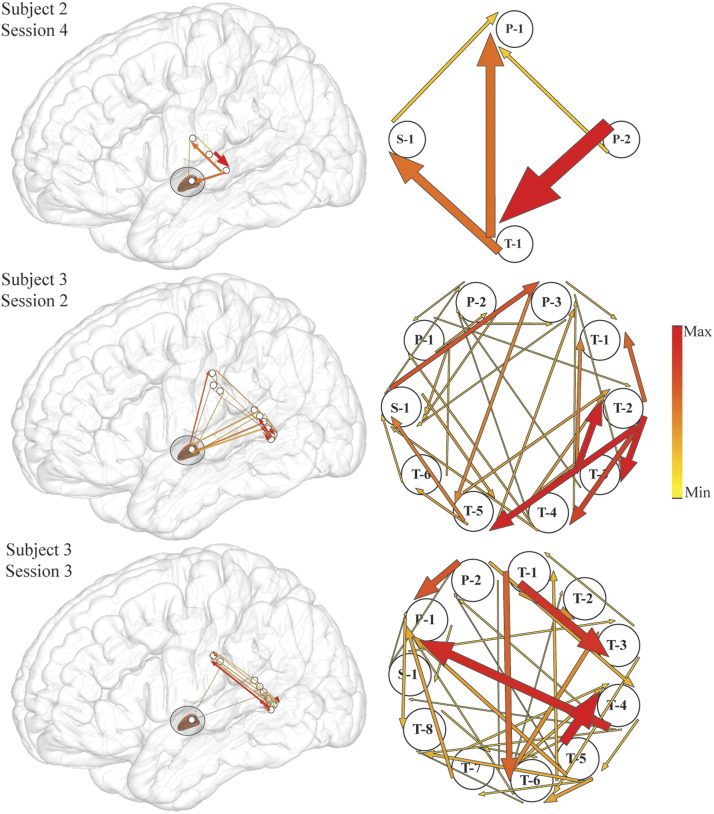
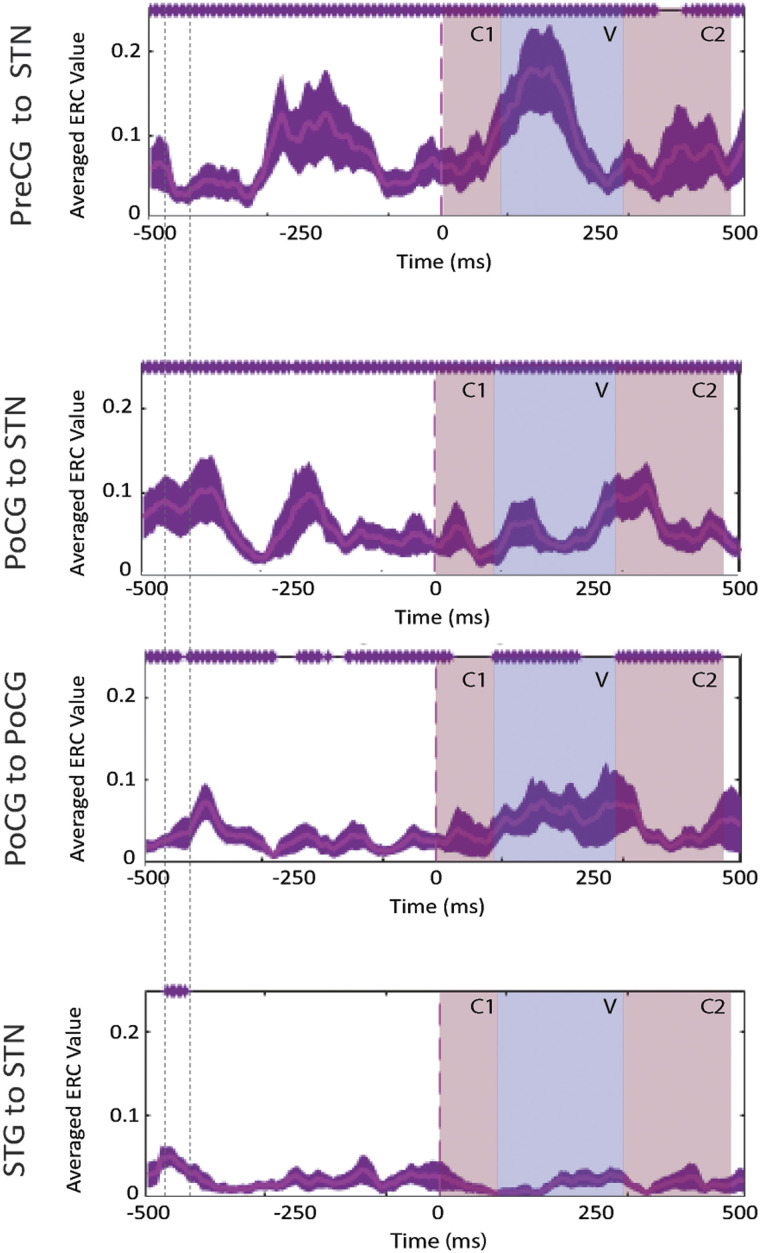
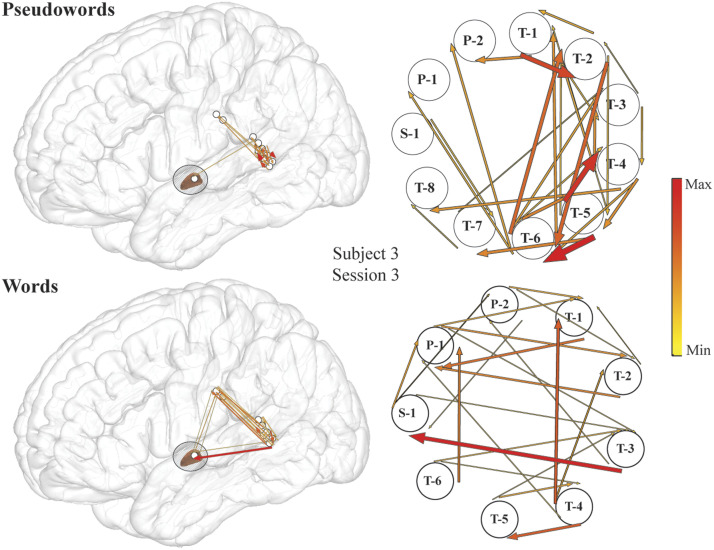
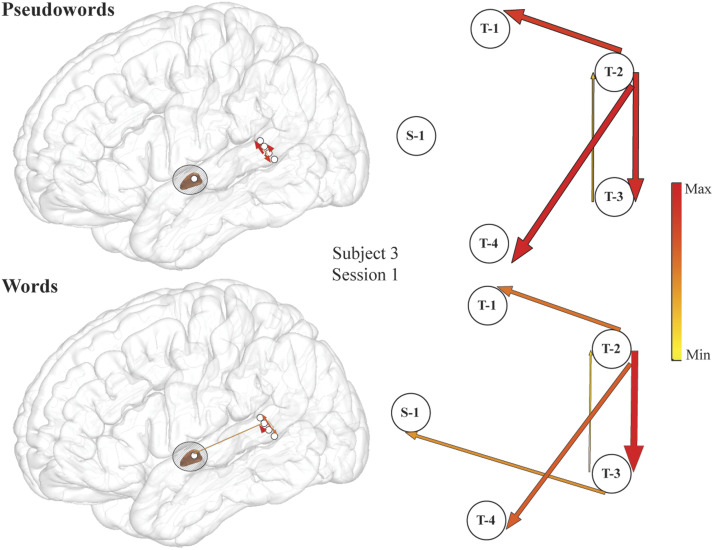
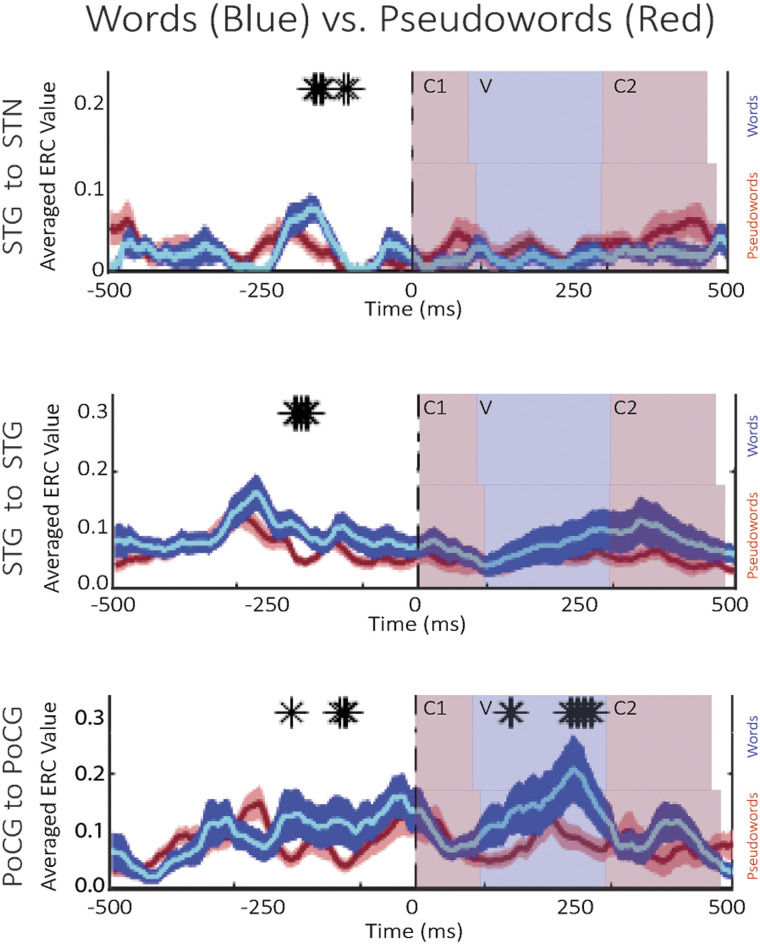
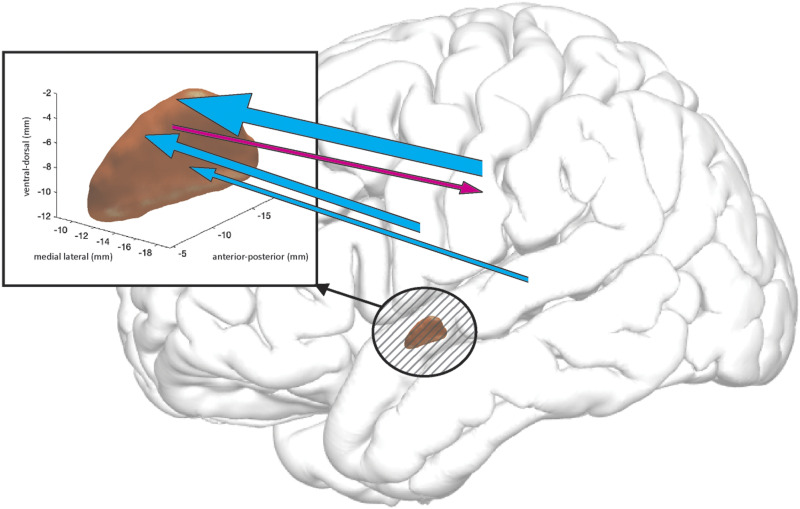
Speech requires successful information transfer within cortical-basal ganglia loop circuits to produce the desired acoustic output. For this reason, up to 90% of Parkinson's disease patients experience impairments of speech articulation. Deep brain stimulation (DBS) is highly effective in controlling the symptoms of Parkinson's disease, sometimes alongside speech improvement, but subthalamic nucleus (STN) DBS can also lead to decreases in semantic and phonological fluency. This paradox demands better understanding of the interactions between the cortical speech network and the STN, which can be investigated with intracranial EEG recordings collected during DBS implantation surgery. We analyzed the propagation of high-gamma activity between STN, superior temporal gyrus (STG), and ventral sensorimotor cortices during reading aloud via event-related causality, a method that estimates strengths and directionalities of neural activity propagation. We employed a newly developed bivariate smoothing model based on a two-dimensional moving average, which is optimal for reducing random noise while retaining a sharp step response, to ensure precise embedding of statistical significance in the time-frequency space. Sustained and reciprocal neural interactions between STN and ventral sensorimotor cortex were observed. Moreover, high-gamma activity propagated from the STG to the STN prior to speech onset. The strength of this influence was affected by the lexical status of the utterance, with increased activity propagation during word versus pseudoword reading. These unique data suggest a potential role for the STN in the feedforward control of speech.
言语需要在皮质-基底神经节环路中成功传递信息,以产生所需的声学输出。因此,高达90%的帕金森病患者存在言语清晰度受损的问题。深部脑刺激(DBS)在控制帕金森病症状方面非常有效,有时还能改善言语,但丘脑底核(STN)DBS也可能导致语义和语音流畅性下降。这种矛盾现象需要我们更好地理解皮质言语网络与STN之间的相互作用,这可以通过在DBS植入手术期间收集的颅内脑电图记录来进行研究。我们通过事件相关因果关系分析了在大声朗读过程中高伽马活动在STN、颞上回(STG)和腹侧感觉运动皮层之间的传播,这是一种估计神经活动传播强度和方向的方法。我们采用了一种基于二维移动平均的新开发的双变量平滑模型,该模型在减少随机噪声的同时保留尖锐的阶跃响应方面是最优的,以确保在时频空间中精确嵌入统计显著性。观察到STN与腹侧感觉运动皮层之间存在持续且相互的神经相互作用。此外,在言语开始之前,高伽马活动从STG传播到STN。这种影响的强度受话语词汇状态的影响,在朗读单词与假词时活动传播增加。这些独特的数据表明STN在言语的前馈控制中可能发挥作用。