Chou Po-An, Bain Anthony, Chantarasuwan Bhanumas, Tzeng Hsy-Yu
Department of Forestry, National Chung Hsing University, No. 145 Xingda Rd., Taichung City 40227, Taiwan.
Department of Biological Science, National Sun Yat-sen University, No. 70 Lien-Hai Rd., Kaohsiung City 80424, Taiwan.
Insects. 2023 May 3;14(5):437. doi: 10.3390/insects14050437.
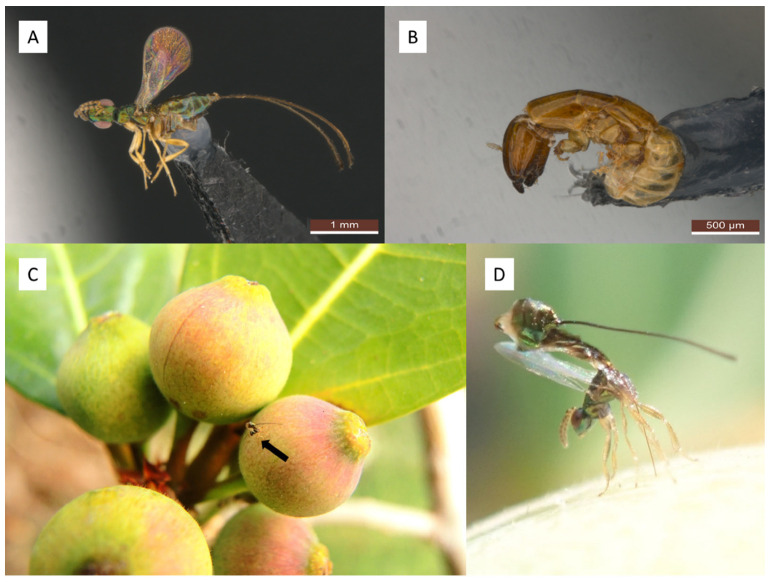
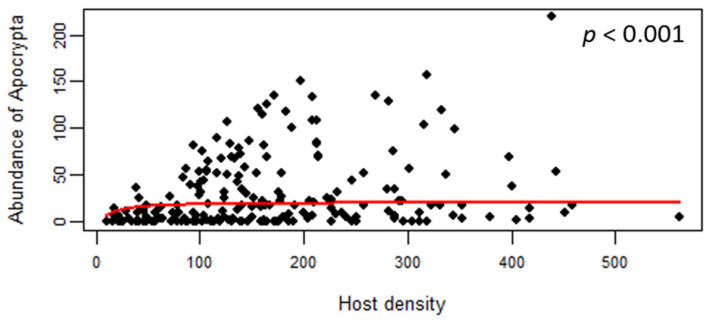
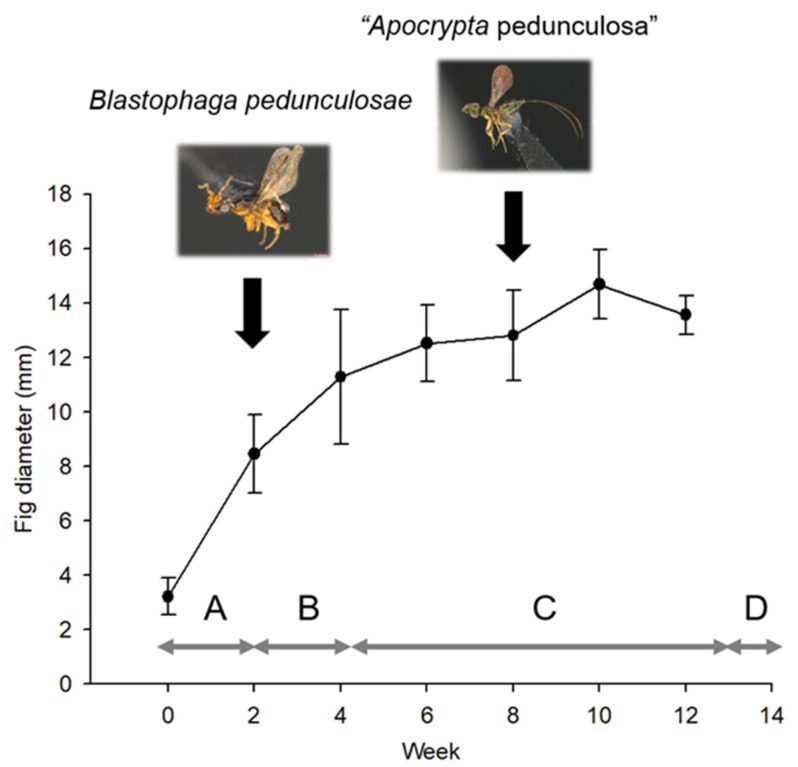
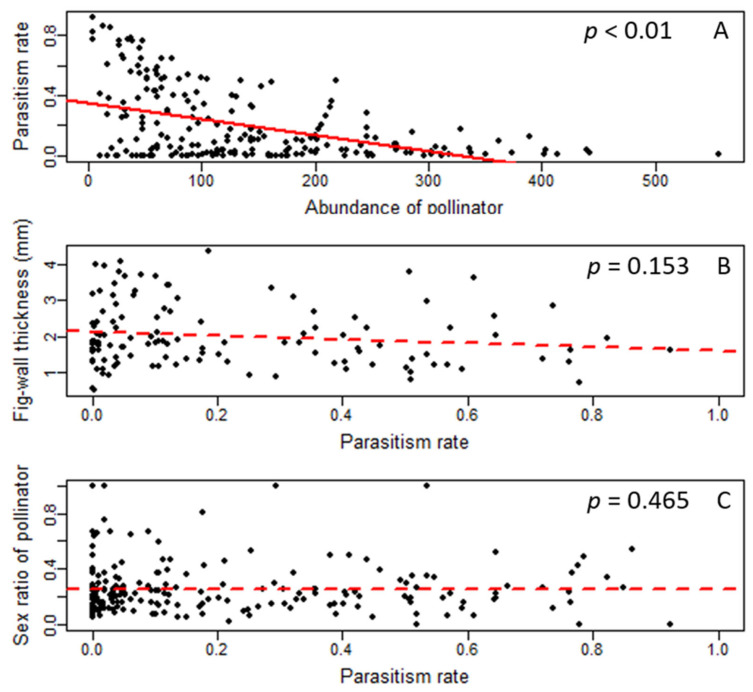
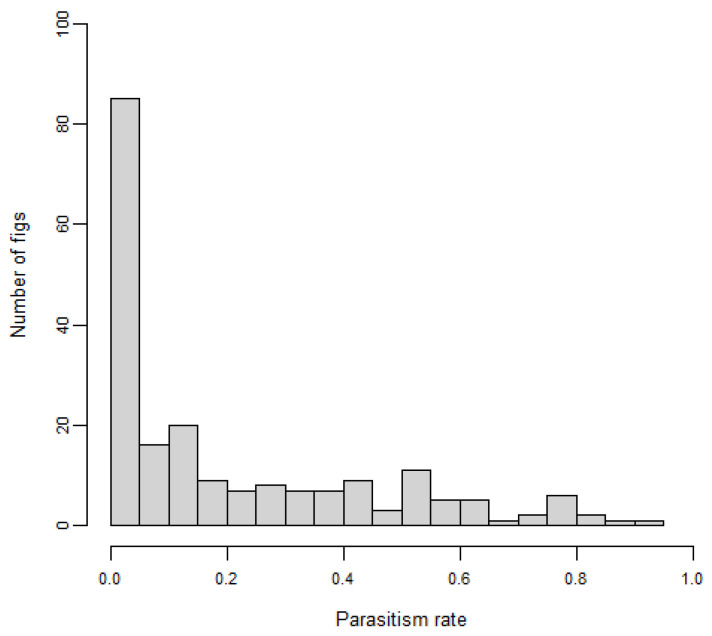
Non-pollinating fig wasps (NPFWs), particularly long-ovipositored Sycoryctina wasps, exhibit a high species specificity and exert complex ecological effects on the obligate mutualism between the plant genus and pollinating fig wasps. is a genus of NPFWs that mostly interacts with the species under the subgenus , and the symbiosis case between and var. , a species under subgenus , is unique. As fig's internal environments and the wasp communities are distinct between the two subgenera, we addressed the following two questions: (1) Are the parasitism features of the wasp associated with var. different from those of other congeneric species? (2) Is this species an efficient wasp that lives in its unique host? Our observation revealed that this wasp is an endoparasitic idiobiont parasitoid, as most congeneric species are, but developed a relatively long ovipositor. Furthermore, the relationships of the parasitism rate versus the pollinator number, the fig wall, and the sex ratio of the pollinator, respectively, showed that it possessed a higher parasitism ability than that of other congeners. However, its parasitism rate was low, and thus it was not an efficient wasp in its habitat. This difference between parasitism ability and parasitism rate might be a consequence of its oviposition strategy and the severe habitat conditions. These findings may also provide insights into the mechanism to maintain the interaction between the fig tree and the fig wasp community.
非传粉榕小蜂,尤其是具有长产卵器的榕小蜂科黄蜂,表现出高度的物种特异性,并对植物属与传粉榕小蜂之间的专性互利共生关系产生复杂的生态影响。是一类主要与亚属中的物种相互作用的非传粉榕小蜂,而与亚属中的物种var. 之间的共生关系是独特的。由于两个亚属的榕树内部环境和黄蜂群落不同,我们提出了以下两个问题:(1)黄蜂对var. 的寄生特征与其他同属物种是否不同?(2)这个物种是否是一种能在其独特宿主中生存的高效黄蜂?我们的观察表明,这种黄蜂与大多数同属物种一样,是一种内寄生性的静止型寄生蜂,但它发育出了相对较长的产卵器。此外,寄生率与传粉者数量、榕果壁以及传粉者性别比之间的关系分别表明,它比其他同属物种具有更高的寄生能力。然而,其寄生率较低,因此在其栖息地中它不是一种高效的黄蜂。寄生能力与寄生率之间的这种差异可能是其产卵策略和恶劣栖息地条件的结果。这些发现也可能为维持榕树与榕小蜂群落之间相互作用的机制提供见解。