Department of Health Promotion, Faculty of Health, Medicine & Life Science, Maastricht University, NUTRIM School of Nutrition and Translational Research in Metabolism, Maastricht, Netherlands.
School of Public Health, Hawassa University College of Medicine and Health Science, Hawassa, P.Box:1560, Ethiopia.
BMC Pregnancy Childbirth. 2023 May 26;23(1):386. doi: 10.1186/s12884-023-05664-9.
Midwifery-led care is an evidence-based practice in which a qualified midwife provides comprehensive care for low-risk pregnant women and new-borns throughout pregnancy, birth, and the postnatal period. Evidence indicates that midwifery-led care has positive impacts on various outcomes, which include preventing preterm births, reducing the need for interventions, and improving clinical outcomes. This is, however, mainly based on studies from high-income countries. Therefore, this systematic review and meta-analysis aimed to assess the effectiveness of midwifery-led care on pregnancy outcomes in low- and middle-income countries.
We used the Preferred Reporting Items for Systematic Review and Meta-Analysis (PRISMA) guidelines. Three electronic databases (PubMed, CINAHL, and EMBASE) were searched. The search results were systematically screened by two independent researchers. Two authors independently extracted all relevant data using a structured data extraction format. Data analysis for the meta-analysis was done using STATA Version 16 software. A weighted inverse variance random-effects model was used to estimate the effectiveness of midwifery-led care on pregnancy outcomes. Odds ratio with a 95% confidence interval (CI) was presented using a forest plot.
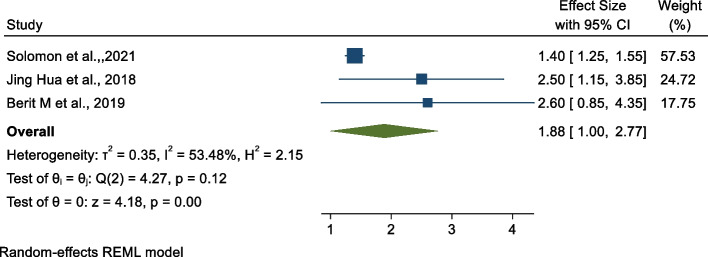
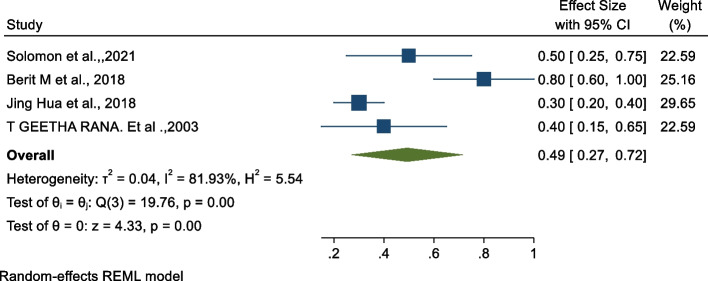
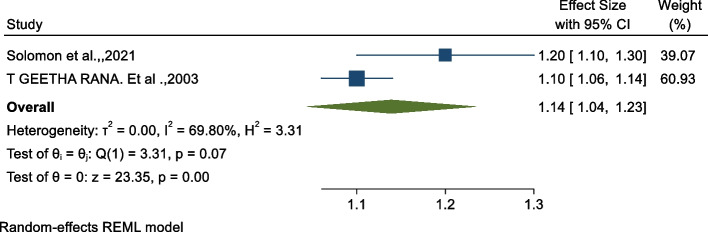
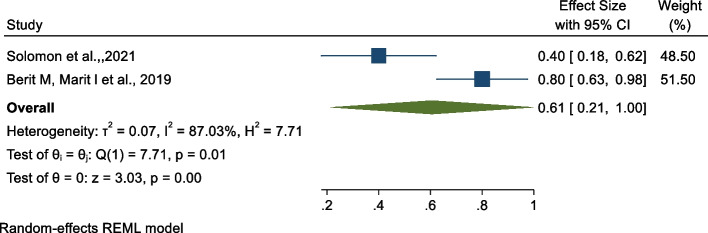
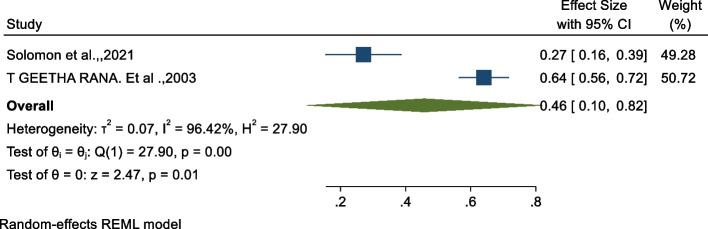
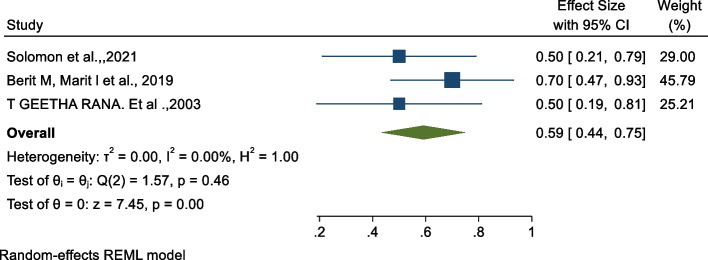
Ten studies were eligible for inclusion in this systematic review, of which five studies were eligible for inclusion in the meta-analysis. Women receiving midwifery-led care had a significantly lower rate of postpartum haemorrhage and a reduced rate of birth asphyxia. The meta-analysis further showed a significantly reduced risk of emergency Caesarean section (OR = 0.49; 95% CI: 0.27-0.72), increased odds of vaginal birth (OR = 1.14; 95% CI: 1.04-1.23), decreased use of episiotomy (OR = 0.46; 95% CI: 0.10-0.82), and decreased average neonatal admission time in neonatal intensive care unit (OR = 0.59; 95% CI: 0.44-0.75).
This systematic review indicated that midwifery-led care has a significant positive impact on improving various maternal and neonatal outcomes in low- and middle-income countries. We therefore advise widespread implementation of midwifery-led care in low- and middle-income countries.
助产士主导的护理是一种循证实践,合格的助产士在整个孕期、分娩和产后为低风险孕妇和新生儿提供全面护理。有证据表明,助产士主导的护理对各种结果有积极影响,包括预防早产、减少干预需求和改善临床结果。然而,这主要基于高收入国家的研究。因此,本系统评价和荟萃分析旨在评估助产士主导的护理对中低收入国家妊娠结局的有效性。
我们使用了系统评价和荟萃分析的首选报告项目(PRISMA)指南。三个电子数据库(PubMed、CINAHL 和 EMBASE)进行了搜索。两名独立研究人员对搜索结果进行了系统筛选。两名作者使用结构化数据提取格式独立提取所有相关数据。使用 STATA 版本 16 软件对荟萃分析进行数据分析。使用加权倒数方差随机效应模型估计助产士主导的护理对妊娠结局的有效性。使用森林图呈现优势比和 95%置信区间(CI)。
共有 10 项研究符合纳入本系统评价的标准,其中 5 项研究符合纳入荟萃分析的标准。接受助产士主导的护理的女性产后出血率显著降低,新生儿窒息率降低。荟萃分析进一步显示,紧急剖宫产的风险显著降低(OR=0.49;95%CI:0.27-0.72),阴道分娩的几率增加(OR=1.14;95%CI:1.04-1.23),会阴切开术的使用减少(OR=0.46;95%CI:0.10-0.82),新生儿重症监护病房新生儿平均住院时间减少(OR=0.59;95%CI:0.44-0.75)。
本系统评价表明,助产士主导的护理对改善中低收入国家的各种母婴结局有显著的积极影响。因此,我们建议在中低收入国家广泛实施助产士主导的护理。