Guillín Yuliany, Cáceres Marlon, Stashenko Elena E, Hidalgo William, Ortiz Claudia
Escuela de Biología, Universidad Industrial de Santander, Bucaramanga 680002, Colombia.
Escuela de Medicina, Universidad Industrial de Santander, Bucaramanga 680002, Colombia.
Antibiotics (Basel). 2023 May 12;12(5):899. doi: 10.3390/antibiotics12050899.
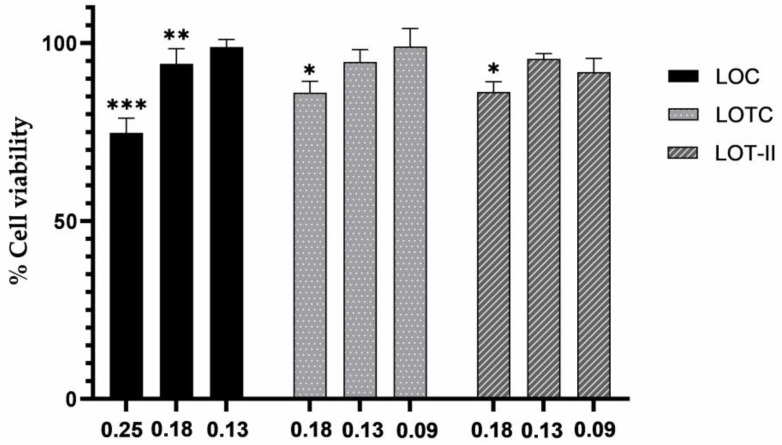
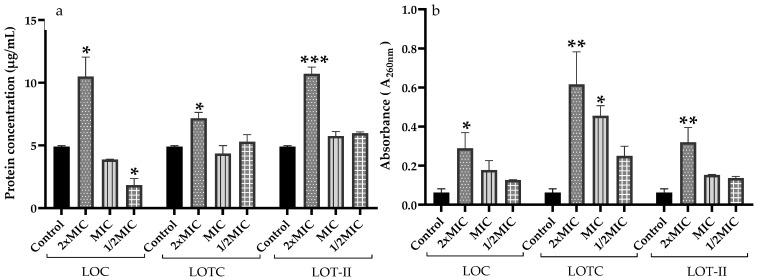
Nontyphoidal species are one of the main bacterial causes of foodborne diseases, causing a public health problem. In addition, the ability to form biofilms, multiresistance to traditional drugs, and the absence of effective therapies against these microorganisms are some of the principal reasons for the increase in bacterial diseases. In this study, the anti-biofilm activity of twenty essential oils (EOs) on serovar Enteritidis ATCC 13076 was evaluated, as well as the metabolic changes caused by thymol chemotype EO (LOT-II) on planktonic and sessile cells. The anti-biofilm effect was evaluated by the crystal violet staining method, and cell viability was evaluated through the XTT method. The effect of EOs was observed by scanning electron microscopy (SEM) analysis. Untargeted metabolomics analyses were conducted to determine the effect of LOT-II EO on the cellular metabolome. LOT-II EO inhibited . Enteritidis biofilm formation by more than 60%, without decreasing metabolic activity. Metabolic profile analysis identified changes in the modulation of metabolites in planktonic and sessile cells after LOT-II EO treatment. These changes showed alterations in different metabolic pathways, mainly in central carbon metabolism and nucleotide and amino acid metabolism. Finally, the possible mechanism of action of EO is proposed based on a metabolomics approach. Further studies are required to advance at the molecular level on the cellular targets affected by EOs, which are promising natural products for developing new therapeutic agents against sp. strains.
非伤寒菌种是食源性疾病的主要细菌病因之一,引发了公共卫生问题。此外,形成生物膜的能力、对传统药物的多重耐药性以及缺乏针对这些微生物的有效治疗方法,是细菌性疾病增加的一些主要原因。在本研究中,评估了二十种精油(EOs)对肠炎血清型ATCC 13076的抗生物膜活性,以及百里香酚化学型EO(LOT-II)对浮游细胞和固着细胞引起的代谢变化。通过结晶紫染色法评估抗生物膜效果,通过XTT法评估细胞活力。通过扫描电子显微镜(SEM)分析观察EOs的效果。进行非靶向代谢组学分析以确定LOT-II EO对细胞代谢组的影响。LOT-II EO抑制肠炎沙门氏菌生物膜形成超过60%,而不降低代谢活性。代谢谱分析确定了LOT-II EO处理后浮游细胞和固着细胞中代谢物调节的变化。这些变化显示出不同代谢途径的改变,主要是在中心碳代谢以及核苷酸和氨基酸代谢方面。最后,基于代谢组学方法提出了EO可能的作用机制。需要进一步研究在分子水平上推进对受EOs影响的细胞靶点的研究,EOs是开发针对沙门氏菌菌株的新型治疗剂的有前景的天然产物。