Ravenhill Shane Michael, Evans Andrew Howard, Crewther Sheila Gillard
School of Psychology and Public Health, La Trobe University, Bundoora 3083, Australia.
Department of Medicine, The Walter and Eliza Hall Institute of Medical Research, Melbourne 3052, Australia.
Antioxidants (Basel). 2023 May 18;12(5):1117. doi: 10.3390/antiox12051117.
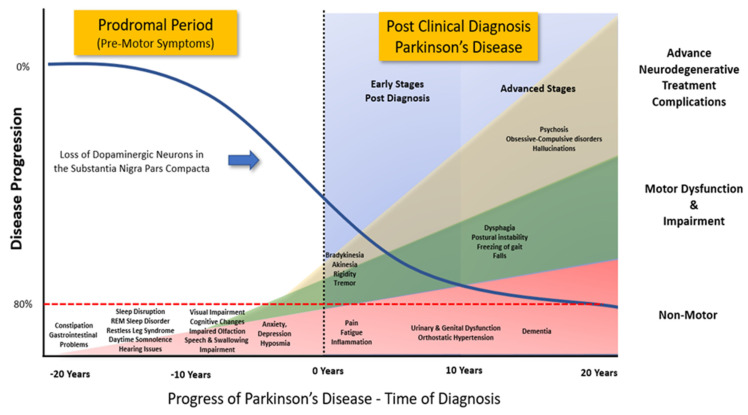
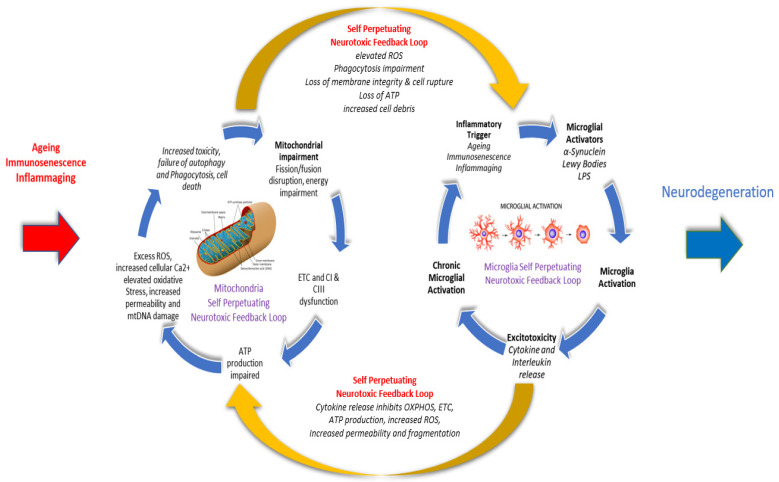
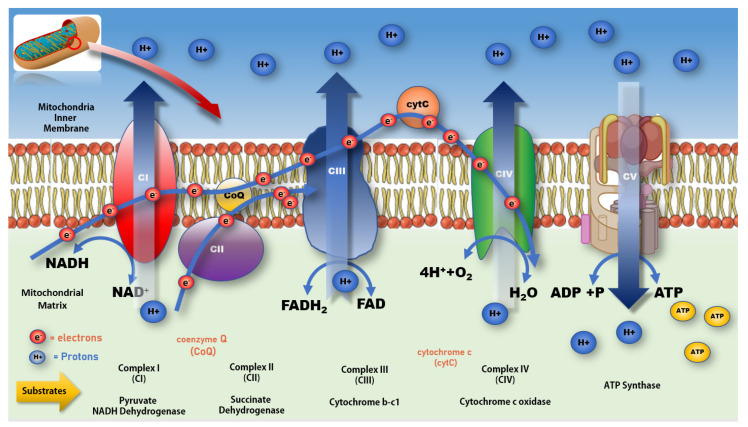
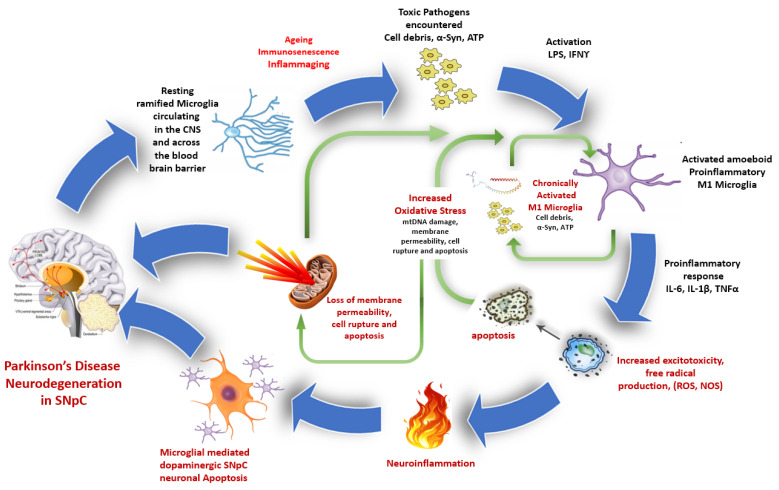
Parkinson's disease (PD) is a chronic and progressive age-related neurodegenerative disease affecting up to 3% of the global population over 65 years of age. Currently, the underlying physiological aetiology of PD is unknown. However, the diagnosed disorder shares many common non-motor symptoms associated with ageing-related neurodegenerative disease progression, such as neuroinflammation, microglial activation, neuronal mitochondrial impairment, and chronic autonomic nervous system dysfunction. Clinical PD has been linked to many interrelated biological and molecular processes, such as escalating proinflammatory immune responses, mitochondrial impairment, lower adenosine triphosphate (ATP) availability, increasing release of neurotoxic reactive oxygen species (ROS), impaired blood brain barrier integrity, chronic activation of microglia, and damage to dopaminergic neurons consistently associated with motor and cognitive decline. Prodromal PD has also been associated with orthostatic hypotension and many other age-related impairments, such as sleep disruption, impaired gut microbiome, and constipation. Thus, this review aimed to present evidence linking mitochondrial dysfunction, including elevated oxidative stress, ROS, and impaired cellular energy production, with the overactivation and escalation of a microglial-mediated proinflammatory immune response as naturally occurring and damaging interlinked bidirectional and self-perpetuating cycles that share common pathological processes in ageing and PD. We propose that both chronic inflammation, microglial activation, and neuronal mitochondrial impairment should be considered as concurrently influencing each other along a continuum rather than as separate and isolated linear metabolic events that affect specific aspects of neural processing and brain function.
帕金森病(PD)是一种慢性进行性的与年龄相关的神经退行性疾病,在全球65岁以上的人群中,患病率高达3%。目前,PD的潜在生理病因尚不清楚。然而,已确诊的这种疾病具有许多与衰老相关的神经退行性疾病进展相关的常见非运动症状,如神经炎症、小胶质细胞激活、神经元线粒体损伤和慢性自主神经系统功能障碍。临床PD与许多相互关联的生物学和分子过程有关,如促炎免疫反应升级、线粒体损伤、三磷酸腺苷(ATP)可用性降低、神经毒性活性氧(ROS)释放增加、血脑屏障完整性受损、小胶质细胞慢性激活以及与运动和认知能力下降始终相关的多巴胺能神经元损伤。前驱期PD还与体位性低血压以及许多其他与年龄相关的损伤有关,如睡眠中断、肠道微生物群受损和便秘。因此,本综述旨在提供证据,将线粒体功能障碍(包括氧化应激升高、ROS和细胞能量产生受损)与小胶质细胞介导的促炎免疫反应的过度激活和升级联系起来,这是自然发生且具有破坏性的相互关联的双向和自我延续循环,在衰老和PD中具有共同的病理过程。我们提出,慢性炎症、小胶质细胞激活和神经元线粒体损伤都应被视为在一个连续体上相互影响,而不是作为影响神经处理和脑功能特定方面的单独和孤立的线性代谢事件。