Lamanuzzi Aurelia, Saltarella Ilaria, Reale Antonia, Melaccio Assunta, Solimando Antonio Giovanni, Altamura Concetta, Tamma Grazia, Storlazzi Clelia Tiziana, Tolomeo Doron, Desantis Vanessa, Mariggiò Maria Addolorata, Desaphy Jean-François, Spencer Andrew, Vacca Angelo, Apollonio Benedetta, Frassanito Maria Antonia
Unit of Internal Medicine and Clinical Oncology, Department of Precision and Regenerative Medicine and Ionian Area, University of Bari Aldo Moro, 70124 Bari, Italy.
Unit of Pharmacology, Department of Precision and Regenerative Medicine and Ionian Area, University of Bari Aldo Moro, 70121 Bari, Italy.
Biomedicines. 2023 May 8;11(5):1400. doi: 10.3390/biomedicines11051400.
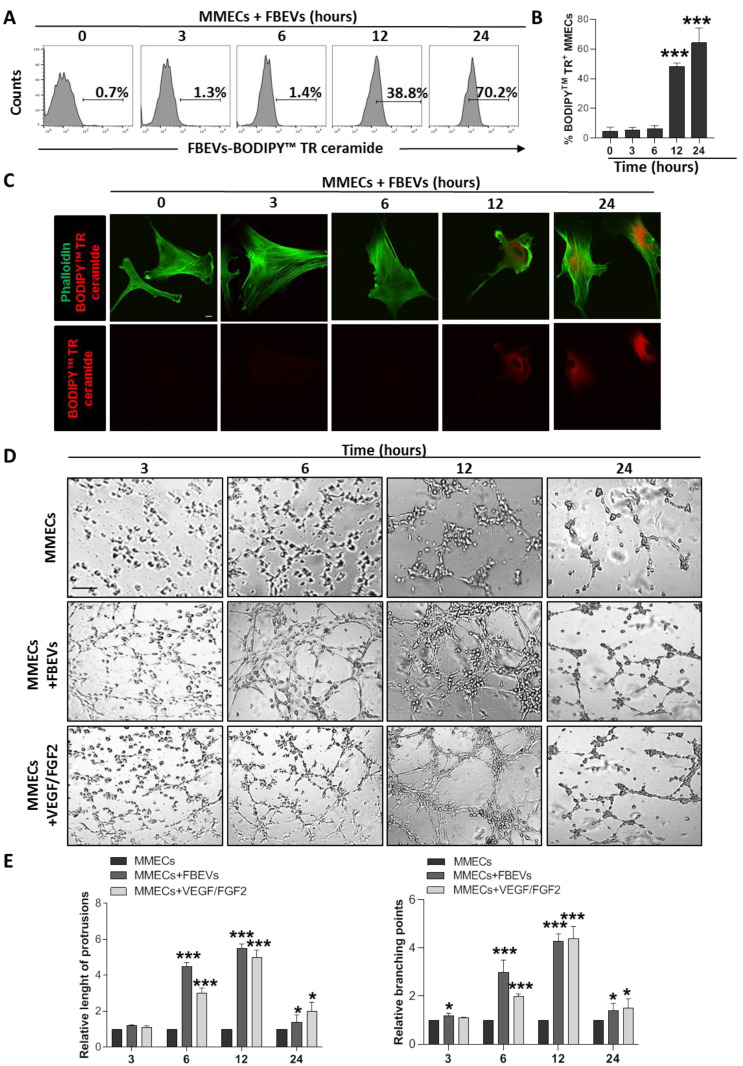
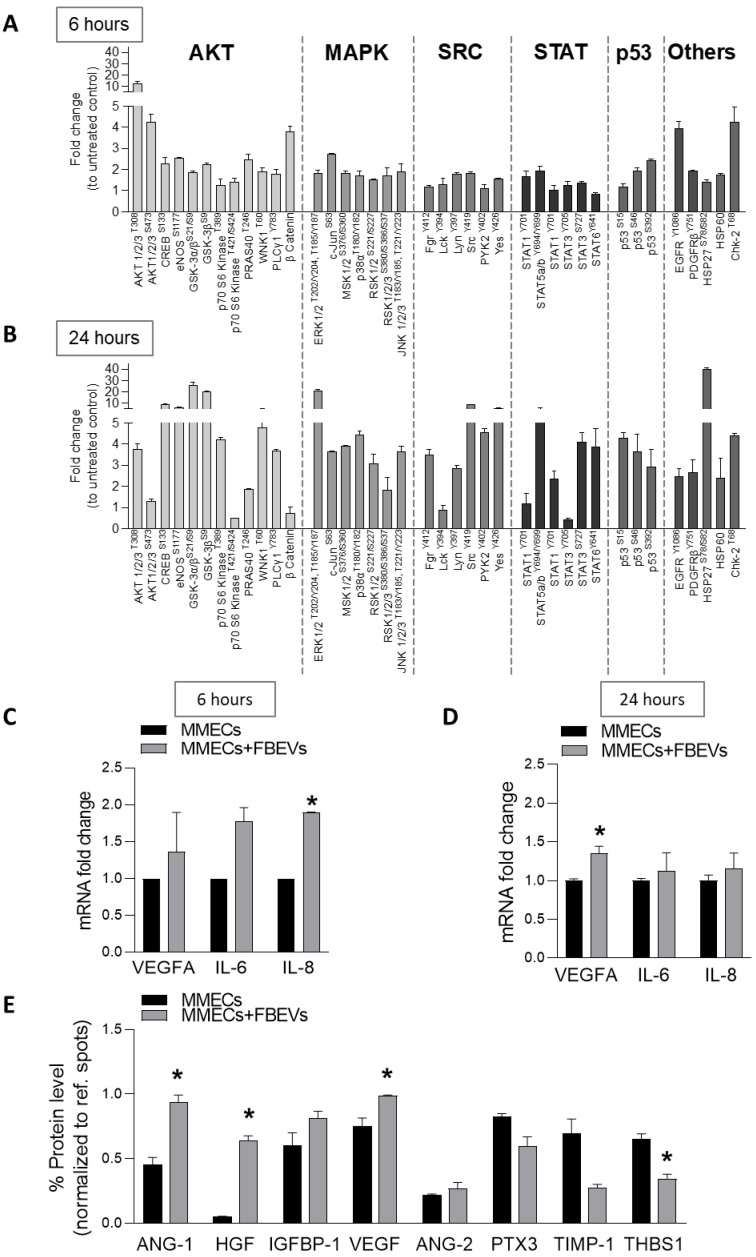
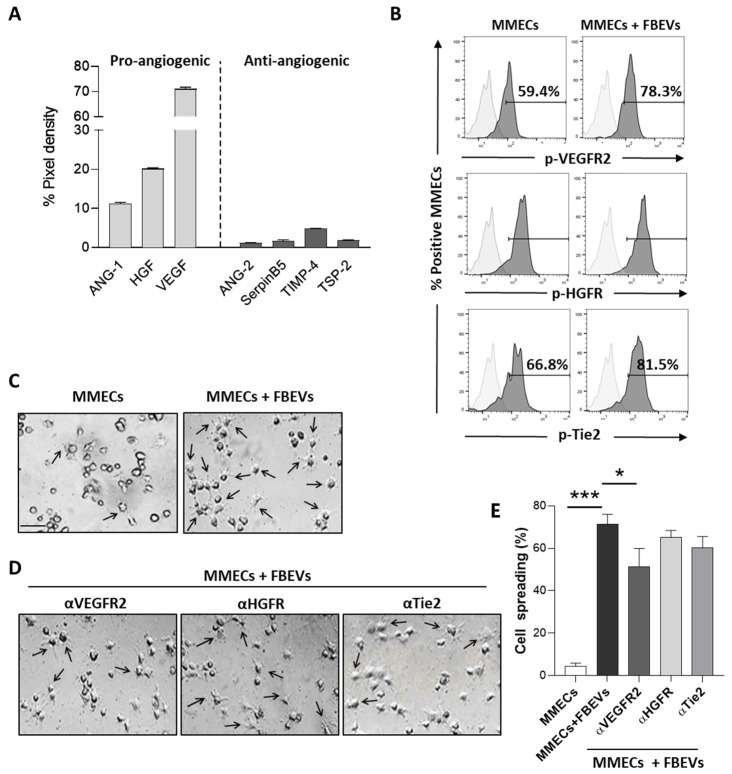
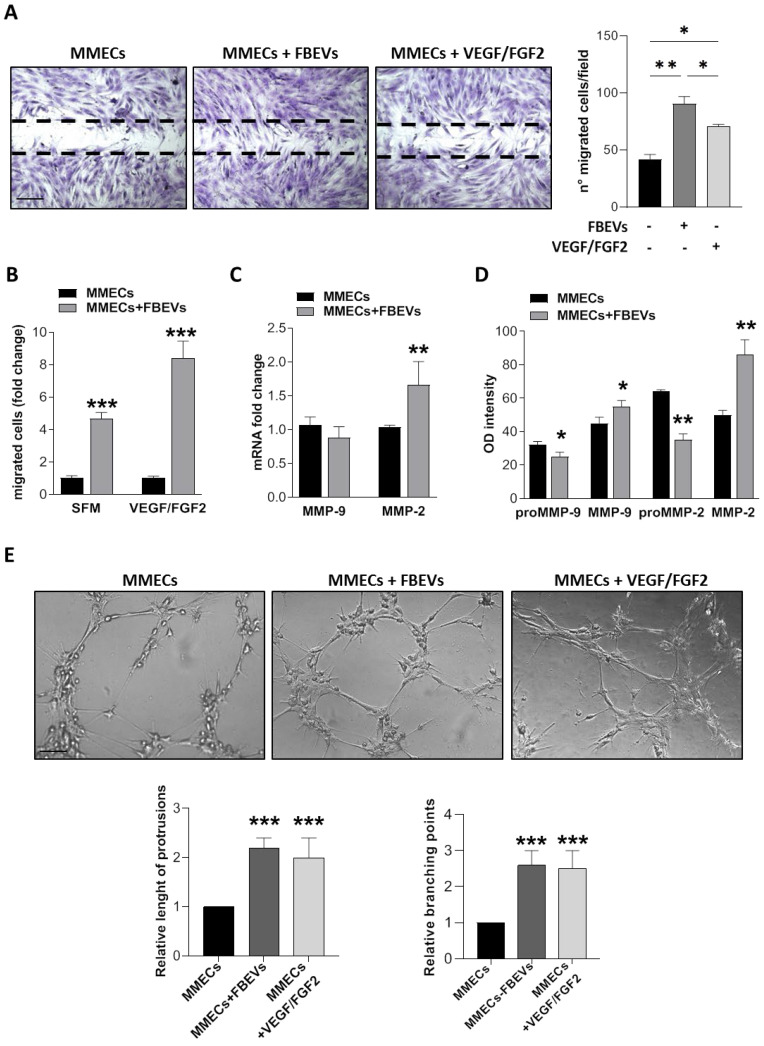
Extracellular vesicles (EVs) have emerged as important players in cell-to-cell communication within the bone marrow (BM) of multiple myeloma (MM) patients, where they mediate several tumor-associated processes. Here, we investigate the contribution of fibroblasts-derived EVs (FBEVs) in supporting BM angiogenesis. We demonstrate that FBEVs' cargo contains several angiogenic cytokines (i.e., VEGF, HGF, and ANG-1) that promote an early over-angiogenic effect independent from EVs uptake. Interestingly, co-culture of endothelial cells from MM patients (MMECs) with FBEVs for 1 or 6 h activates the VEGF/VEGFR2, HGF/HGFR, and ANG-1/Tie2 axis, as well as the mTORC2 and Wnt/β-catenin pathways, suggesting that the early over-angiogenic effect is a cytokine-mediated process. FBEVs internalization occurs after longer exposure of MMECs to FBEVs (24 h) and induces a late over-angiogenic effect by increasing MMECs migration, chemotaxis, metalloproteases release, and capillarogenesis. FBEVs uptake activates mTORC1, MAPK, SRC, and STAT pathways that promote the release of pro-angiogenic cytokines, further supporting the pro-angiogenic milieu. Overall, our results demonstrate that FBEVs foster MM angiogenesis through dual time-related uptake-independent and uptake-dependent mechanisms that activate different intracellular pathways and transcriptional programs, providing the rationale for designing novel anti-angiogenic strategies.
细胞外囊泡(EVs)已成为多发性骨髓瘤(MM)患者骨髓(BM)中细胞间通讯的重要参与者,在其中介导多种肿瘤相关过程。在此,我们研究成纤维细胞衍生的细胞外囊泡(FBEVs)在支持骨髓血管生成中的作用。我们证明FBEVs的货物包含几种促血管生成细胞因子(即血管内皮生长因子、肝细胞生长因子和血管生成素-1),它们可促进早期过度血管生成效应,且与细胞外囊泡的摄取无关。有趣的是,将MM患者的内皮细胞(MMECs)与FBEVs共培养1或6小时可激活血管内皮生长因子/血管内皮生长因子受体2、肝细胞生长因子/肝细胞生长因子受体和血管生成素-1/酪氨酸激酶受体2轴,以及哺乳动物雷帕霉素靶蛋白复合物2和Wnt/β-连环蛋白信号通路,这表明早期过度血管生成效应是一个细胞因子介导的过程。MMECs长时间暴露于FBEVs(24小时)后会发生FBEVs内化,并通过增加MMECs迁移、趋化性、金属蛋白酶释放和毛细血管生成诱导晚期过度血管生成效应。FBEVs摄取激活哺乳动物雷帕霉素靶蛋白复合物1、丝裂原活化蛋白激酶、SRC和信号转导子和转录激活子信号通路,促进促血管生成细胞因子的释放,进一步支持促血管生成环境。总体而言,我们的结果表明,FBEVs通过与时间相关的双重机制促进MM血管生成,即摄取无关和摄取依赖机制,这些机制激活不同的细胞内信号通路和转录程序,为设计新的抗血管生成策略提供了理论依据。