Sitek Joanna Dorota, Kuczeriszka Marta, Walkowska Agnieszka, Kompanowska-Jezierska Elżbieta, Dobrowolski Leszek
Department of Renal and Body Fluid Physiology, Mossakowski Medical Research Institute, Polish Academy of Sciences, 02-106 Warsaw, Poland.
Pharmaceuticals (Basel). 2023 May 11;16(5):732. doi: 10.3390/ph16050732.
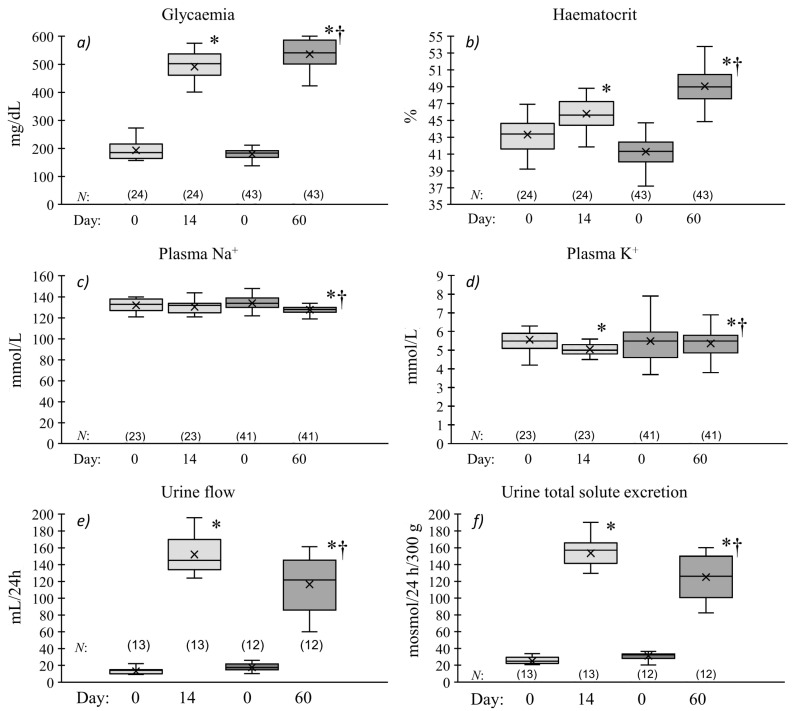
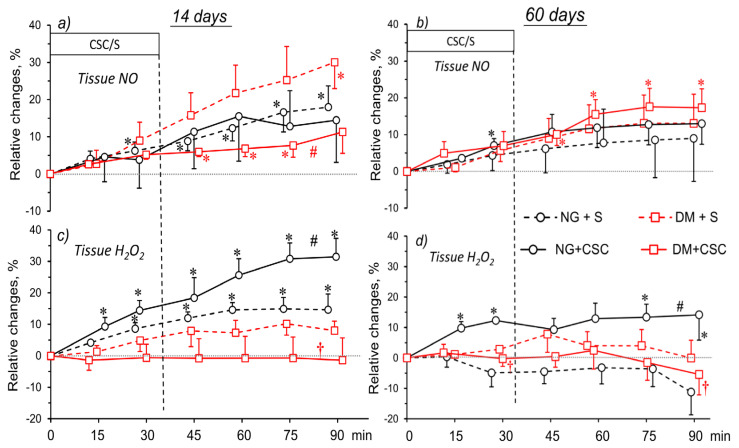
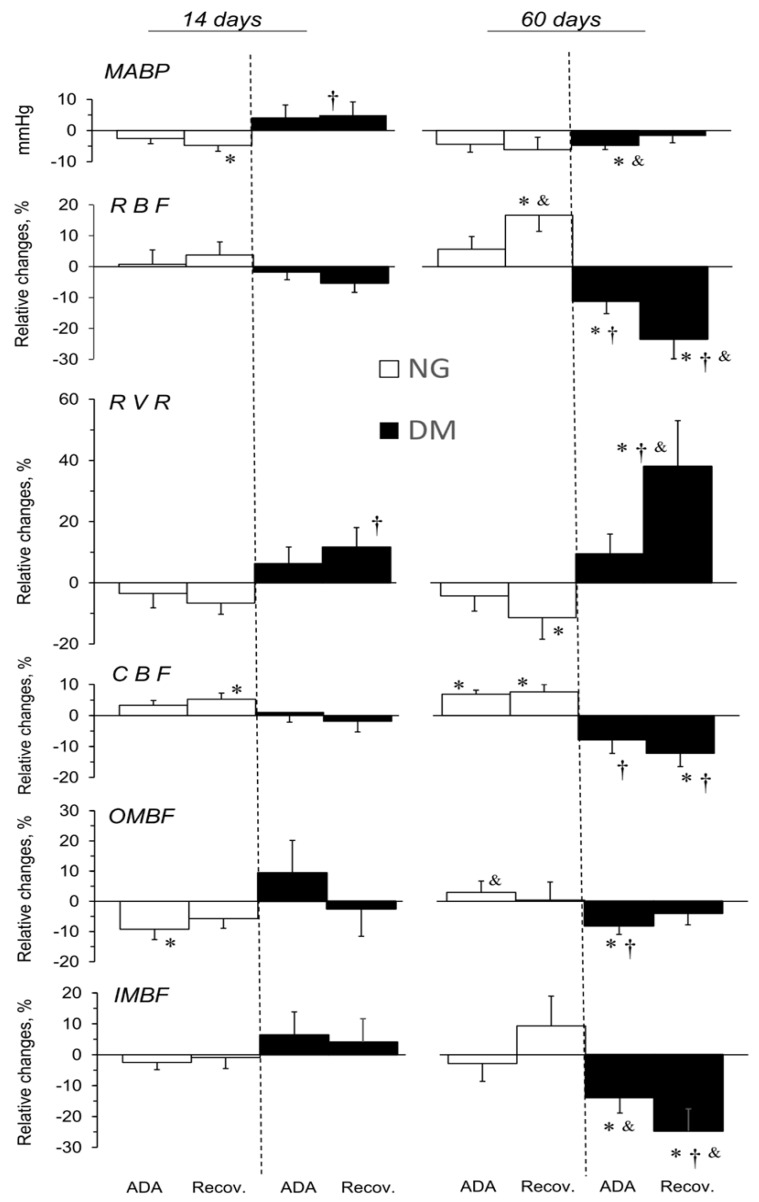
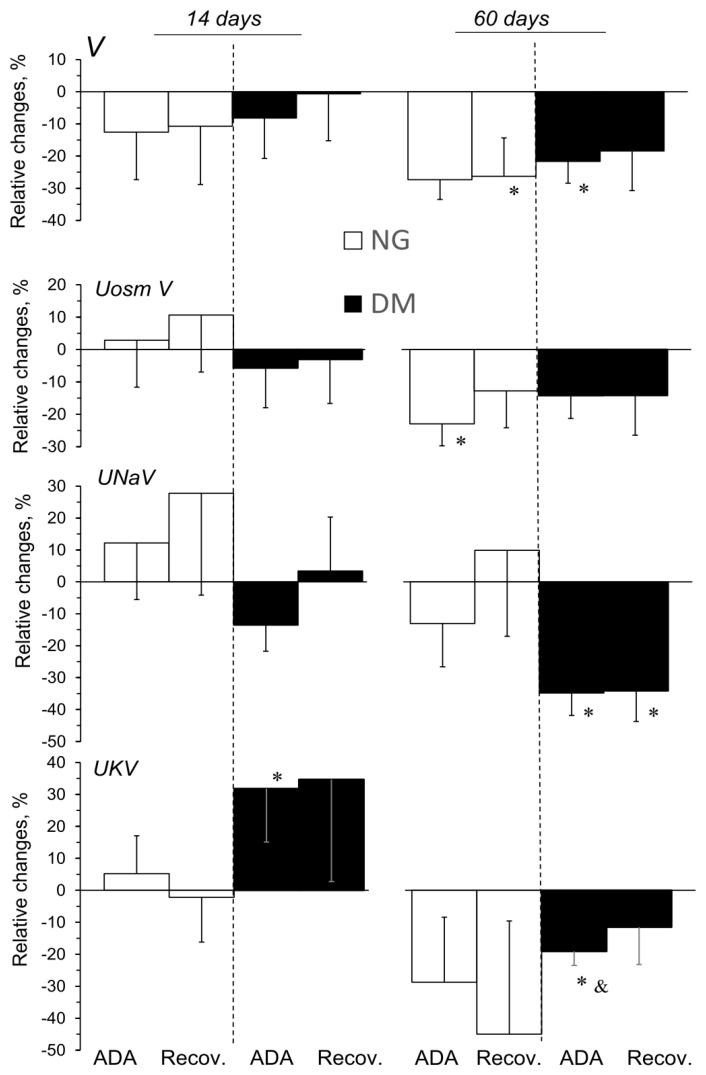
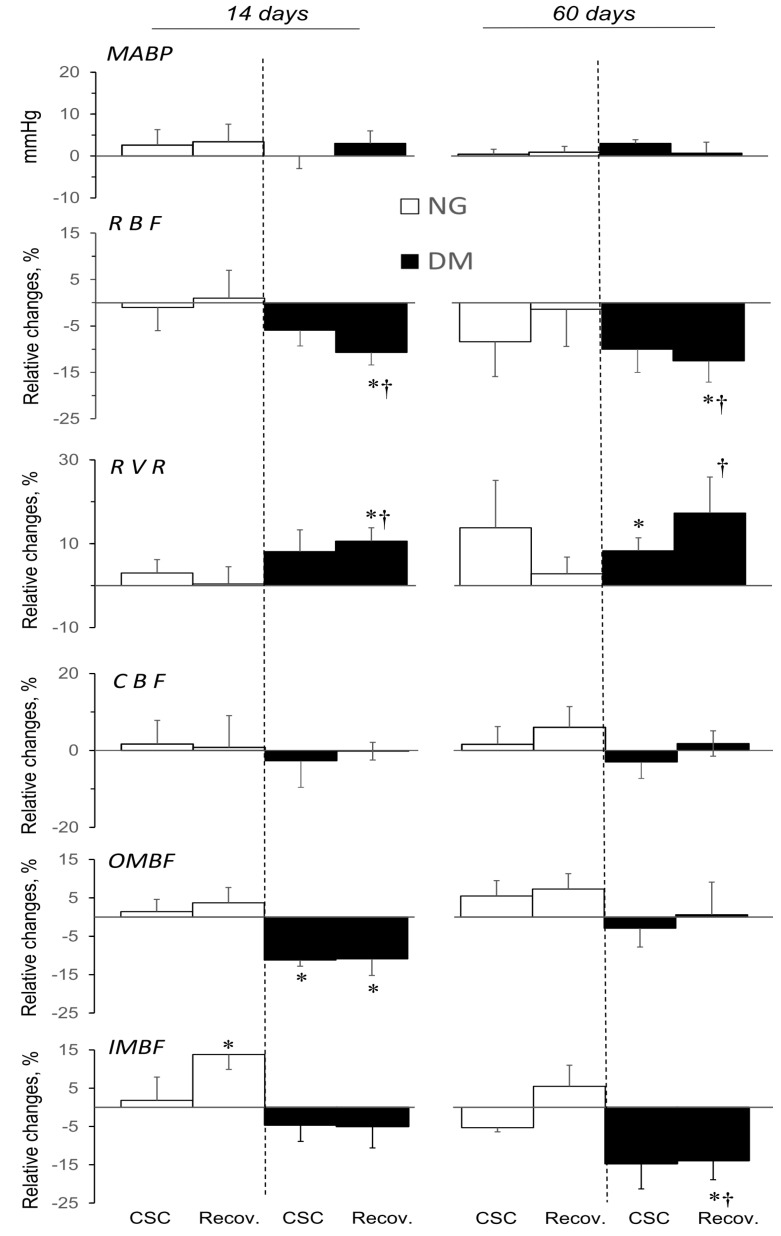
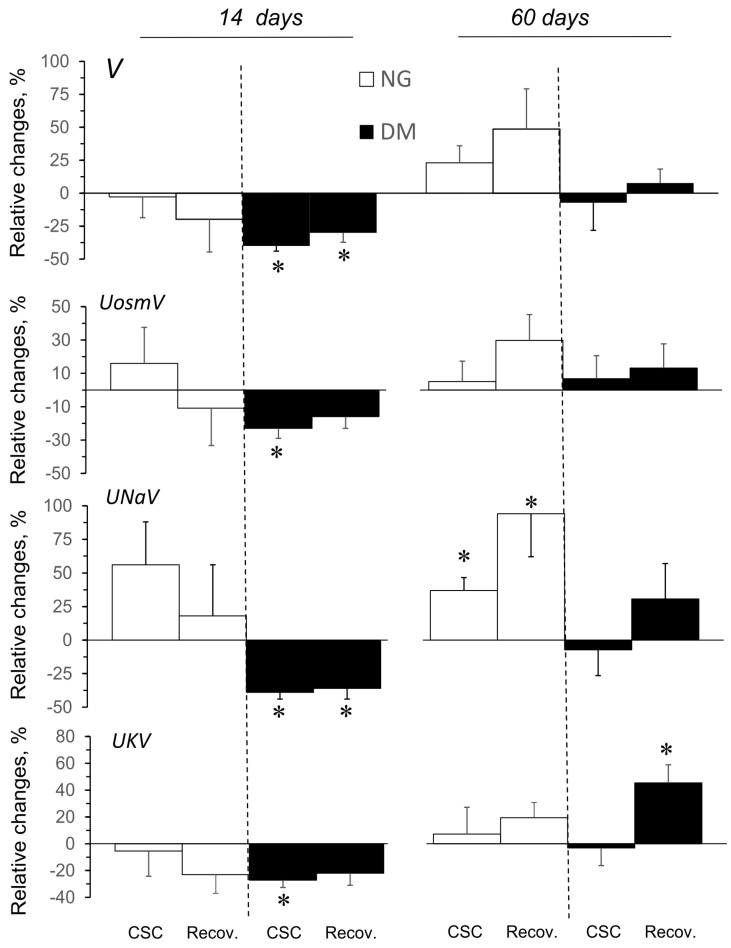
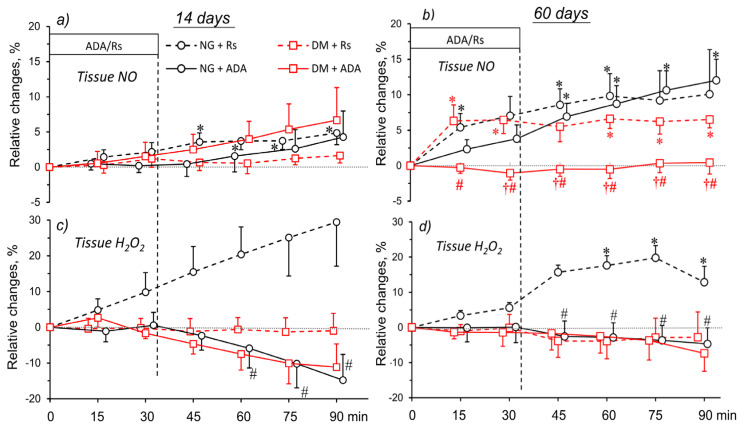
Long-lasting hyperglycaemia may alter the role of adenosine-dependent receptors (P1R) in the control of kidney function. We investigated how P1R activity affects renal circulation and excretion in diabetic (DM) and normoglycaemic (NG) rats; the receptors' interactions with bioavailable NO and HO were also explored. The effects of adenosine deaminase (ADA, nonselective P1R inhibitor) and P1A2a-R-selective antagonist (CSC) were examined in anaesthetised rats, both after short-lasting (2-weeks, DM-14) and established (8-weeks, DM-60) streptozotocin-induced hyperglycaemia, and in normoglycaemic age-matched animals (NG-14, NG-60, respectively). The arterial blood pressure, perfusion of the whole kidney and its regions (cortex, outer-, and inner medulla), and renal excretion were determined, along with the in situ renal tissue NO and HO signals (selective electrodes). The ADA treatment helped to assess the P1R-dependent difference in intrarenal baseline vascular tone (vasodilation in DM and vasoconstriction in NG rats), with the difference being more pronounced between DM-60 and NG-60 animals. The CSC treatment showed that in DM-60 rats, A2aR-dependent vasodilator tone was modified differently in individual kidney zones. Renal excretion studies after the ADA and CSC treatments showed that the balance of the opposing effects of A2aRs and other P1Rs on tubular transport, seen in the initial phase, was lost in established hyperglycaemia. Regardless of the duration of the diabetes, we observed a tonic effect of A2aR activity on NO bioavailability. Dissimilarly, the involvement of P1R in tissue production of HO, observed in normoglycaemia, decreased. Our functional study provides new information on the changing interaction of adenosine in the kidney, as well as its receptors and NO and HO, in the course of streptozotocin diabetes.
长期高血糖可能会改变腺苷依赖性受体(P1R)在肾功能控制中的作用。我们研究了P1R活性如何影响糖尿病(DM)大鼠和血糖正常(NG)大鼠的肾循环和排泄;还探讨了这些受体与生物可利用的一氧化氮(NO)和血红素加氧酶(HO)的相互作用。在短期(2周,DM - 14)和长期(8周,DM - 60)链脲佐菌素诱导的高血糖大鼠以及年龄匹配的血糖正常动物(分别为NG - 14和NG - 60)中,对麻醉大鼠给予腺苷脱氨酶(ADA,非选择性P1R抑制剂)和P1A2a - R选择性拮抗剂(CSC),并检测动脉血压、全肾及其各区域(皮质、外髓和内髓)的灌注以及肾排泄,同时检测肾组织原位NO和HO信号(选择性电极)。ADA处理有助于评估肾内基线血管张力中P1R依赖性差异(DM大鼠血管舒张,NG大鼠血管收缩),这种差异在DM - 60和NG - 60动物之间更为明显。CSC处理表明,在DM - 60大鼠中,A2aR依赖性血管舒张张力在各个肾区的改变不同。ADA和CSC处理后的肾排泄研究表明,在高血糖形成后最初阶段观察到的A2aR和其他P1R对肾小管转运的相反作用平衡丧失。无论糖尿病病程长短,我们都观察到A2aR活性对NO生物利用度有持续作用。与之不同的是,在血糖正常时观察到的P1R参与HO组织生成的情况减少了。我们的功能研究为链脲佐菌素糖尿病病程中肾脏内腺苷及其受体与NO和HO之间不断变化的相互作用提供了新信息。