Division of Comparative Medicine, University of North Carolina at Chapel Hill, Chapel Hill, NC 27599, USA.
Department of Pathology and Laboratory Medicine, University of North Carolina at Chapel Hill, Chapel Hill, NC 27599, USA.
Viruses. 2023 Apr 26;15(5):1057. doi: 10.3390/v15051057.
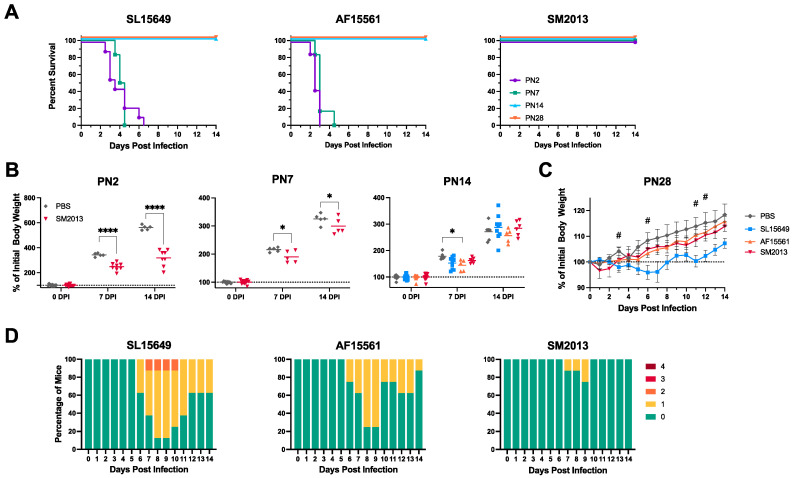
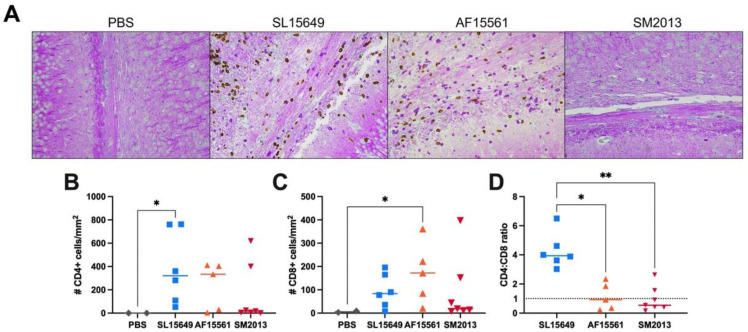
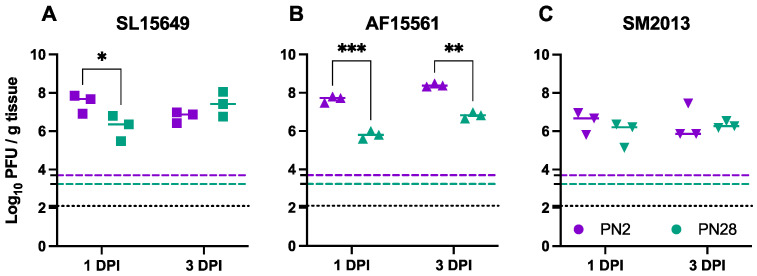
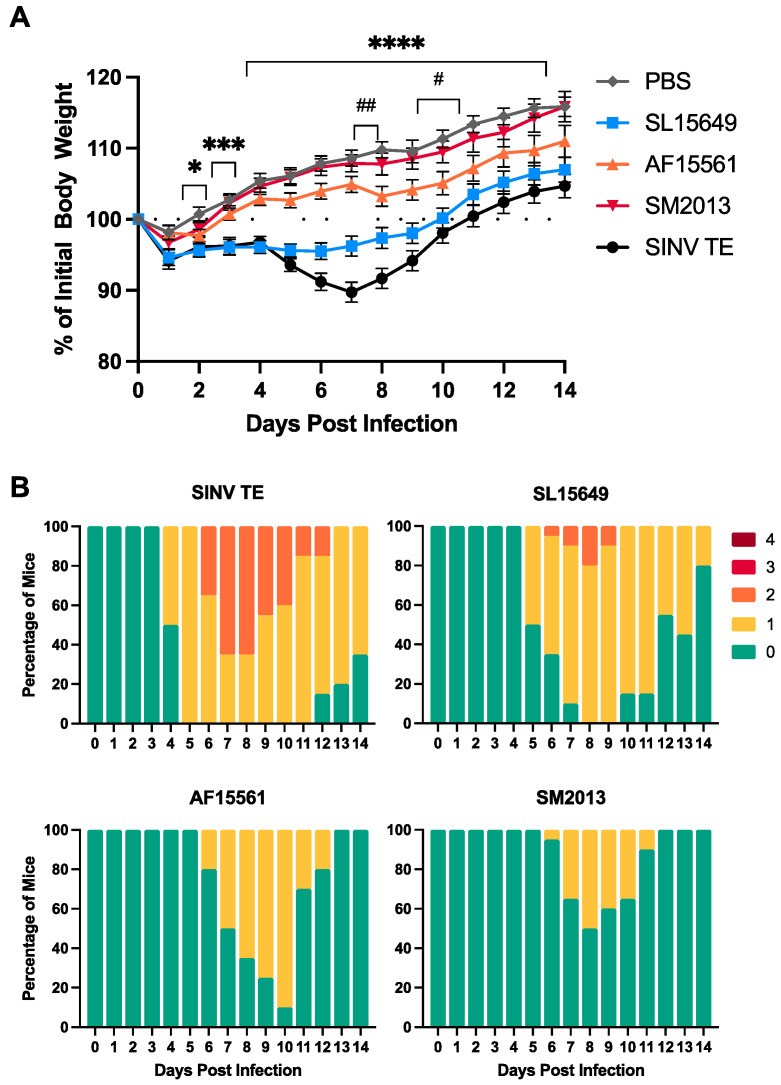
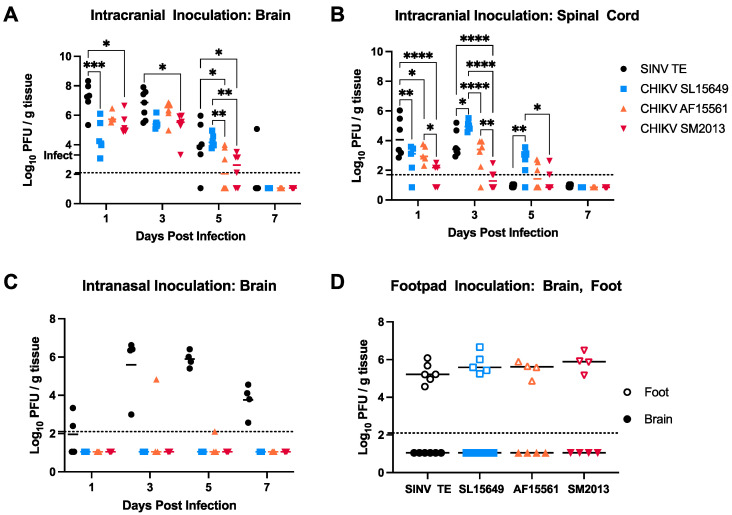
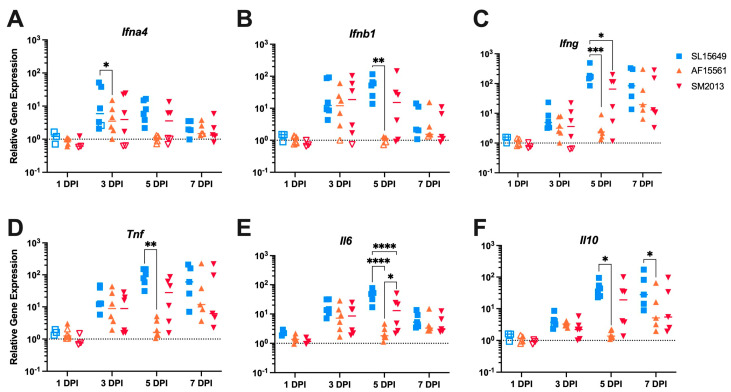
The alphavirus chikungunya virus (CHIKV) represents a reemerging public health threat as mosquito vectors spread and viruses acquire advantageous mutations. Although primarily arthritogenic in nature, CHIKV can produce neurological disease with long-lasting sequelae that are difficult to study in humans. We therefore evaluated immunocompetent mouse strains/stocks for their susceptibility to intracranial infection with three different CHIKV strains, the East/Central/South African (ECSA) lineage strain SL15649 and Asian lineage strains AF15561 and SM2013. In CD-1 mice, neurovirulence was age- and CHIKV strain-specific, with SM2013 inducing less severe disease than SL15649 and AF15561. In 4-6-week-old C57BL/6J mice, SL15649 induced more severe disease and increased viral brain and spinal cord titers compared to Asian lineage strains, further indicating that neurological disease severity is CHIKV-strain-dependent. Proinflammatory cytokine gene expression and CD4+ T cell infiltration in the brain were also increased with SL15649 infection, suggesting that like other encephalitic alphaviruses and with CHIKV-induced arthritis, the immune response contributes to CHIKV-induced neurological disease. Finally, this study helps overcome a current barrier in the alphavirus field by identifying both 4-6-week-old CD-1 and C57BL/6J mice as immunocompetent, neurodevelopmentally appropriate mouse models that can be used to examine CHIKV neuropathogenesis and immunopathogenesis following direct brain infection.
甲病毒中的基孔肯雅病毒(CHIKV)是一种重新出现的公共卫生威胁,因为蚊子传播媒介的扩散和病毒获得有利的突变。尽管 CHIKV 主要具有关节炎性,但它可以产生具有长期后遗症的神经系统疾病,这些后遗症在人类中难以研究。因此,我们评估了免疫功能正常的小鼠品系/品系对三种不同 CHIKV 株(东/中/南非(ECSA)谱系株 SL15649 和亚洲谱系株 AF15561 和 SM2013)颅内感染的易感性。在 CD-1 小鼠中,神经毒力具有年龄和 CHIKV 株特异性,SM2013 引起的疾病比 SL15649 和 AF15561 轻。在 4-6 周龄的 C57BL/6J 小鼠中,与亚洲谱系株相比,SL15649 诱导更严重的疾病和更高的病毒脑和脊髓滴度,进一步表明神经疾病严重程度取决于 CHIKV 株。SL15649 感染也增加了大脑中促炎细胞因子基因的表达和 CD4+T 细胞浸润,表明与其他脑炎性甲病毒一样,CHIKV 诱导的关节炎,免疫反应有助于 CHIKV 诱导的神经系统疾病。最后,这项研究通过确定 4-6 周龄的 CD-1 和 C57BL/6J 小鼠作为免疫功能正常、神经发育适当的小鼠模型,克服了甲病毒领域的当前障碍,可用于研究直接脑感染后 CHIKV 的神经发病机制和免疫发病机制。