Department of Biochemistry & Molecular Biology, College of Medicine and Health Sciences (CMHS), United Arab Emirates (UAE) University, Al Ain 15551, United Arab Emirates.
Department of Microbiology and Immunology, College of Medicine and Health Sciences (CMHS), UAE University, Al Ain 15551, United Arab Emirates.
Viruses. 2023 May 2;15(5):1110. doi: 10.3390/v15051110.
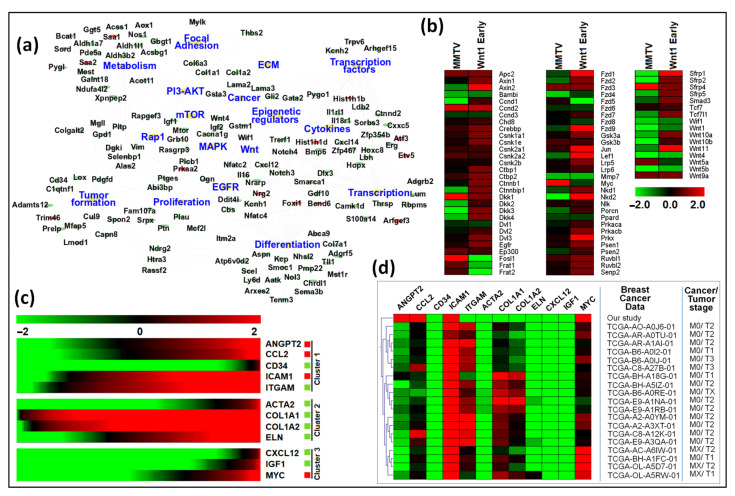
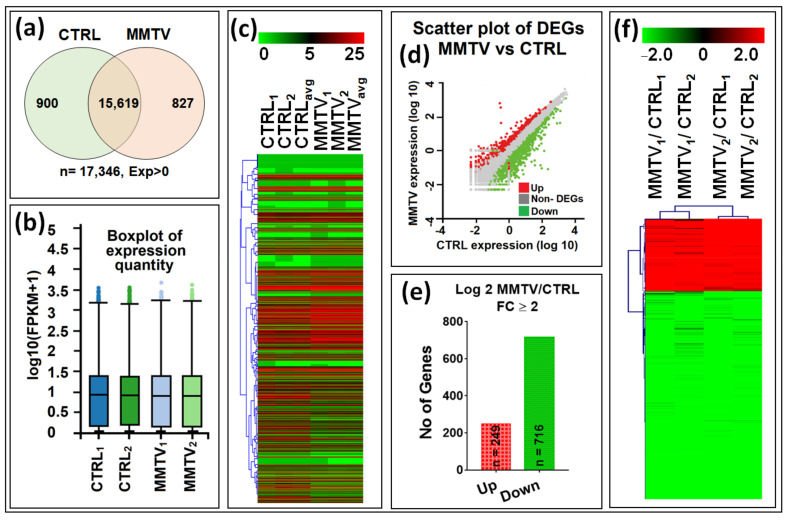
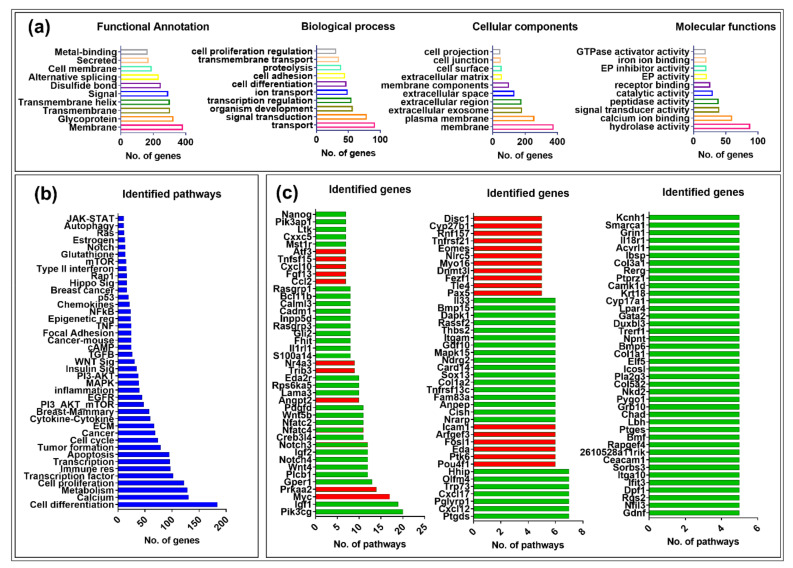
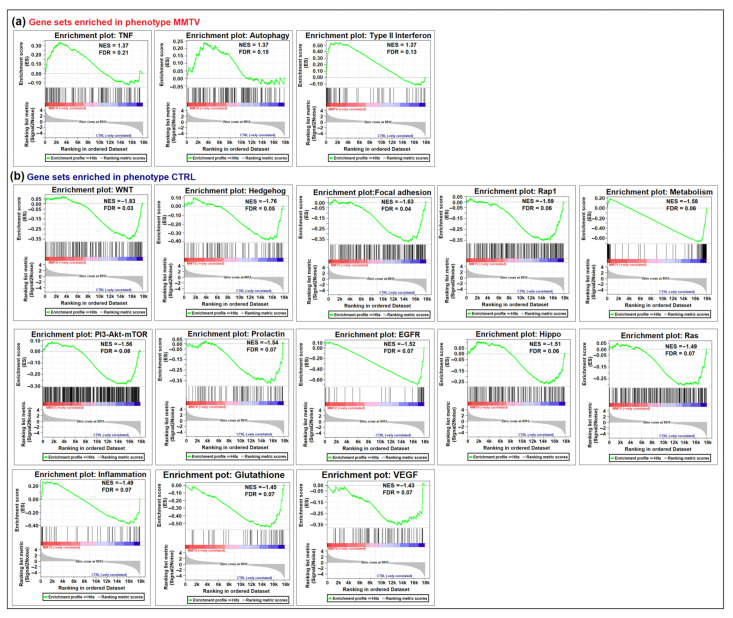
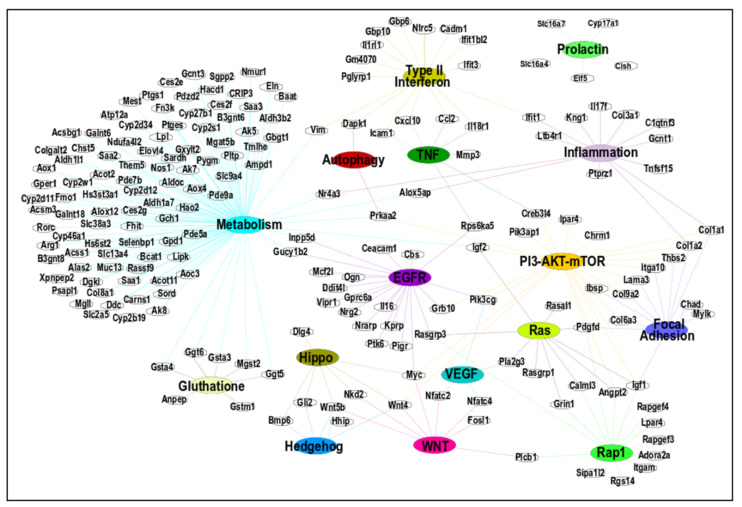
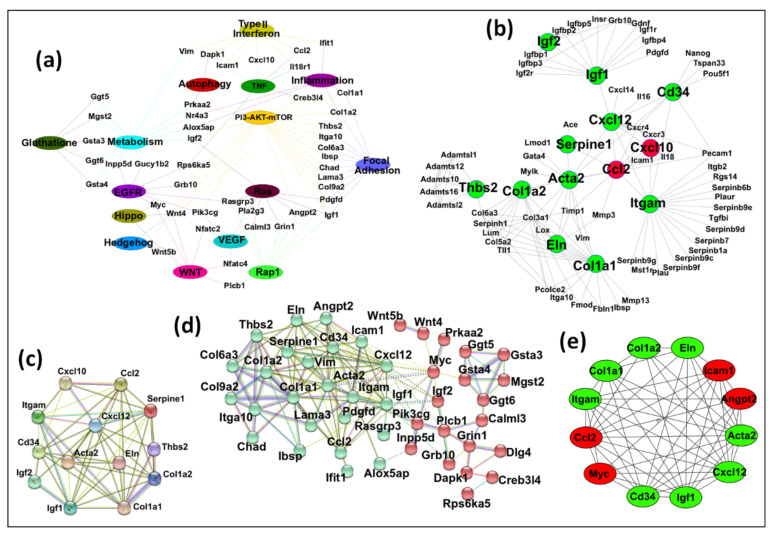
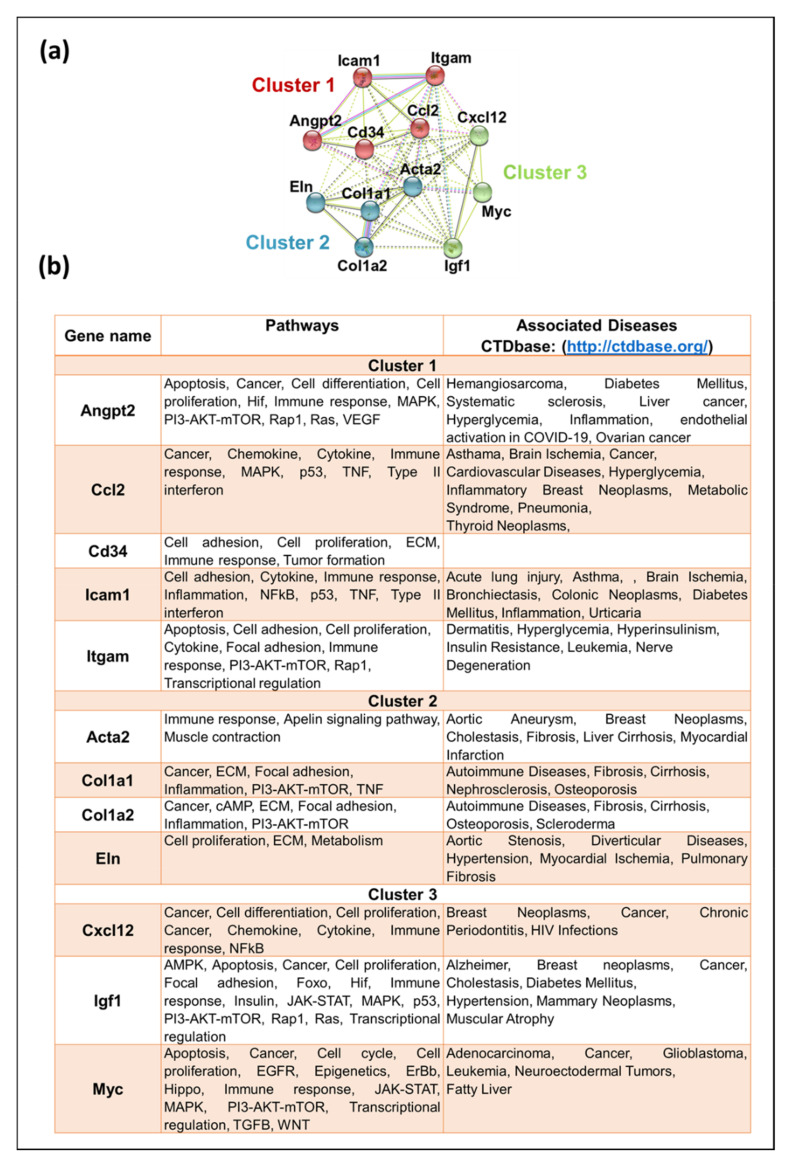
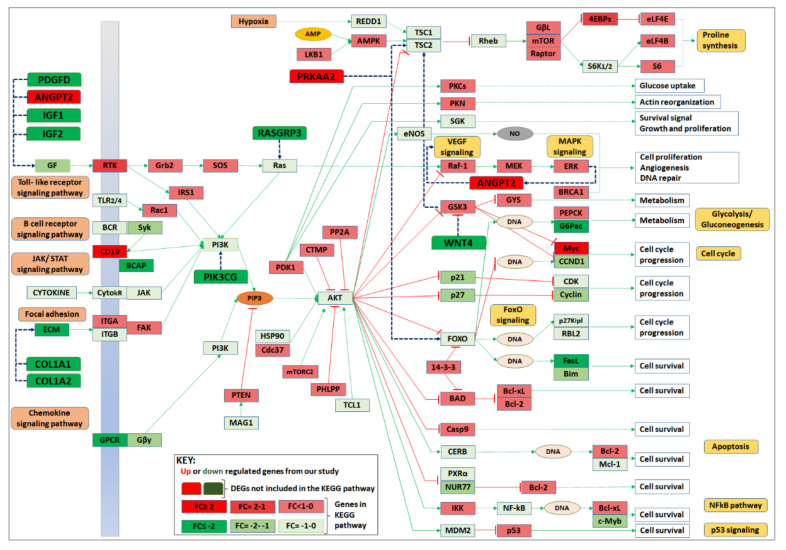
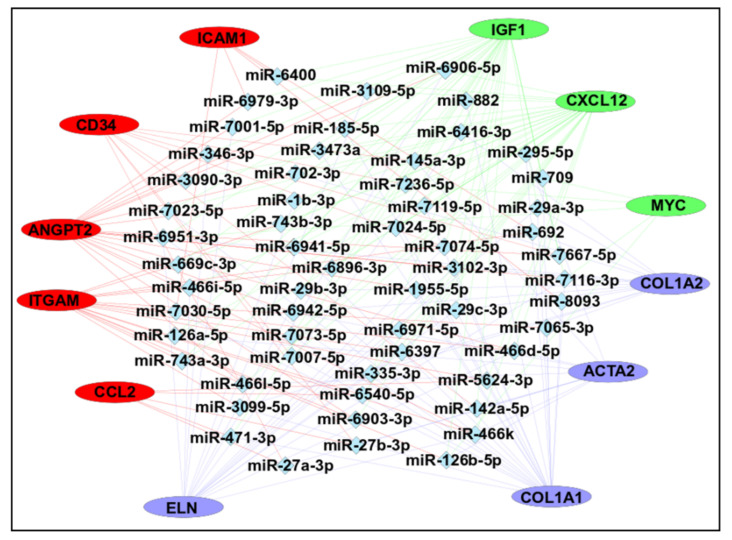
Mouse mammary tumor virus (MMTV) is a that causes breast cancer in mice. The mouse mammary epithelial cells are the most permissive cells for MMTV, expressing the highest levels of virus upon infection and being the ones later transformed by the virus due to repeated rounds of infection/superinfection and integration, leading eventually to mammary tumors. The aim of this study was to identify genes and molecular pathways dysregulated by MMTV expression in mammary epithelial cells. Towards this end, mRNAseq was performed on normal mouse mammary epithelial cells stably expressing MMTV, and expression of host genes was analyzed compared with cells in its absence. The identified differentially expressed genes (DEGs) were grouped on the basis of gene ontology and relevant molecular pathways. Bioinformatics analysis identified 12 hub genes, of which 4 were up-regulated (Angp2, Ccl2, Icam, and Myc) and 8 were down-regulated (Acta2, Cd34, Col1a1, Col1a2, Cxcl12, Eln, Igf1, and Itgam) upon MMTV expression. Further screening of these DEGs showed their involvement in many diseases, especially in breast cancer progression when compared with available data. Gene Set Enrichment Analysis (GSEA) identified 31 molecular pathways dysregulated upon MMTV expression, amongst which the PI3-AKT-mTOR was observed to be the central pathway down-regulated by MMTV. Many of the DEGs and 6 of the 12 hub genes identified in this study showed expression profile similar to that observed in the PyMT mouse model of breast cancer, especially during tumor progression. Interestingly, a global down-regulation of gene expression was observed, where nearly 74% of the DEGs in HC11 cells were repressed by MMTV expression, an observation similar to what was observed in the PyMT mouse model during tumor progression, from hyperplasia to adenoma to early and late carcinomas. Comparison of our results with the Wnt1 mouse model revealed further insights into how MMTV expression could lead to activation of the Wnt1 pathway independent of insertional mutagenesis. Thus, the key pathways, DEGs, and hub genes identified in this study can provide important clues to elucidate the molecular mechanisms involved in MMTV replication, escape from cellular anti-viral response, and potential to cause cell transformation. These data also validate the use of the MMTV-infected HC11 cells as an important model to study early transcriptional changes that could lead to mammary cell transformation.
鼠乳腺肿瘤病毒(MMTV)是一种病毒,可导致小鼠乳腺癌。鼠乳腺上皮细胞是最易受 MMTV 感染的细胞,在感染后表达最高水平的病毒,并且由于反复的感染/超感染和整合,这些细胞最终被病毒转化,导致乳腺肿瘤。本研究的目的是鉴定 MMTV 在乳腺上皮细胞中表达所调控的基因和分子途径。为此,我们对稳定表达 MMTV 的正常鼠乳腺上皮细胞进行了 mRNAseq 分析,并与缺失 MMTV 的细胞相比,分析了宿主基因的表达情况。根据基因本体论和相关分子途径,对鉴定出的差异表达基因(DEGs)进行了分组。生物信息学分析确定了 12 个关键基因,其中 4 个上调(Angp2、Ccl2、Icam 和 Myc),8 个下调(Acta2、Cd34、Col1a1、Col1a2、Cxcl12、Eln、Igf1 和 Itgam)。进一步筛选这些 DEGs 发现,与现有数据相比,它们与许多疾病有关,尤其是与乳腺癌的进展有关。基因集富集分析(GSEA)鉴定出 31 个分子途径在 MMTV 表达后失调,其中观察到 PI3-AKT-mTOR 是受 MMTV 下调的核心途径。本研究中鉴定的许多 DEGs 和 12 个关键基因中的 6 个,其表达谱与 PyMT 小鼠乳腺癌模型观察到的相似,尤其是在肿瘤进展过程中。有趣的是,观察到基因表达的全面下调,其中 HC11 细胞中近 74%的 DEGs 被 MMTV 表达抑制,这与 PyMT 小鼠模型在肿瘤进展过程中观察到的情况相似,从增生到腺瘤到早期和晚期癌。将我们的结果与 Wnt1 小鼠模型进行比较,进一步揭示了 MMTV 表达如何导致 Wnt1 途径的激活,而不依赖于插入诱变。因此,本研究中鉴定的关键途径、DEGs 和关键基因可以为阐明 MMTV 复制、逃避细胞抗病毒反应以及潜在的细胞转化所需的分子机制提供重要线索。这些数据还验证了使用 MMTV 感染的 HC11 细胞作为研究可能导致乳腺细胞转化的早期转录变化的重要模型的有效性。