Eye Center, Second Affiliated Hospital of Zhejiang University School of Medicine, Hangzhou, China.
Department of Ophthalmology, Zhejiang Provincial People's Hospital, People's Hospitalof Hangzhou Medical College, Hangzhou, China.
Front Immunol. 2023 May 15;14:1129246. doi: 10.3389/fimmu.2023.1129246. eCollection 2023.
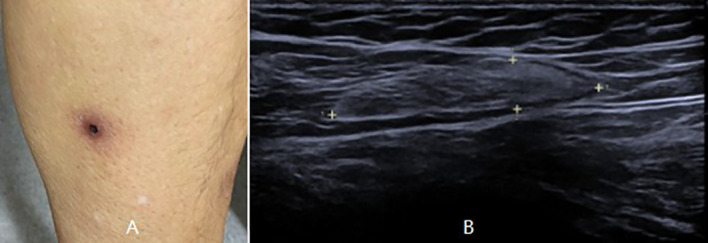
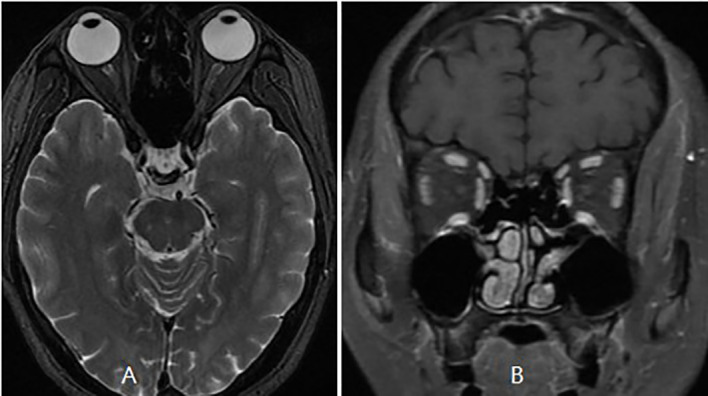
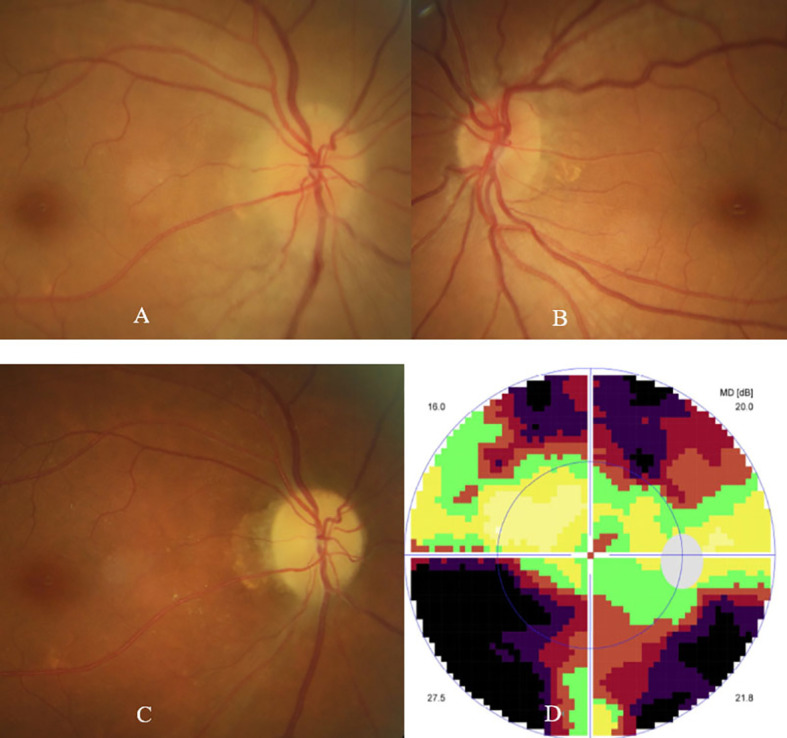
Scrub typhus is an acute febrile illness caused by Orientia tsutsugamushi infection, and typically manifested as fever, eschar, lymphadenopathy, rash, and other flu-like signs. Ocular involvement was not uncommon, and mostly occurred at post-fever or recovery stage in scrub typhus cases. We hereby report a case of scrub typhus presenting as unilateral optic neuritis (ON). A 56-year-old man going wild fishing nearly every day complained of a blurred vision and an inferior visual field defect in the right eye two or three days after an insect-bite like shin induration in his left leg. He was diagnosed as ON, and treated with dexamethasone in the local hospital. Unfortunately, his right eye vision progressively deteriorated during steroid therapy. Three days after steroid therapy ceased, he suffered from a high fever and painful subcutaneous masses in the left groin. Peripheral blood test by metagenomic next-generation sequencing (mNGS) was positive for Orientia tsutsugamushi, but negative for other pathogens. The diagnosis was then revised to scrub typhus and ON. His systemic symptoms rapidly disappeared after oral doxycycline and omadacycline therapy. However, his right eye vision continuously deteriorated to hand motion. Further serum tests for aquaporin 4-IgG antibody and myelin oligodendrocyte glycoprotein-IgG antibody were both negative, but for anticardiolipin IgM and beta-2-glycoprotein-I IgM were both positive. The patient's right eye vision gradually improved after doxycycline combined with steroid pulse therapy. Our case indicates that ON in scrub typhus cases may present as a parainfectious inflammation, and that mNGS is a useful and valuable method for early diagnosis of scrub typhus.
恙虫病是由恙虫东方体感染引起的急性发热性疾病,通常表现为发热、焦痂、淋巴结肿大、皮疹和其他流感样症状。眼部受累并不少见,多发生在恙虫病发热后或恢复期。我们在此报告一例以单侧视神经炎(ON)为表现的恙虫病病例。一名 56 岁男性,几乎每天都去野外钓鱼,在左腿被虫咬后出现硬结两三天后,出现右眼视力模糊和下视野缺损。他被诊断为 ON,并在当地医院接受地塞米松治疗。不幸的是,他的右眼视力在激素治疗过程中逐渐恶化。停止激素治疗三天后,他出现高热和左腹股沟疼痛的皮下肿块。采用宏基因组下一代测序(mNGS)的外周血检查对恙虫东方体呈阳性,但对其他病原体呈阴性。诊断随后修订为恙虫病和 ON。他的全身症状在口服多西环素和奥马环素治疗后迅速消失。然而,他的右眼视力持续恶化至手动视力。进一步的血清 aquaporin 4-IgG 抗体和髓鞘少突胶质细胞糖蛋白-IgG 抗体检测均为阴性,但抗心磷脂 IgM 和β-2-糖蛋白-IgM 均为阳性。在接受多西环素联合激素冲击治疗后,患者右眼视力逐渐改善。我们的病例表明,恙虫病病例中的 ON 可能表现为副感染性炎症,mNGS 是早期诊断恙虫病的一种有用且有价值的方法。