Faculty of Health, University of Canberra, Bruce, Canberra, ACT, Australia.
Prehabilitation, Activity, Cancer, Exercise and Survivorship (PACES) Research Group, University of Canberra, Bruce, Canberra, ACT, Australia.
J Cancer Surviv. 2024 Oct;18(5):1608-1629. doi: 10.1007/s11764-023-01401-5. Epub 2023 May 31.
To critically synthesise qualitative research to understand experiences of supportive care in people affected by brain cancer and their informal caregivers.
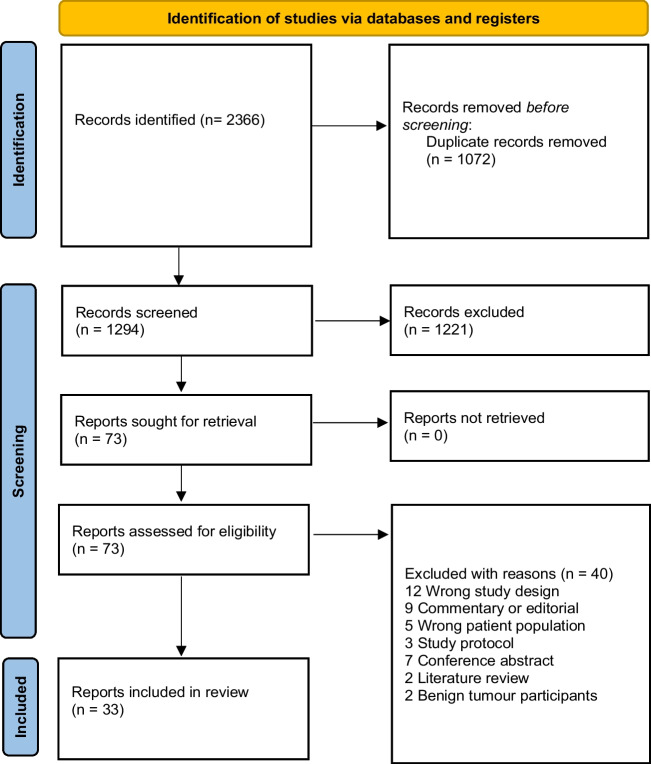
A qualitative systematic review was conducted according to the Joanna Briggs methodology and has been reported according to the Preferred Reporting Items for Systematic Reviews and Meta-Analysis (PRISMA) Guidelines. Electronic databases were searched by an expert systematic review librarian for all qualitative studies irrespective of research design. All publications were double screened by two reviewers using a pre-determined exclusion and inclusion criteria. The review was managed using Covidence systematic review software. Methodological quality assessment and data extraction were performed. Qualitative findings accompanied by illustrative quotes from included studies were extracted and grouped into categories, which created the overall synthesised findings.
A total of 33 studies were included which represented a total sample of 671 participants inclusive of 303 patients and 368 informal caregivers. There was a total of 220 individual findings included in this review, which were synthesised into two findings (1) caregivers and patients perceived supports which would have been helpful and (2) caregiver and patient experiences of unmet supportive care needs.
This review highlighted the suffering and distress caused by brain cancer and associated treatments. Both patients and their informal caregivers experienced disconnect from themselves in renegotiating roles, and a profound sense of loneliness as the physical deterioration of the disease progressed. Both patients and informal caregivers reported similar unmet needs within the current service provision for brain cancer. However, what is apparent is that current cancer services are provided solely for patients, with little or no consideration to the support needs of both the patient and their informal caregiver. Service re-design is needed to improve care coordination with individualised informational support, implementation of holistic needs assessments for both the patients and their caregivers, better community support provision, improved opportunities for emotional care with early referral for palliative care services.
It is recommended that members of the multidisciplinary brain cancer team reflect on these findings to target holistic needs assessments and develop shared self-management care plans for both the patient and the informal caregiver.
批判性综合定性研究,以了解脑癌患者及其非专业照护者的支持性护理体验。
根据乔安娜·布里格斯方法进行了定性系统评价,并按照系统评价和荟萃分析的首选报告项目(PRISMA)指南进行了报告。一位专家系统评价图书管理员在不考虑研究设计的情况下,对所有定性研究进行了电子数据库检索。使用预先确定的排除和纳入标准,由两名评审员对所有出版物进行了双重筛选。使用 Covidence 系统评价软件管理审查。对方法学质量评估和数据提取进行了评估。从纳入的研究中提取定性发现,并附有说明性引述,将其分组为类别,从而创建总体综合发现。
共纳入 33 项研究,共纳入 671 名参与者,其中包括 303 名患者和 368 名非专业照护者。本综述共纳入 220 项个体发现,综合为两个发现:(1)照护者和患者认为有帮助的支持措施;(2)照护者和患者对支持性护理需求未得到满足的体验。
本综述强调了脑癌及其相关治疗所带来的痛苦和困扰。患者及其非专业照护者在重新协商角色时感到与自己脱节,随着疾病的身体恶化,他们感到深深的孤独。患者和非专业照护者在当前脑癌服务提供中报告了类似的未满足需求。然而,显而易见的是,当前的癌症服务仅针对患者提供,几乎没有考虑到患者及其非专业照护者的支持需求。需要重新设计服务,以改善护理协调,提供个性化信息支持,对患者及其照护者进行全面需求评估,更好地提供社区支持,改善提供情感关怀的机会,并及早转介姑息治疗服务。
建议脑癌多学科团队的成员反思这些发现,以确定全面的需求评估,并为患者和非专业照护者制定共同的自我管理护理计划。